How big is the energy storage market in South-Eastern African countries?
Energy Storage Market
Analysis of South-Eastern Africa Countries
1. Introduction
This report focuses on the analysis of the energy storage market in South-Eastern African Countries. It covers several aspects such as area, population, average monthly income of urban residents, the status of power supply and the household energy storage market size etc. The aim is to understand the current situation and development potential of these countries in the energy-related fields.
2. Regional Overview
2.1 Area and Population of South-eastern African countries
The following are the area and population data of each country in South-eastern African countries
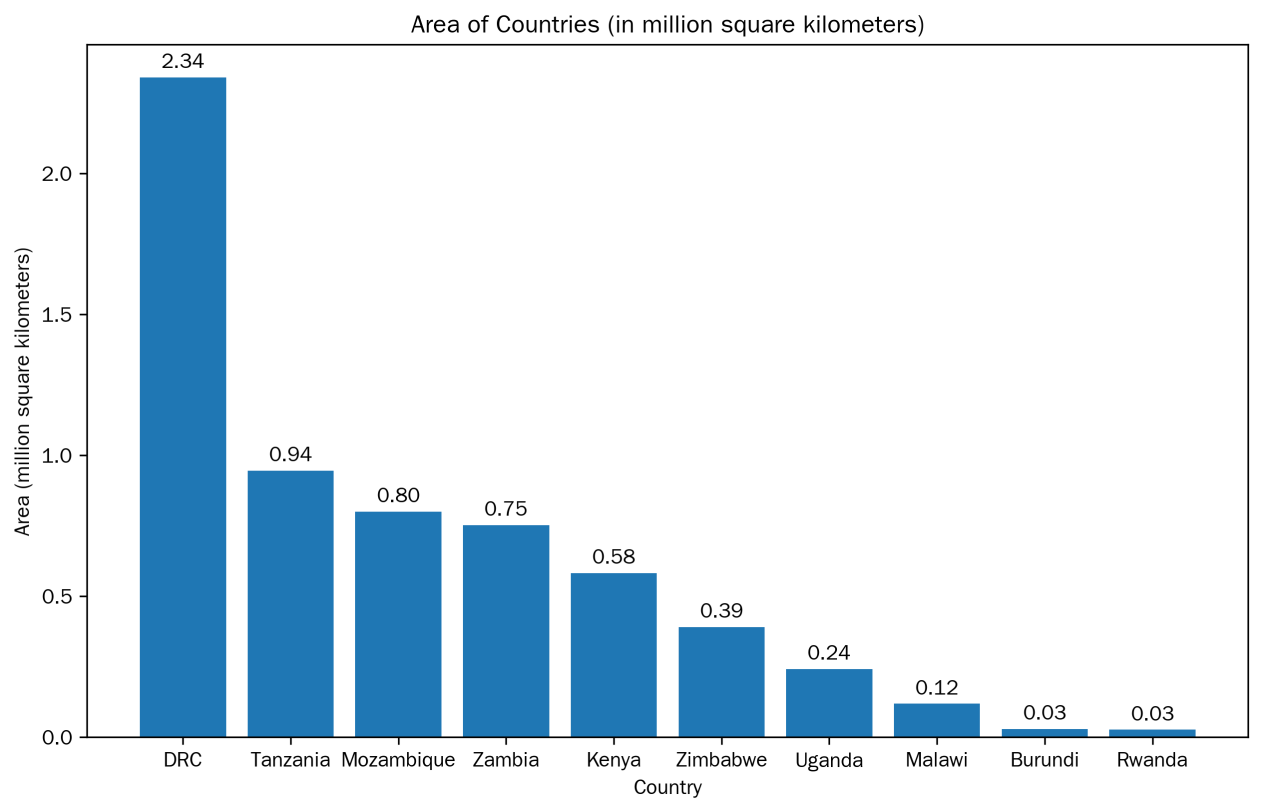
From the area data, we can see that the Democratic Republic of the Congo (DRC) has a vast territory, with an area of 2.34 million square kilometers, which is much larger than other countries. Rwanda and Burundi, on the other hand, are relatively small in area, both less than 30,000 square kilometers. This large disparity in area may lead to differences in resource distribution and development potential among countries. For example, larger-area countries may have more diverse natural resources and greater room for large- scale infrastructure development.
Population of South-eastern African countries
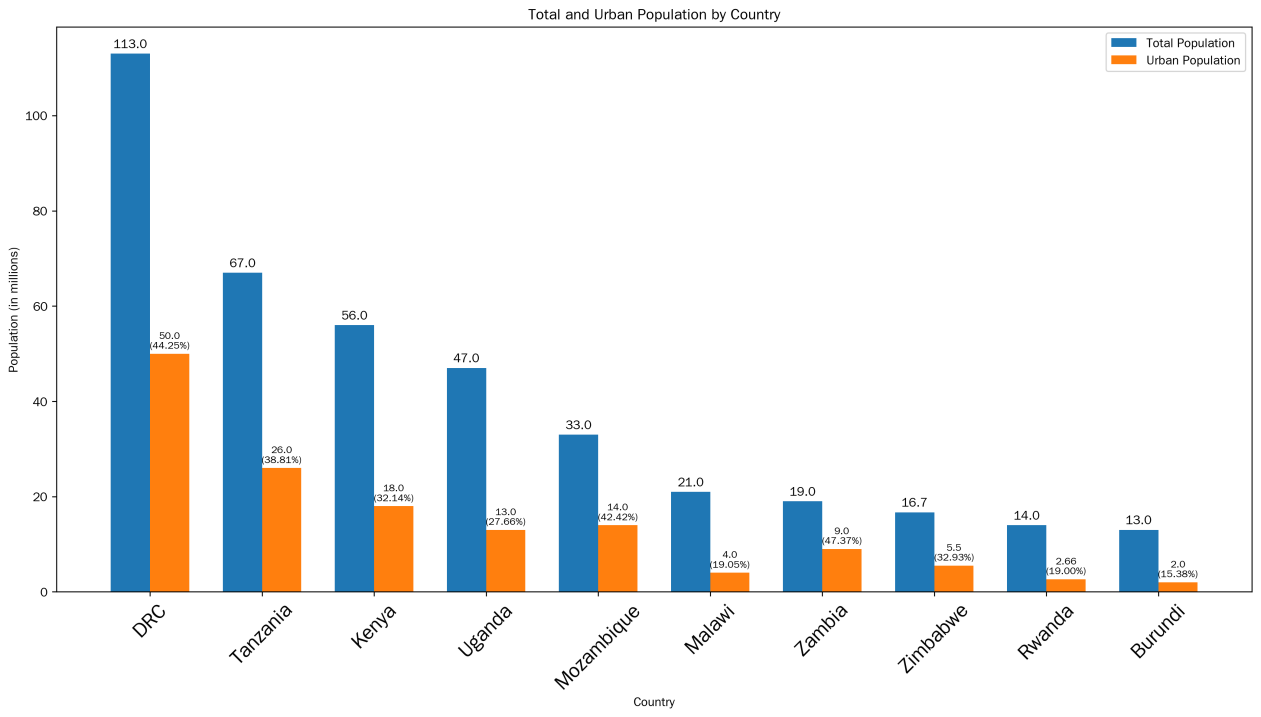
The DRC also has the largest population in this region, reaching 113 million. Rwanda and Burundi have relatively small populations. The population size is closely related to the energy demand. Larger populations generally mean greater demand for electricity and energy storage facilities, which provides a broad market space for the energy storage industry.
3. The Status of Power Supply
3.1 Power coverage rates and tariff in South-eastern African countries
Power coverage rates
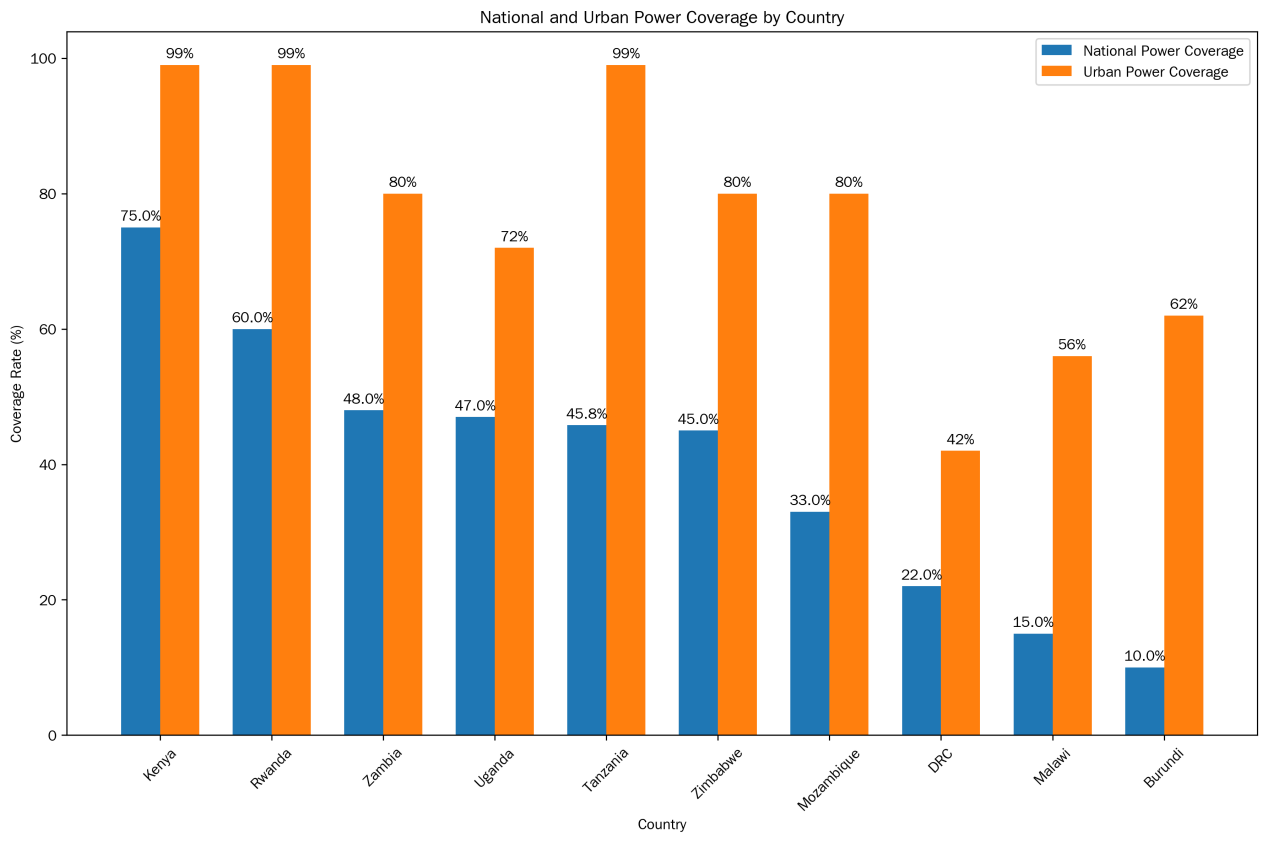
The power coverage rates in these countries vary significantly. Kenya has a relatively high national power coverage rate of 75.0%, while Burundi and Malawi have very low rates, at 10.0% and 15.0% respectively. This large disparity indicates uneven development in power infrastructure across the region. Countries with low national power coverage rates may have greater potential for energy storage development, as expanding power access could involve the use of energy storage systems to improve the stability and reliability of power supply in remote areas.
Urban Power Coverage Rates
Most of the urban areas in these countries have relatively high power coverage rates, with Tanzania, Kenya, and Rwanda achieving 99% coverage. However, the DRC and Malawi have lower urban power coverage rates compared to others. High urban power coverage in some countries suggests that the urban power infrastructure is relatively well - developed, and the focus of energy storage applications in these areas may shift more towards peak shaving, load balancing, and improving power quality. In contrast, countries with lower urban power coverage need to invest more in basic power infrastructure, and energy storage can play a role in this process.
Electricity Tariff
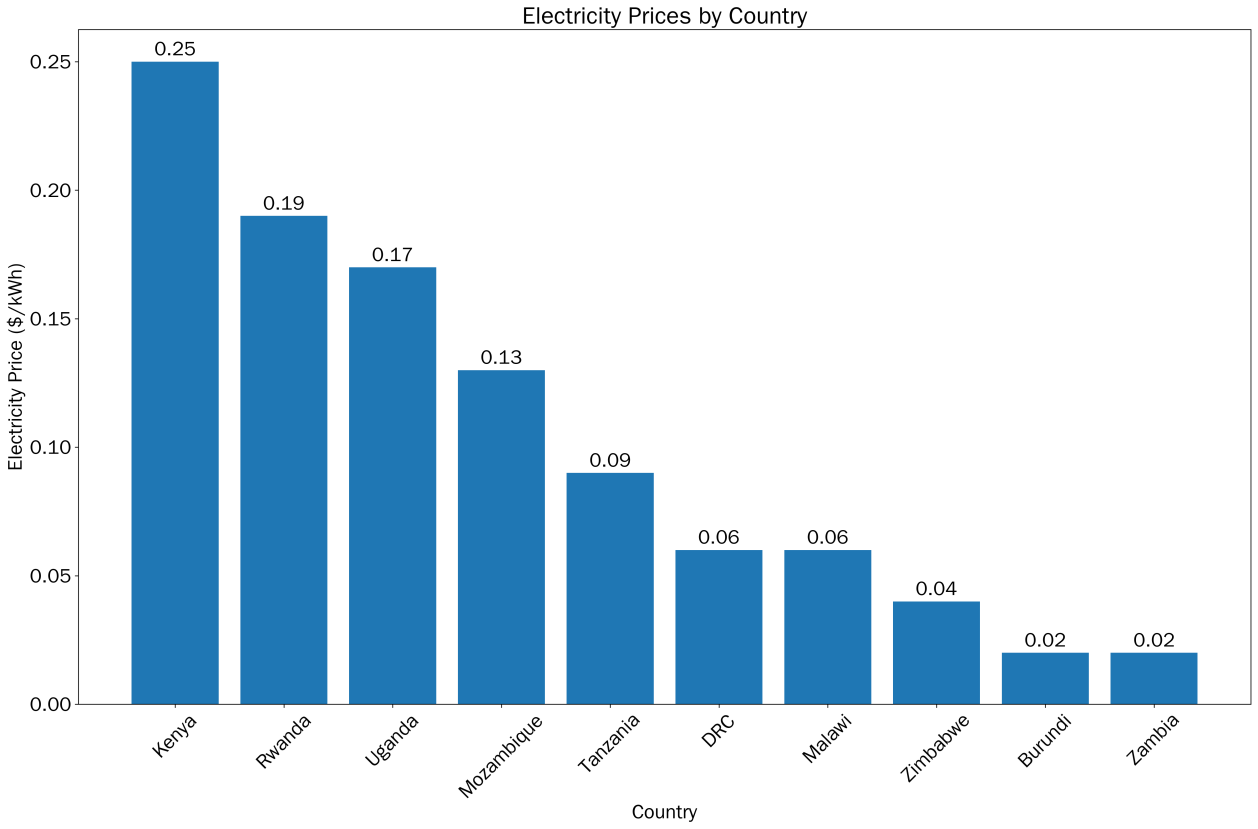
The average electricity tariff also show great differences. Kenya has the highest at $0.25 per kWh, while Burundi and Zambia have the lowest at $0.02 per kWh. High electricity price in some countries may make energy storage solutions more economically viable, as they can help consumers reduce electricity costs through peak - valley arbitrage. Low - price countries may need to focus more on improving power generation efficiency and reducing costs to further expand power access.
4. Average Monthly Income Analysis
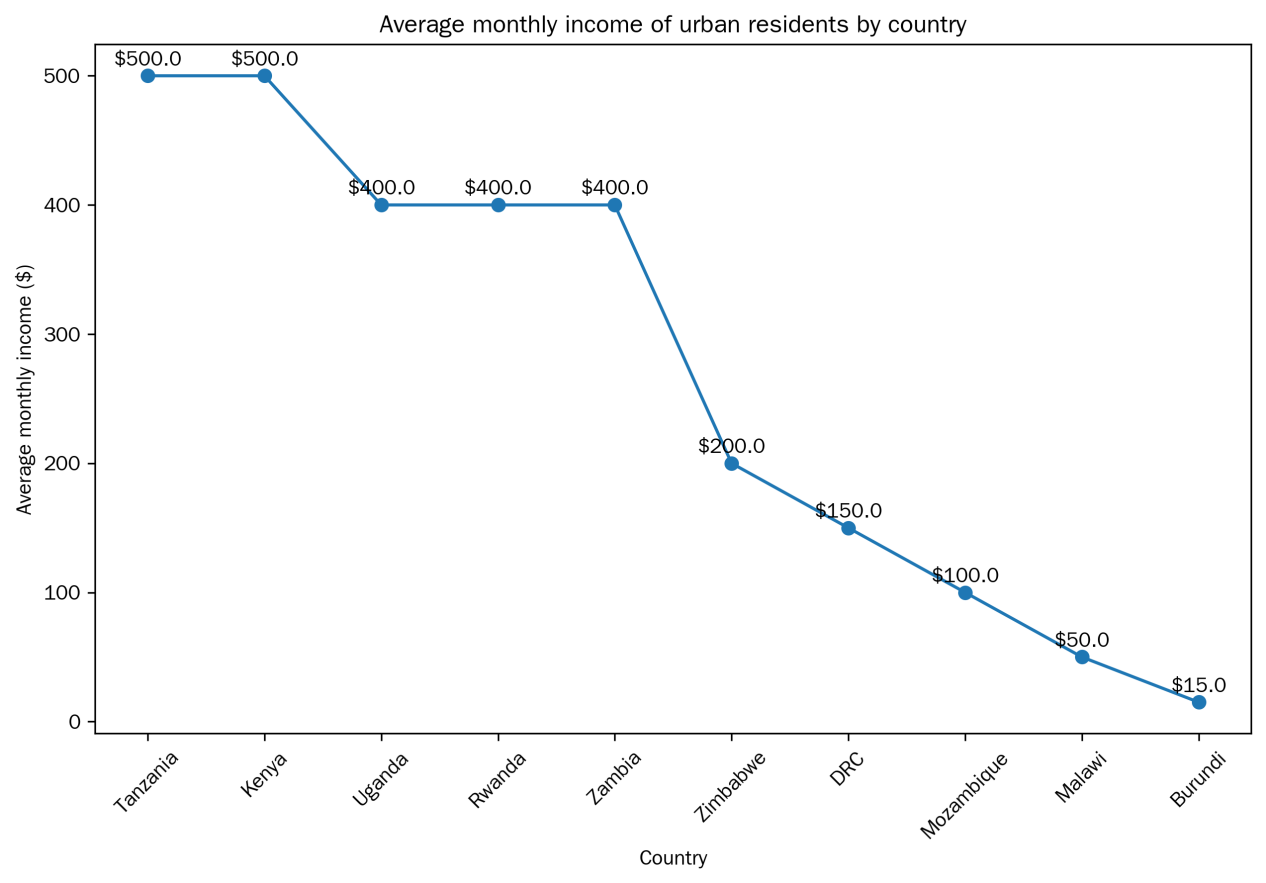
The data on the average monthly income of urban residents shows a large disparity among these countries. Tanzania and Kenya have the highest average monthly income of $500, while Burundi has a significantly low income of only $15. This large gap in income levels can have a profound impact on the consumption patterns and market demand in different countries. For high - income countries like Tanzania and Kenya, residents may have more purchasing power for high - end energy storage products or services. In contrast, in low - income countries such as Burundi, the market may be more price - sensitive, and only more affordable energy storage solutions can be accepted.
5. National Policies on Power Development
All countries in this region have made the development of renewable energy a national policy and basically aim to achieve 100% power coverage by 2030. This common policy goal creates a favorable political environment for the development of the energy storage market. Energy storage technologies can be combined with renewable energy sources such as hydropower (which is the main power source in these countries) to improve the stability and reliability of power supply, helping countries achieve their power coverage goals.
6. Household Energy Storage Market
6.1 Household Energy Storage Market Size in 2024
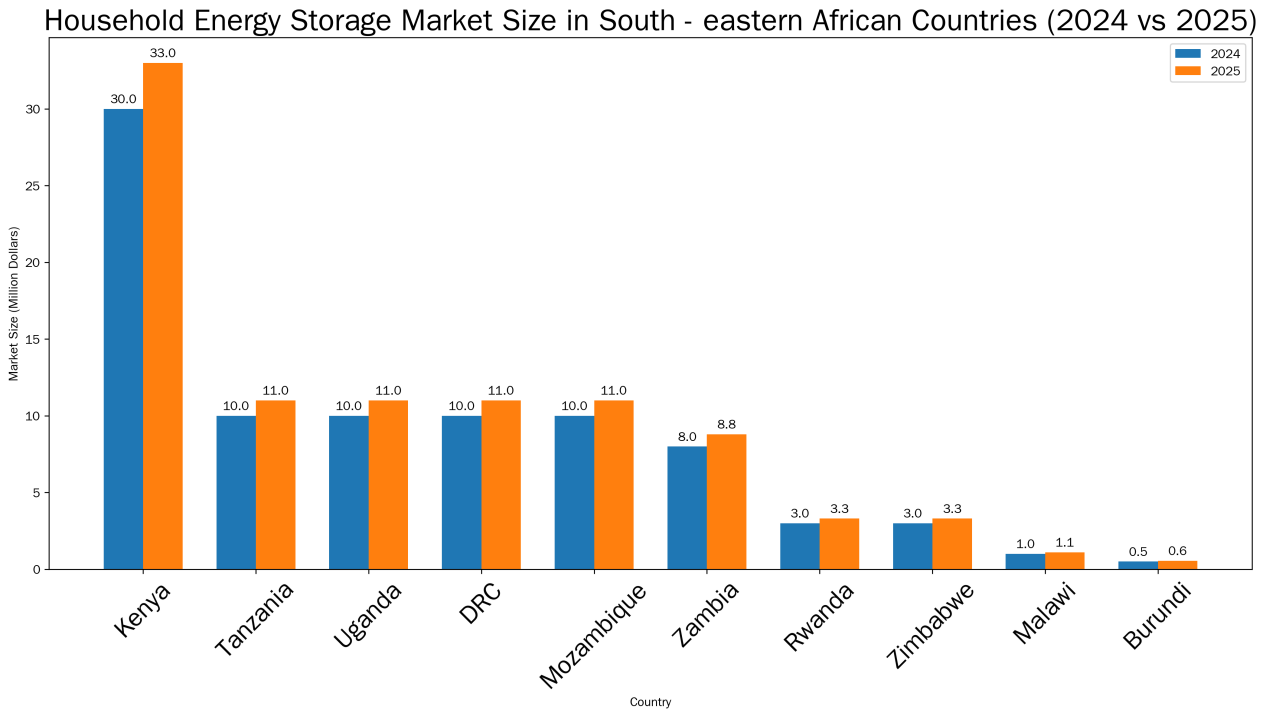
In 2024, the household energy storage market sizes vary greatly among different countries in South-eastern Africa. Kenya stands out with a market size of $30 million, which is significantly larger than most other countries. This could be due to factors such as a higher level of economic development, greater urbanization, or more acute power stability issues in Kenya compared to its neighbors. On the other hand, Burundi has a relatively tiny market size of only $0.5 million, perhaps indicating limited consumer awareness, lower purchasing power, or less severe power - related needs in the household sector.
6.2 Predicted Household Energy Storage Market Size in 2025
Based on the given growth rates, most countries are expected to see an increase in their household energy storage market sizes in 2025. However, Burundi is an exception, with its market size remaining at $0.5 million as its growth rate is only 5% and the base size is very small. Overall, the growth in market size reflects the growing potential of the household energy storage market in South-Eastern Africa. As the power grid stability remains poor in the region and the demand for reliable power supply in households increases, the market is likely to continue expanding in the coming years.
5. Conclusion
- The entire South-Eastern African region is geographically well-suited for the development of renewable energy. However, it is still in its initial stages. There is sufficient business potential to sustain operations for 5 to 6 years.
- Household photovoltaic systems combined with energy storage will become the backup power source for urban families, replacing diesel generators. Such systems will mainly operate in off-grid mode.
- There is huge potential for grid-connected photovoltaic + energy storage projects in the industrial and commercial energy storage sector as well as micro-grid projects.
- While each country's market space is currently limited due to the early development stage, the similarity in business scenarios allows for a regional approach. Focus should be on key countries like Tanzania, Kenya, Uganda, DRC, Zambia, Mozambique, and Zimbabwe.
- Tanzania, with its central geographical location and good business environment, could serve as a regional hub for market expansion.
SVC has ensured a strong inventory of inverters and batteries for clients
SVC ENERGY to Participate in Key Industry Events in 2025
Related Article