Zambia Residential Energy Storage Market Analysis Report!
author: SVC ENERGY
2025-04-18

1. Analysis of power infrastructure and demand gap
The grim reality of grid coverage
- The overall electricity coverage rate in the country is only 31% (67% in cities and 4%-5% in rural areas), and more than 14 million people are not connected to the power grid. The average annual power outage duration in rural areas exceeds 500 hours, and about 80% of rural households rely on diesel generators (costing about US$0.5/kWh) or candles.
- The country has a high reliance on hydropower (83% of installed capacity), but drought will cause a drop in power generation in 2024, necessitating an eight-hour daily power cut and costing the power company $35 million in revenue.
Solar energy resources development potential and bottlenecks
- The average annual sunshine hours are 3,000 hours, and the solar radiation intensity is 4.5-6.0kWh/m². Theoretically, it can support 2,300MW of photovoltaic installed capacity, but currently it is only 89MW.
- The penetration rate of off-grid photovoltaic systems is only 8%, and insufficient energy storage has resulted in more than 30% of photovoltaic power generation being wasted. Micro photovoltaic systems (such as the StarTimes project) are being promoted in rural areas, but the coverage rate of micro energy storage devices below US$500 is less than 40%.
2. Policy and Energy Planning Drivers
2030 Renewable Energy Targets
- It is planned to increase the proportion of renewable energy from 30% to 60%, with a focus on developing solar energy (target 600MW) and wind energy. A 15% equipment import tariff reduction will be provided for off-grid photovoltaic + energy storage projects, and solar panels will be exempted from value-added tax.
- The government has introduced a tiered electricity price: basic electricity consumption (<100kWh/month) is US$0.032/kWh, and high electricity consumption (>300kWh/month) is US$0.079/kWh, to stimulate middle- and high-income families to turn to energy storage.
International cooperation and financial support
- The World Bank, African Development Bank and others provide low-interest loans (annual interest rate 5%-8%), such as the US$265 million rural power grid project. The Green Climate Fund (GCF) has pledged $154 million to support 100MW of solar-plus-storage projects.

3. Economic stratification and market capacity estimation
Consumption capacity hierarchy
- There are about 1.2 million middle-class urban households (monthly income of US$500-1500), which can afford a storage system of US$3000-5000 (such as a 5kWh lead-acid battery system). Rural households (monthly income
- There is a significant income gap: high-income households in the Copperbelt Province earn 11,068 kwacha (about US$650) per month, while low-income households in Muzinga Province earn only 1,271 kwacha (about US$75).
Comparison of costs and technical routes
- System Type: Micro Energy Storage, Technical route: Lead-acid battery + 100W photovoltaic, Cost (USD): 300–500, Lifespan (years): 2–3, Applicable scenarios: Rural basic lighting
- System Type: Mid-range household savings, Technical route: 5kWh lead-acid battery Cost (USD): 3500, Lifespan (years): 4–5, Applicable scenarios: Daily electricity consumption of urban households
- System Type: High-end solution, Technical route: Lithium battery + 3kW photovoltaic, Cost (USD): 5000+, Lifespan (years): 8–10, Applicable scenarios: High-income families/small and micro businesses

4. Market competition pattern and channel barriers
Existing players and product limitations
- South African manufacturers (Bluevolt, Sinetech) account for 60% of the market share, focusing on 5kWh lead-acid battery systems (average price of US$3,500), but lack lithium battery solutions and have a cycle life of only 500 times.
- Chinese companies are accelerating their layout: Honeycomb Energy has launched a household lithium iron phosphate storage system (3,000 cycles), and China National Building Materials South Africa has covered Zambia through overseas warehouses, with a market share of 20%.
Distribution network pain points
- 70% of distributors are concentrated in Lusaka, and rural areas rely on small electrical appliance stores (such as Kazang Solar), with after-sales coverage of less than 40%. Mobile payment (MTN, Airtel Money) has a penetration rate of 65%, but logistics costs account for 15%-20% of the product price.
5. Market opportunities and risk warnings
Incremental opportunities
- The energy storage penetration rate of urban middle-class households is expected to increase from 8% to 25% (2025-2030), and the annual demand for micro energy storage equipment will exceed 500,000 units.
- The government plans to build 1,500 microgrids, which require supporting 20MWh energy storage projects (such as the cooperation project between GEI Power and YEO).
Key risks
- High local financing costs: The annual interest rate of commercial bank loans is 18%-25%, and funds from international financial institutions are required.
- The lack of a lead-acid battery recycling system poses a risk of environmental pollution; China’s dependence on imported lithium batteries is 95%, and the stability of the supply chain is questionable.
Middle East Residential Energy Storage Status and Outlook!
Great news, Zambia! SVC's inverters and energy storage batteries have arrived at our local warehouse!
Related Article
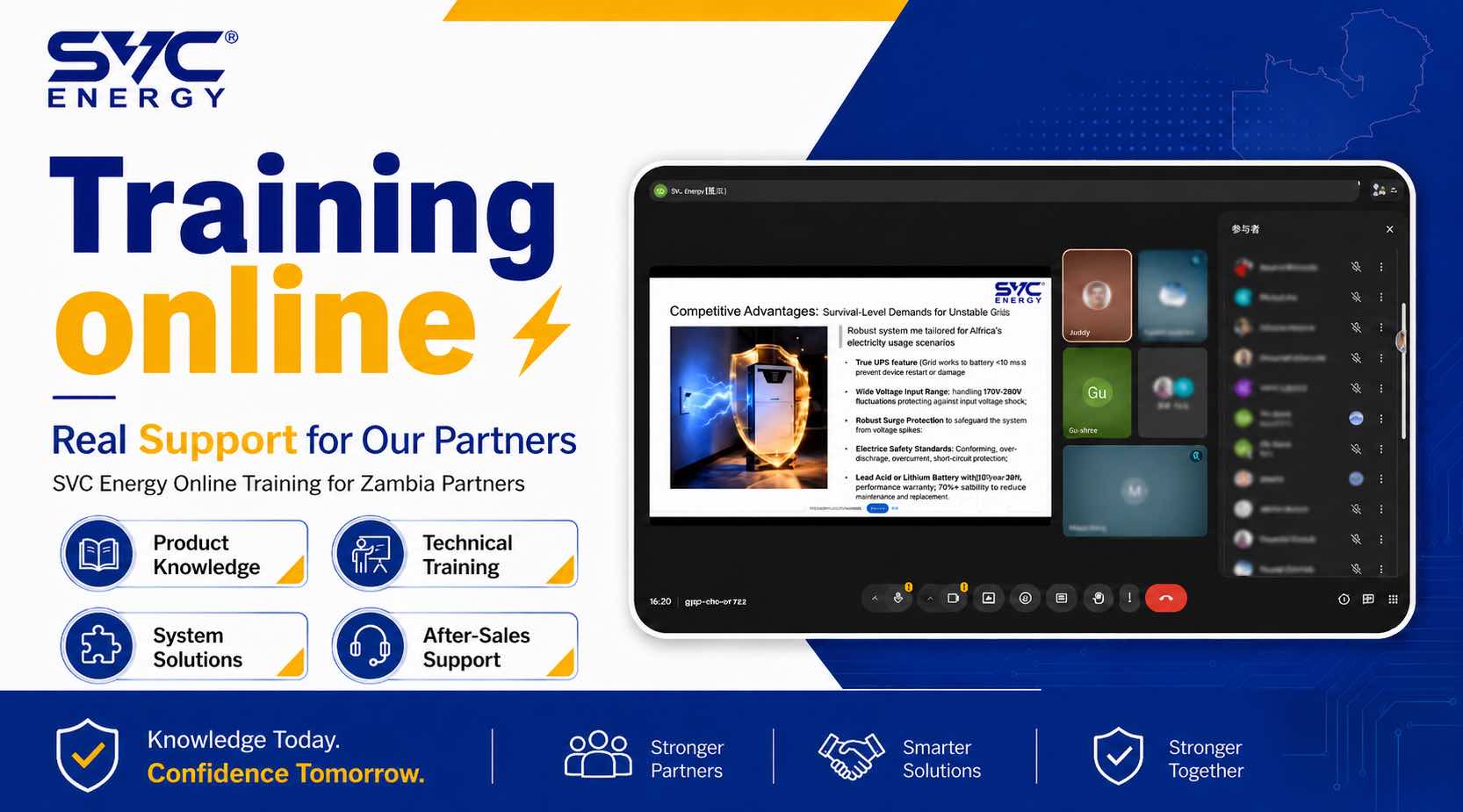
SVC Energy recently held an online training session for partners in Zambia, sharing product knowledge, technical guidance, solar backup system solutions, and after-sales support. This training reflects SVC Energy’s commitment to supporting partners not only with solar inverters and lithium batteries, but also with long-term service, practical knowledge, and market confidence.
SVC Energy Online Training for Zambia Partners: Real Support Beyond Product Supply

SVC Energy successfully provided off-grid solar energy systems for 6 schools in Zambia, helping improve access to reliable electricity for educational environments through 3.6kW inverters and 2.56kWh lithium battery solutions.
SVC Energy Supports 6 Schools in Zambia with Solar Power Systems

SVC Energy attended the Zambia National STEM Innovation Hub Fundraising Gala Dinner, joining discussions on education, technology development, and the importance of reliable solar energy solutions for Zambia and Africa.
SVC Energy Joins Zambia STEM Gala Dinner, Supporting Innovation Through Reliable Energy Solutions
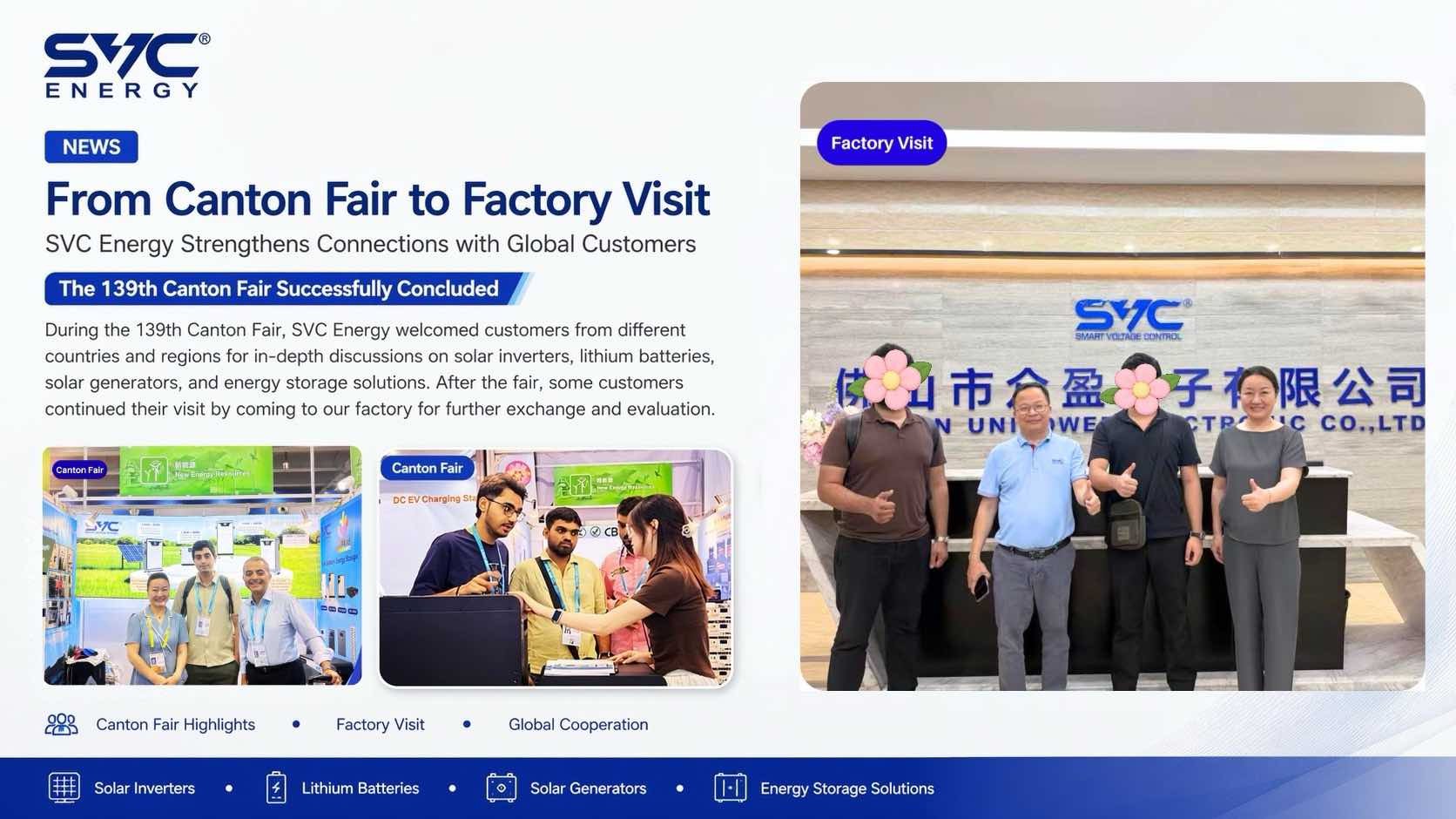
After the successful conclusion of the 139th Canton Fair, SVC Energy continued in-depth communication with international customers through factory visits, further strengthening trust and exploring future cooperation in solar inverters, lithium batteries, solar generators, and energy storage solutions.
From Canton Fair to Factory Visit: SVC Energy Strengthens Connections with Global Customers