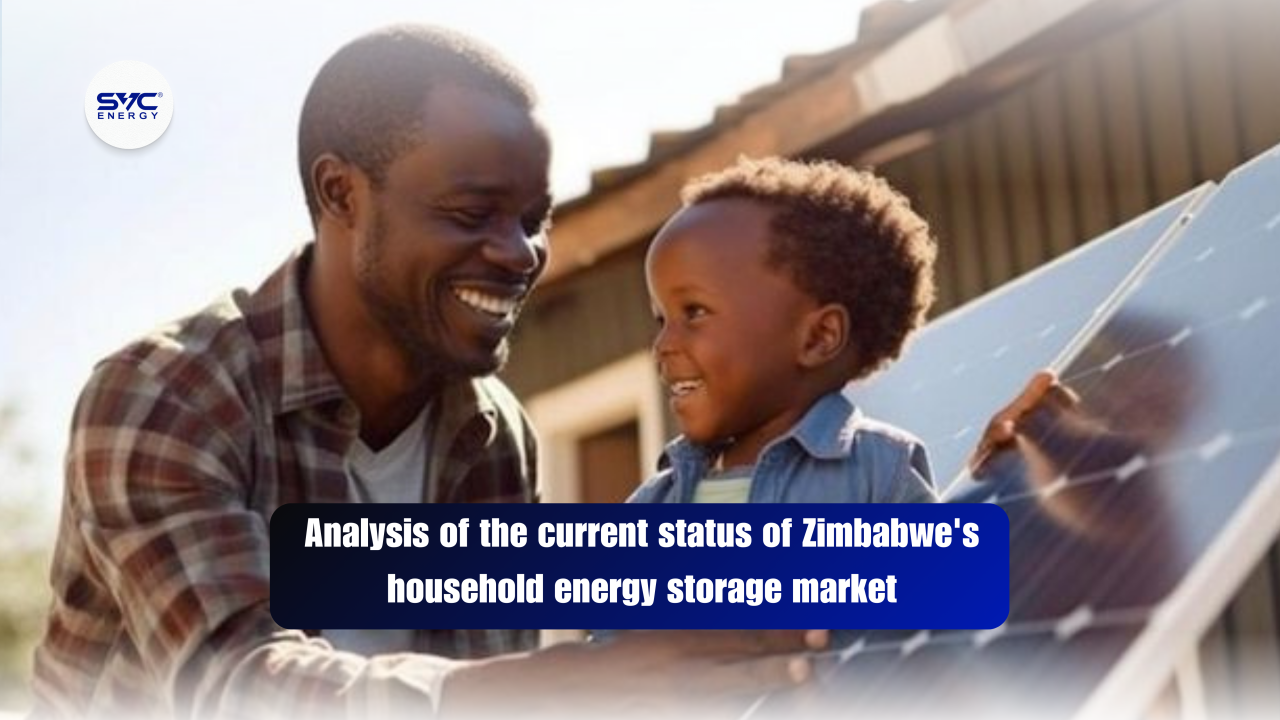
Analysis of the current status of Zimbabwe's Residential Energy Storage Market!
1. Market drivers
1. Power shortage and unstable power grid
- Zimbabwe’s electricity grid coverage is only 40%, with coverage in rural areas less than 10% (World Bank, 2024).
- The average daily power outage duration is 8-12 hours, and cities such as the capital Harare experience power outages as frequently as 20 days a month (Zimbabwe Energy Authority, 2023).
- The national electricity gap is about 1.2GW, which can only cover 60% of peak demand (African Development Bank, 2024).
2. Renewable energy policy promotion
- The government has set a target of “renewable energy accounting for 27% by 2030”, and household photovoltaic + energy storage systems can enjoy a 15% import tariff reduction (Zimbabwe Energy Policy White Paper, 2023).
International aid programs, such as the EU’s Africa Energy Initiative, provide $230 million in funding to subsidize the purchase of home energy storage devices.
3. Economic costs drive demand
- The operating cost of diesel generators is as high as US$0.35-0.5/kWh, while the cost of photovoltaic + energy storage systems has dropped to US$0.18-0.25/kWh (Bloomberg New Energy Finance, 2024).
- The average annual electricity bill for urban households is 12% of their income, higher than the average for Sub-Saharan Africa (8%) (World Bank Household Survey, 2023).
2. Market size and structure
1. Overall scale
- In 2023, the household energy storage market capacity will reach 48MW, a year-on-year increase of 32%, and the market size will be approximately US$62 million (Frost & Sullivan, 2024).
- The market size is expected to exceed US$110 million in 2025, with a compound annual growth rate (CAGR) of 28%.
2. Product structure
- Technology route: Lithium-ion batteries account for 58% (led by BYD and Huawei), lead-acid batteries account for 37% (dominated by local brands), and emerging flow batteries account for 5% (World Energy Council, 2024).
- Power distribution: 3-5kW systems are the mainstream (65%), mainly serving middle- and high-income families; 1-3kW systems account for 30%, concentrated in rural areas.
3. Regional differences
- Large cities such as Harare and Bulawayo account for 72% of the market share, while rural areas rely on second-hand equipment or small lead-acid batteries due to purchasing power constraints (Zimbabwe Ministry of Energy, 2023).

3. Competition Landscape
1. International brands dominate the high-end market
- Chinese brands (Huawei, BYD, CATL) account for 85% of the lithium battery market, with product prices ranging from US$800-1500/kWh.
- European brands (Sonnen, Tesla) entered the market through agents, focusing on high-end systems above 10kWh, but the penetration rate was less than 5%.
2. Local enterprises focus on the mid- and low-end
- Local manufacturers (such as ZESA subsidiaries, Zimbabwe Solar Energy) mainly assemble lead-acid battery systems with prices as low as US$300-500/kWh, but the cycle life is only 500-800 times (Industry Test Report, 2024).
- The second-hand battery refurbishment industry chain is worth US$12 million, mainly circulating lead-acid batteries (70% of which are scrapped batteries imported from South Africa).
4. Consumer Behavior and Pain Points
1. Purchase decision factors
- Price sensitivity: 72% of consumers prioritize initial cost, while only 18% focus on long-term returns (University of Harare Research, 2024).
- Brand trust: International brands have a weak after-sales network, and local dealer channels account for more than 60% of sales.
2. Use pain points
- Impact of high temperature environment: The efficiency of lead-acid batteries decreases by 40% in an environment above 35°C, while the temperature resistance of lithium batteries has not been optimized specifically (African Energy Storage Association report, 2023).
- Insufficient maintenance capabilities: Only 23% of users in rural areas have basic maintenance knowledge, resulting in a 30% reduction in equipment life (UNDP survey, 2023).
5. Supply Chain and Policy Challenges
1. Import dependence and foreign exchange controls
- 85% of lithium batteries are imported from China. Due to the depreciation of the Zimbabwe dollar , the import cost of energy storage equipment will increase by 47% in 2023 (Central Bank of Zimbabwe, 2024).
- Foreign exchange shortages have caused delivery cycles to extend to 3-6 months (Industry Interview, 2024).
2. Delayed policy implementation
- Only 30% of promised subsidies are actually received, and the approval process takes an average of 9 months (Transparency International Zimbabwe, 2023).
- Due to the lack of uniform technical standards, the failure rate of second-hand refurbished equipment is as high as 25% (Zimbabwe Consumer Council, 2024).
6. Future Trends
1. Technology iteration
- The commercialization of sodium-ion batteries is accelerating, and it is expected that the cost will be 30% lower than that of lithium batteries in 2026 , which is suitable for low-power demand in rural areas (International Renewable Energy Agency, 2024).
2. Business model innovation
- The rise of on-demand leasing models: users pay $10-15/month for a 5kWh system (South African company Green Solar pilot project, 2024).
- Blockchain microgrid: German company SOLshare piloted "peer-to-peer electricity trading" in the suburbs of Harare, increasing the utilization rate of the energy storage system by 40%.
3. Geopolitical influence
- China has added US$500 million in loans under the Belt and Road Initiative, specifically for the purchase of home energy storage equipment (Ministry of Commerce of China, 2024).
- The revised rules of the South African Customs Union (SACU) may lead to an 8-12% increase in the cost of imported Chinese components (South African Department of Trade and Industry, 2024).

Conclusion
Zimbabwe's household energy storage market presents a contradictory situation of "policy-driven growth" and "supply chain fragility". In the short term, lead-acid batteries will still dominate the low-end market, but the penetration rate of lithium batteries will increase rapidly with the injection of international capital. In the medium and long term, systemic obstacles such as foreign exchange controls and lack of technical standards need to be resolved to release market potential.
SVC Expands African Reach: Local Warehouses Drive Sales Boom and Brand Growth
Middle East Residential Energy Storage Status and Outlook!
Related Article