How to Protect Solar Panels and Batteries from Theft, Heat and Bad Wiring in Nigeria
How to Protect Solar Panels and Batteries in Nigeria: A Safety Guide for Solar Buyers
Short Description
Solar panels and lithium batteries are valuable investments in Nigeria. This guide explains how to protect your solar system from theft, heat damage, bad wiring and poor installation, so your backup power system can work safely and reliably for the long term.
Direct Answer
To protect solar panels and batteries in Nigeria, buyers should secure solar panels with anti-theft mounting, place lithium batteries in a cool and ventilated space, use correctly sized cables and breakers, and work with a qualified solar installer. A low inverter or battery price may look attractive at first, but poor wiring, weak mounting, fake battery capacity or unsafe installation can cost much more than the system itself.
Why Solar System Protection Matters in Nigeria
Many Nigerian buyers compare inverter battery price, solar battery price, lithium battery price, 5kWh lithium battery price, inverter price and solar generator price before choosing a system.
This is understandable, especially when many homes, shops and small businesses need reliable backup power during grid outages. However, the price of the system is only one part of the decision. A safe and reliable solar backup system also depends on how well the equipment is protected, installed and maintained.
Solar buyers in Nigeria should pay attention to five common risks.
First, solar panels may be stolen if they are easy to access or poorly mounted. Roof installations, locked technical areas and anti-theft bolts can reduce this risk.
Second, batteries can age faster if they are exposed to high temperature, direct sunlight or poor ventilation. Lithium batteries should be kept in a shaded and ventilated space.
Third, bad wiring can cause voltage drop, overheating, inverter failure or even fire risk. Correct cable size, DC breakers, AC breakers, earthing and surge protection are essential.
Fourth, fake or overstated battery capacity can lead to much shorter backup time than expected. Buyers should check the real kWh rating, battery chemistry, BMS, warranty and product weight.
Fifth, poor installation can cause the system to trip when appliances such as fridges, pumps or air conditioners start. A proper load audit and commissioning test should always be done before handover.
How Can Solar Panels Be Protected from Theft?
Solar panels are visible assets, especially on homes, shops, clinics, farms and warehouses. In areas where theft risk is high, protection should be planned before installation, not after a problem happens.
To reduce theft risk, buyers can ask installers to use tamper-resistant mounting bolts instead of normal bolts. Panels should be installed in areas that are not easy to access without a ladder, roof hatch or controlled entry point. Ground-mounted panels should only be used when the site has fencing, lighting or security.
Buyers should also record the serial numbers of solar panels and keep purchase documents. This helps with tracking, warranty and ownership proof. Cable routing is also important. If cables are exposed and easy to pull, thieves may remove panels more easily.
For commercial buildings, farms, shops and clinics, additional security measures such as CCTV, lighting or site guards may be necessary. For larger solar systems, dividing the solar array into sections can also reduce the impact of theft, because one incident will not disable the entire system.
A good solar panel installation in Nigeria should not only discuss panel wattage. It should also consider roof structure, wind load, cable routing, access control and theft exposure.
How Should Lithium Batteries Be Protected from Heat?
Heat is one of the most common hidden causes of battery aging in Nigeria. A lithium battery should not be placed under direct sunlight, inside a sealed box with no airflow, near roof heat, close to water leakage or in a dusty outdoor corner.
For homes and small businesses, batteries should be installed indoors or in a shaded technical room. There should be enough space around the battery for airflow. The battery should be kept away from kitchens, water tanks, wet walls and areas where children or untrained people can easily touch it.
Buyers should also check whether the battery has a smart BMS. A good BMS helps protect the battery from overcharge, overdischarge, overcurrent, short circuit and temperature-related risks.
SVC standalone LiFePO4 batteries use Grade A cells, smart BMS management, smart monitoring app support and wide inverter compatibility. For buyers who need longer backup time, SVC 10.5kWh and 16.08kWh LiFePO4 batteries are more suitable than small backup units. The 10.5kWh Phoenix battery uses a 51.2V / 205Ah configuration with about 10,496Wh nominal energy, while the 16.08kWh model uses a 51.2V / 314Ah configuration with BMS protection.
What Wiring Mistakes Can Damage a Solar Inverter Battery System?
Many solar system failures in Nigeria are blamed on the inverter or battery, but the real cause is often poor wiring or unsafe installation.
One common mistake is using battery cables that are too thin. This can cause heat, voltage drop and unexpected shutdowns. Another serious problem is installing the system without a proper DC breaker or fuse, which increases fire risk during a short circuit.
Loose terminals can also create sparks, heat and unstable charging. Poor earthing increases the risk of electric shock and surge damage. Mixing old and new batteries can cause imbalance and poor performance. If essential and non-essential loads are not separated, heavy appliances may drain the backup system much faster than expected.
A proper installation should include a commissioning test after setup. This helps the buyer confirm whether the system is safe, correctly wired and able to handle the expected loads.
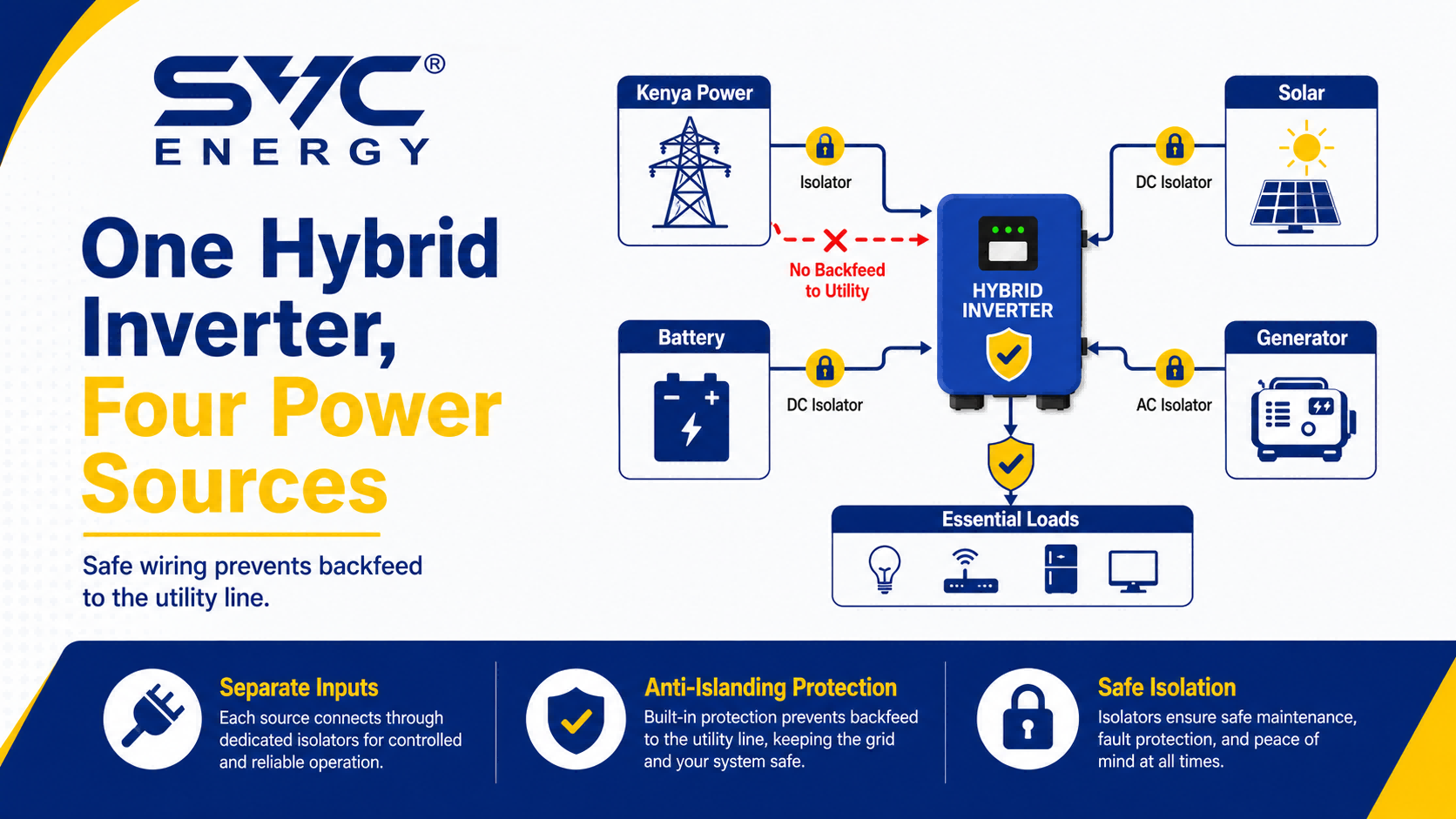
A hybrid inverter should always be matched with the correct battery voltage, PV input range, charging current and load profile. SVC hybrid inverters from 3.5kW to 11kW support features such as wide MPPT voltage range on applicable models, lithium battery wake-up, battery-less operation on supported models and dust filters for harsh environments. These features help installers build more flexible systems, but correct design and wiring are still essential.
Should Nigerian Buyers Choose a Solar Generator or a Hybrid Inverter System?
Both solar generators and hybrid inverter systems can work in Nigeria, but they are suitable for different needs.
A solar generator is usually better for apartments, light backup loads and simple use. It is compact, easier to move and usually requires less installation work.
A hybrid inverter with lithium battery is better for homes that need to power a fridge, fans, TV, router and other daily loads. It is also more expandable for future backup needs.
For homes that want to run an air conditioner, water pump or other high-surge appliances, a larger hybrid inverter system is usually more suitable. These loads require careful sizing and proper load separation.
For shops, clinics and small offices, a hybrid inverter with solar panels and lithium battery is often a better long-term solution because it can be designed around business hours, backup time and daily energy use.
For buyers who want less wiring complexity, an all-in-one energy storage system can also be a practical option because the inverter and battery communication are already pre-matched.
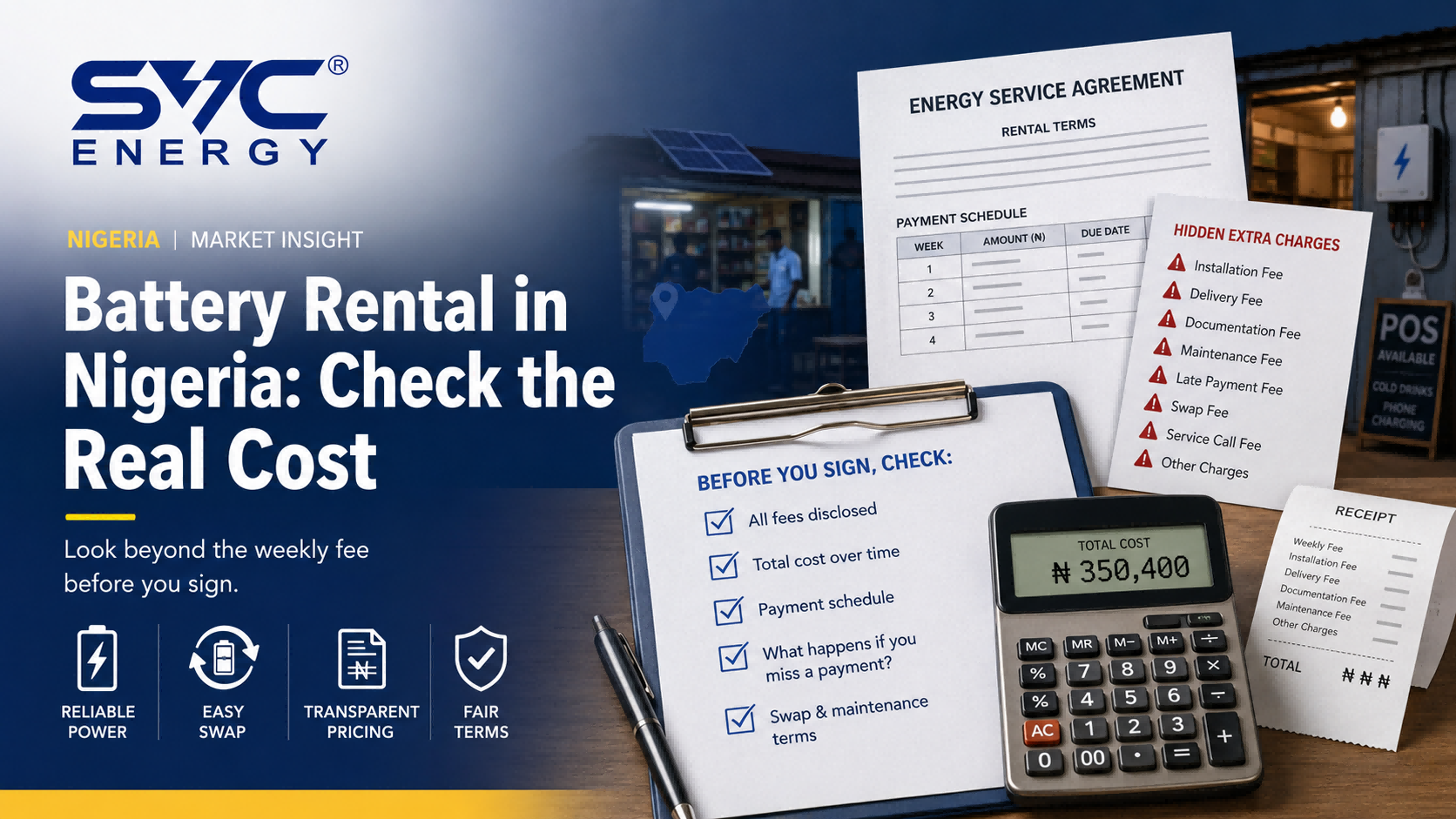
When comparing solar generator price in Nigeria with a full hybrid inverter system, buyers should check what is included in the quotation. A complete quote should clearly state the inverter, battery capacity, solar panels, cables, mounting structure, breakers, installation, warranty and monitoring. A cheaper price may simply mean smaller battery capacity, weaker protection or missing installation materials.
What Should Nigerian Buyers Ask Before Paying?
Before accepting any quotation for a solar inverter battery system, buyers should ask several important questions.
What is the real battery capacity in kWh? Is the battery LiFePO4, gel or lead-acid? What is the usable capacity, not just the nominal capacity? What is the continuous output rating of the inverter? Is it a hybrid inverter or only an off-grid inverter?
Buyers should also confirm the total PV wattage, the type of solar panels included and whether DC breakers, AC breakers, surge protection and earthing are included. Cable size should be clearly stated, especially for the connection between battery, inverter and solar panels.
It is also important to ask whether the installer will separate essential and non-essential loads. This helps protect the backup system from being overloaded by heavy appliances.
Before handover, the installer should perform a commissioning test and explain the system status to the buyer. Warranty terms for the inverter, battery and solar panels should also be confirmed in writing. If monitoring is included, the buyer should know how to check battery and inverter status.
This is especially important when comparing inverter battery price in Nigeria or 5kWh lithium battery price online. A 5kWh battery can be useful for light loads, but it may not be enough for long nighttime backup, refrigerators, pumps or air conditioners unless the load is carefully managed.
Where SVC Products Fit
For Nigerian buyers who want a safer and more expandable backup power system, SVC offers different product options for different needs.
For basic home backup, an all-in-one solar generator or compact energy storage system can reduce wiring complexity.
For homes that need longer backup time, SVC 10.5kWh and 16.08kWh LiFePO4 batteries are more suitable than small portable systems.
For homes and shops using solar panels, SVC hybrid inverters can support solar, grid and battery operation depending on the model.
For dusty or demanding installation environments, SVC inverter dust filters and battery BMS protections are useful features to consider during system design.
The final configuration should always be based on load audit, backup hours, installation environment and local electrical requirements.
FAQ
Is a lithium battery safer than a lead-acid battery for Nigeria?
LiFePO4 lithium batteries are often preferred for modern solar storage because they offer better usable energy, longer cycle life and integrated BMS protection when properly designed. However, safety still depends on real battery quality, correct wiring, ventilation and professional installation.
Does a higher inverter price in Nigeria always mean better quality?
Not always. A higher inverter price may reflect higher capacity, hybrid functions, better MPPT design, stronger brand support or longer warranty. However, buyers should still verify the model, datasheet, installation quality and protection devices.
Why do some solar battery prices in Nigeria look too cheap?
Very cheap solar battery prices may be caused by smaller capacity, older battery technology, weak cables, missing breakers, low-quality panels or unrealistic runtime claims. Buyers should always ask for the exact battery kWh, battery chemistry, warranty and full installation scope.
Can solar panels completely replace a generator?
Sometimes, but not always. For many Nigerian homes and shops, solar plus battery can reduce generator runtime. Completely replacing a generator requires careful sizing based on daily load, nighttime use, air conditioner or pump usage, weather conditions and required backup hours.
What is the most important part of solar panel installation in Nigeria?
Buyers should carefully inspect the mounting structure, cable size, breakers, earthing, battery location, inverter ventilation and commissioning report. These details often decide whether the system will perform safely after installation.
Why Does My Inverter Shut Down When ZESCO Power Comes Back or When the Fridge Starts?
Which Lithium Battery Features Matter Most for Kenyan Installers: CAN, RS485, WiFi or App Monitoring?
Related Article