How to Choose Inverter and Battery Combination For Home
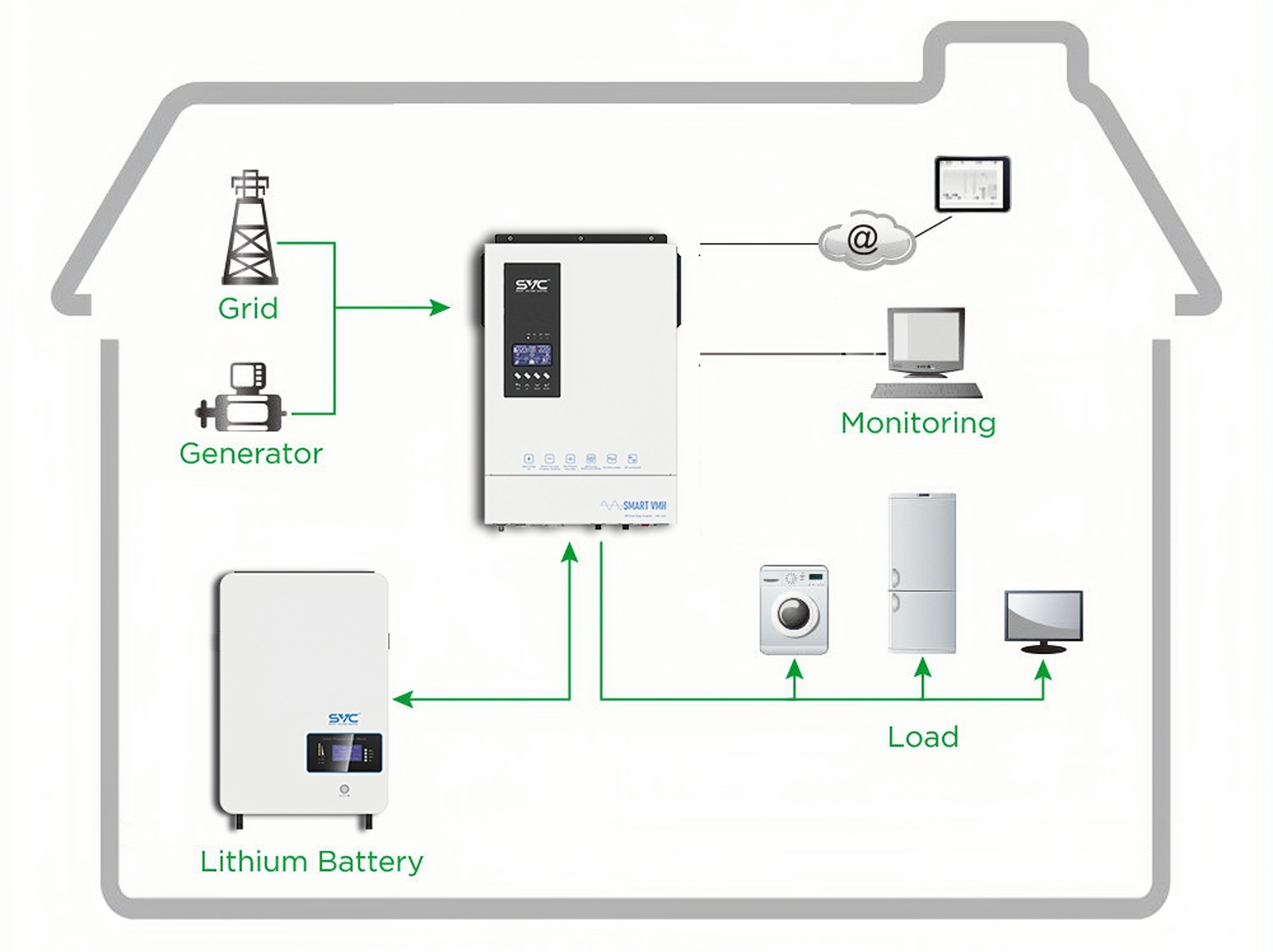
Are you live in an area where power cuts are frequent and long? If yes, you may have considered installing an inverter and battery system for your home. An inverter and battery system can provide you with uninterrupted power supply during blackouts, and also help you save money and energy by using solar power or grid power. But how do you choose the best inverter and battery combination for your needs? In this blog post, we will answer all these questions and more.
What are the factors that you need to consider before buying an inverter and battery combination system?
Your power requirement: This is the total amount of power that you need to run your appliances and devices during a power outage. You can calculate this by adding up the power ratings of all the items that you want to use with the inverter.
Your inverter capacity: This is the maximum power that the inverter can deliver at a time. It is measured in VA (volt-ampere) and should be higher than your power requirement. You can find the VA rating of the inverter by dividing your power requirement by the power factor (efficiency) of the inverter. The power factor is usually between 0.6 and 0.8. For example, if your power requirement is 634 watts and the power factor is 0.7, your inverter capacity is 634/0.7 = 906 VA. You can choose an inverter with a VA rating of 900 or 1000 for your home.
Your battery capacity: This is the amount of energy that the battery can store and provide to the inverter. It is measured in Ah (ampere-hour) and determines the backup time of the inverter. You can calculate the battery capacity by multiplying your power requirement by the backup time (in hours) and dividing by the battery voltage (usually 12V). For example, if you want a backup time of 3 hours and your power requirement is 634 watts, your battery capacity is (634*3)/12 = 158.5 Ah. You can choose a battery with a capacity of 150 or 180 Ah for your home.
The type of inverter and battery: There are different types of inverters and batteries available in the market, such as pure sine wave, modified sine wave, and square wave inverters, and flat plate, tubular, and lithium-ion batteries. They differ in their quality, compatibility, efficiency, durability, and cost. You should choose the type that suits your needs and budget.
The brand reputation, warranty, and cost: You should also consider the brand reputation, warranty, and cost of the inverter and battery system. You should look for a reliable and reputable brand that offers a good warranty and after-sales service. You should also compare the prices of different models and brands and choose the one that offers the best value for money.
SVC Inverter and Battery Combination System
The difference between off-grid and on-grid solar energy
Solar Panel and Batteries Wiring
Related Article