Can a Hybrid Inverter Switch Automatically During a Power Outage Without Restarting Work Devices in Nigeria?
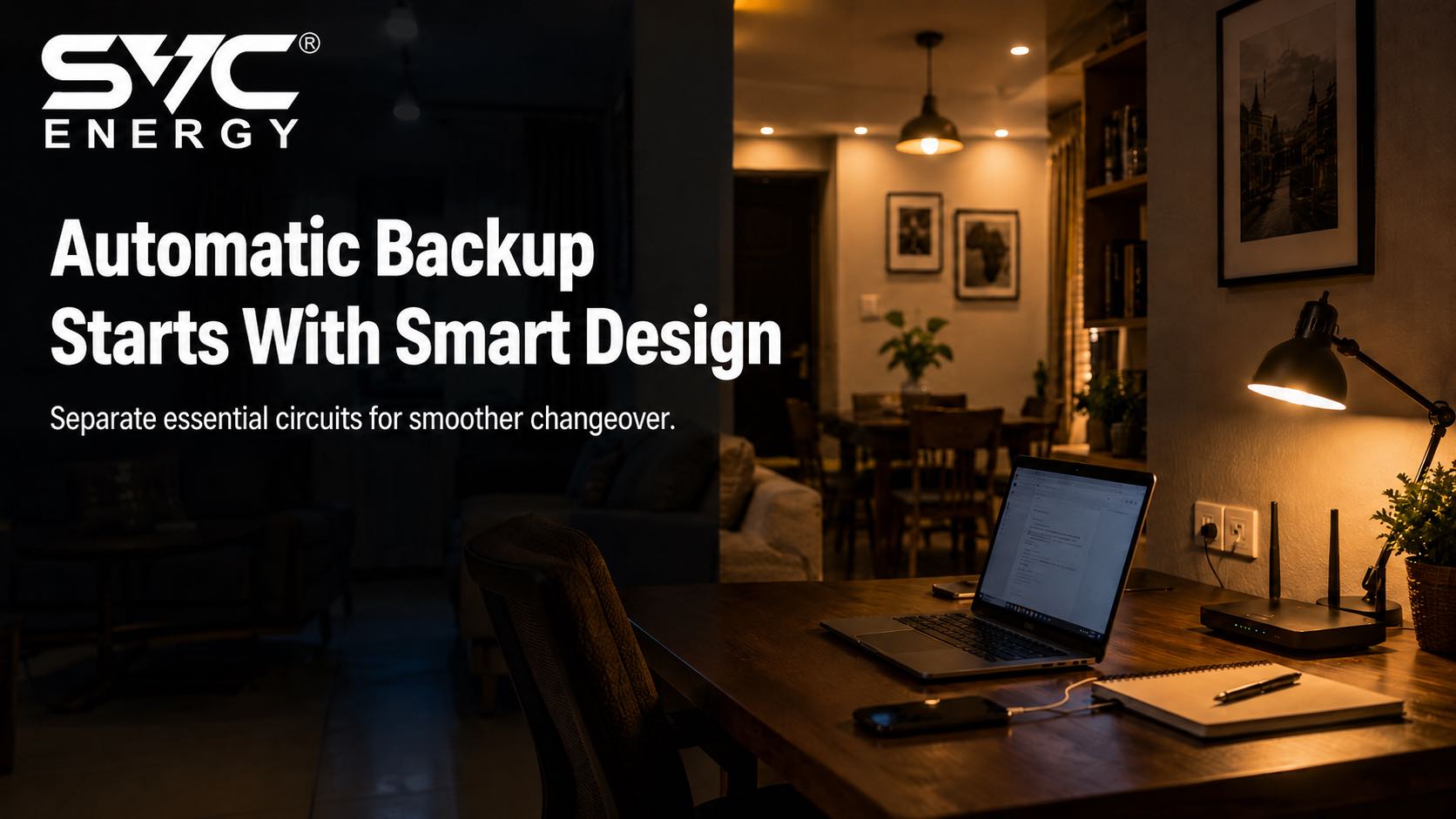
Can a Hybrid Inverter Keep Your Work Devices On During a Nigerian Power Outage?
For Nigerian homes, home offices and small businesses, a hybrid inverter can switch automatically from the grid to battery power during an outage. However, whether your laptop, router, modem, CCTV system or desktop computer stays on without restarting depends on the inverter’s transfer time, the way essential circuits are wired, the battery’s condition and the actual load. A system designed for critical loads can make the changeover feel almost seamless; an overloaded or poorly configured system may still cause a restart.
Quick Answer
Yes. A properly designed hybrid inverter system can switch automatically from grid power to battery backup during an outage. However, whether a laptop, router, modem, CCTV system or desktop computer stays on without restarting depends on the complete system design—not only the inverter’s advertised capacity.
What Does “Automatic Switching” Mean?
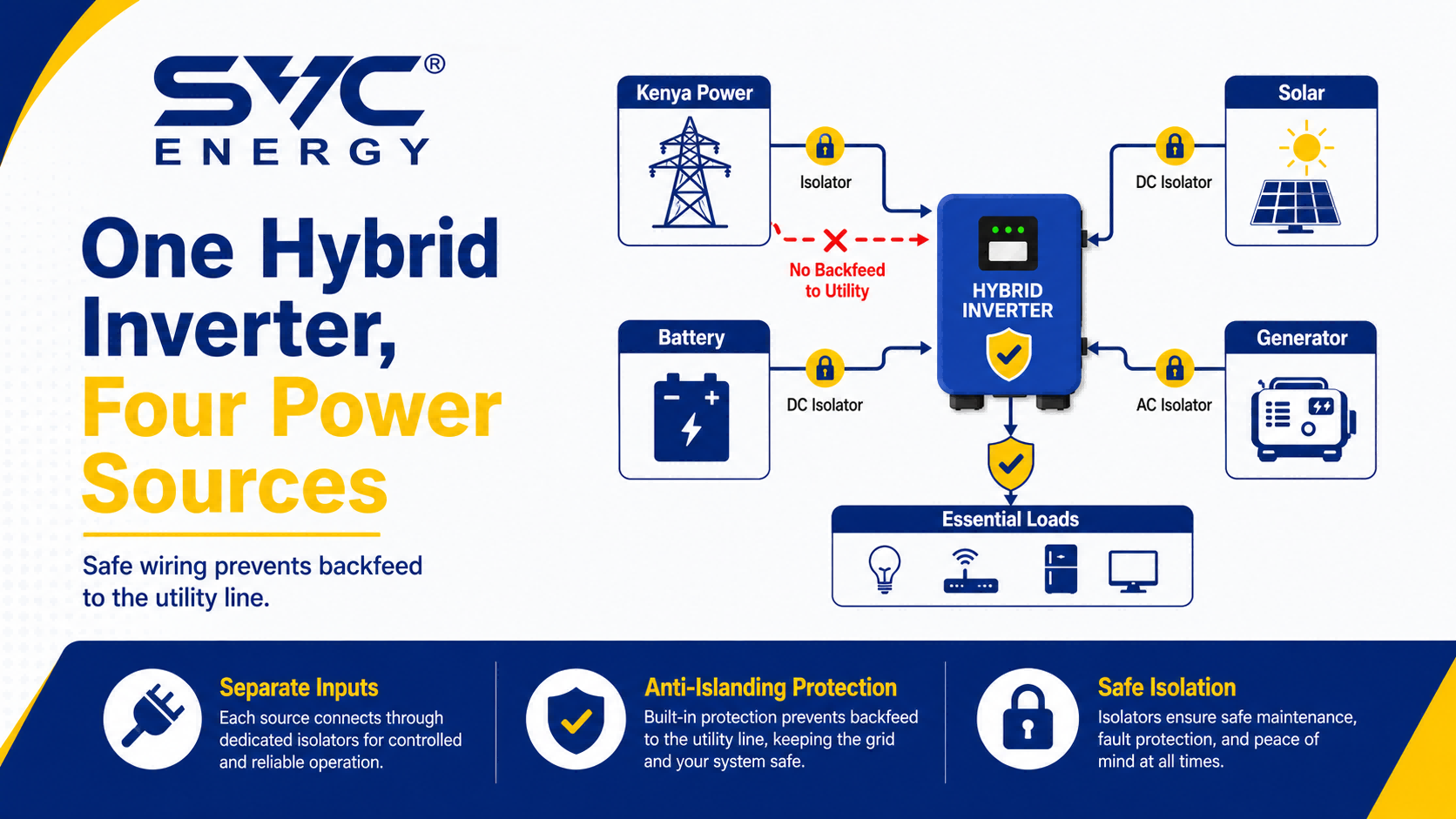
A hybrid inverter monitors the grid. When grid power fails, it disconnects from the grid and supplies selected loads from the battery and, when available, solar PV. When grid power returns, it can switch back and recharge the battery according to the system settings.
The key number is transfer time: the short interval between grid loss and battery backup taking over. Some sensitive devices can tolerate only a very brief interruption. A router may reboot after a short power break, while a desktop PC, monitor, network switch or office equipment may respond differently depending on its own power supply.
Transfer Time
Which Devices Should Be Placed on the Backup Output?
The most reliable approach is to separate essential loads from high-power appliances.
Essential Loads
- ✓Internet router and modem
- ✓Laptop, desktop PC and monitor
- ✓Phone chargers
- ✓A few LED lights
- ✓CCTV, access control or a small network switch
- ✓A small fan, if it fits the load plan
High-Demand Appliances
- —Air conditioners
- —Electric irons
- —Kettles
- —Water heaters
- —Pumps and compressors
- —Large freezers
High-demand appliances should normally be kept off the critical backup circuit unless the inverter and battery have been sized specifically for them.
Dual AC Output for Load-Priority Design
SVC hybrid inverter models from 3.5 kW to 11 kW, except the 3.5 kW model, offer dual AC outputs. This supports a practical load-priority design: critical devices can be placed on the essential output, while non-essential appliances are separated or managed according to the system’s power availability.
Why Do Work Devices Still Restart After an Outage?
A restart does not always mean the inverter is faulty. Common causes include:
The Inverter Is Overloaded
If a refrigerator compressor, pump or other high-starting-current appliance is connected to the same output as your router and PC, the inverter may see a sudden surge when the grid fails. That can trigger protection or cause a voltage dip large enough for sensitive equipment to restart.
The Battery Is Low or Not Ready
A hybrid inverter needs enough available battery power to take over. If the battery has reached its low-voltage cutoff, has an incorrect communication setting or is not charging correctly, backup may not start as expected.
The Critical Loads Were Not Separated
If the entire house or shop is connected to one backup output, the system must carry every active appliance during the outage. A dedicated essential-load circuit makes the system more predictable and protects work devices from unnecessary demand.
Wiring or Settings Were Not Commissioned Properly
Incorrect neutral wiring, loose terminals, unsuitable battery parameters or wrong output-priority settings can affect changeover performance. The installer should test the system by simulating a grid outage before handover.
A Practical Setup for a Nigerian Home Office
A good starting point is to list each device that must stay on during an outage and add its normal power demand. Do not use only the inverter’s headline kW rating. Consider startup power, expected outage duration, battery capacity and how quickly the battery can recharge when grid power or solar returns.
For a home office, keep the router, laptop or desktop, monitor, lights and communications equipment on the essential circuit. If you need air conditioning or refrigeration during outages, include those loads in a separate sizing calculation. Their power demand and startup behaviour can change the required inverter and battery capacity substantially.
Commissioning Checklist Before You Rely on the System for Work
Before treating any solar-battery system as business-critical, ask the installer to verify:
- ✓Grid-to-battery transfer using your actual router, PC and monitor
- ✓Essential and non-essential circuits are clearly separated
- ✓Battery type, communication and low-voltage settings are correct
- ✓Inverter capacity accounts for surge loads, not only running watts
- ✓The system recharges correctly from solar, grid or generator where applicable
- ✓You know which appliances must remain off during an outage
- ✓You have a clear support contact and commissioning record
What About Exceptionally Sensitive Equipment?
For very sensitive equipment, consider an appropriately sized UPS as an additional buffer. A UPS can bridge exceptionally sensitive loads and provide a second layer of continuity, while the hybrid inverter supplies longer-duration backup power.
Automatic Switching Works Best as Part of a Complete System Design
Yes, a properly designed hybrid inverter system can switch automatically during a Nigerian grid outage and keep suitable work devices running. The result depends less on a single product claim and more on a complete design: fast transfer time, correct battery configuration, a dedicated essential-load circuit and realistic load management. Start with the devices that truly cannot go off, then size the inverter and battery around that priority list.
Planning Backup Power for Your Home or Business?
Start with the devices that cannot be interrupted, then size the inverter, battery and solar array around your actual priority loads.
Contact SVC EnergyWhy Does My Solar System Still Fail After Installation in Zambia?
For a Kenyan Milk Bar or M-Pesa Shop, Is Battery Backup Cheaper Than Losing Sales During Outages?
Related Article