Hybrid Solar Energy Storage System Integrated with Grid and Generator in African Context
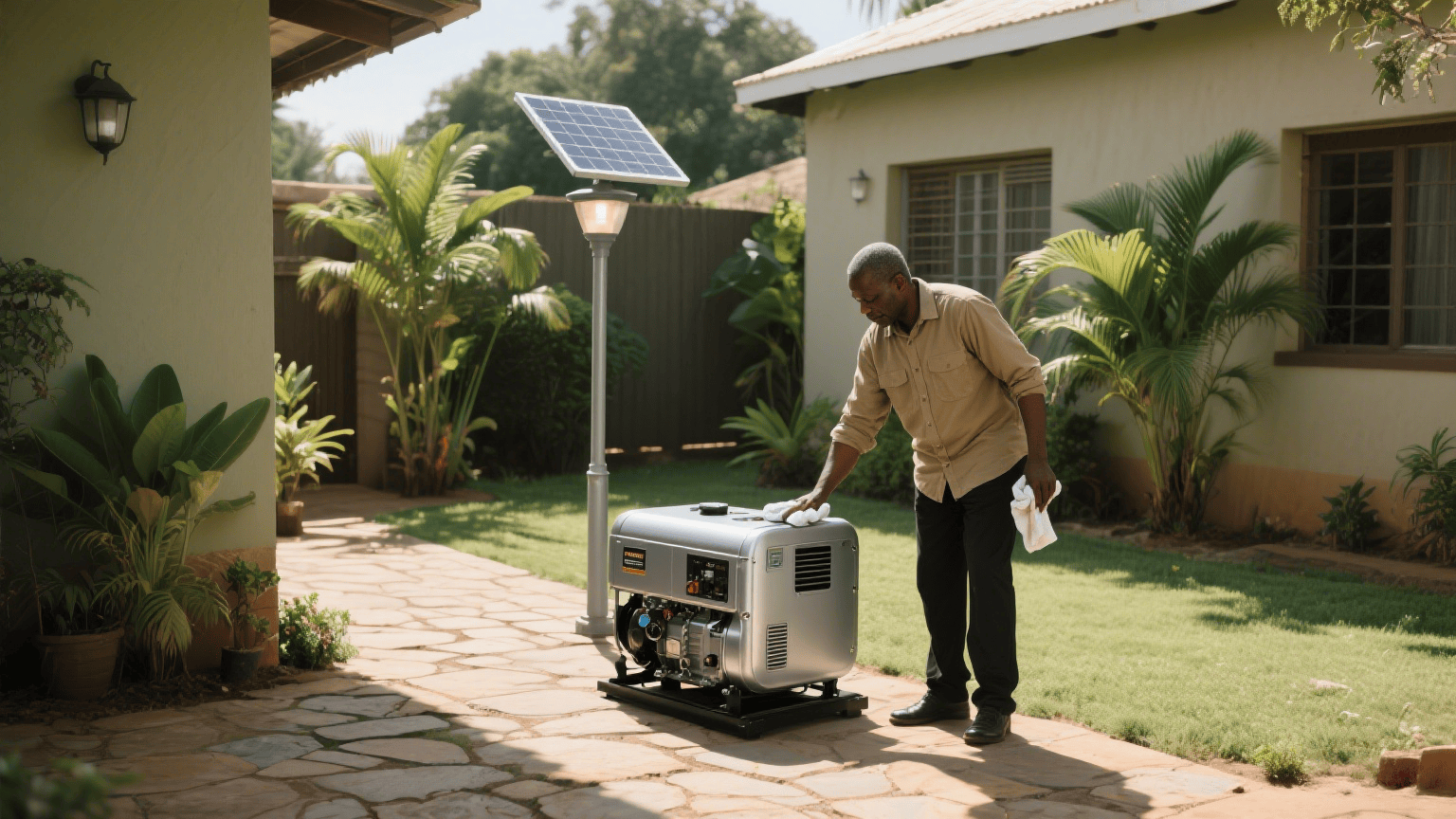
Hybrid Solar Energy Storage System Integrated with Grid and Generator in African Context
In many African countries, the power supply situation is characterized by the following aspects:
- Unstable grid: Frequent blackouts, voltage fluctuations, and limited coverage are common issues.
- Widespread use of diesel generators: They are employed to compensate for grid failures but come with high costs, excessive noise, and pollution problems.
- Abundant solar resources: With high irradiation levels throughout almost the entire year, solar energy holds great feasibility.
- Diverse electricity demand: Ranging from small rural households to urban commercial facilities, all require reliable and continuous power supply.
Advantages of Adding Solar + Storage
Reduce diesel consumption
Solar PV combined with battery storage shortens the running time of diesel generators, significantly reducing fuel costs.
Lower environmental impact
It minimizes carbon emissions and noise pollution, thereby improving living and working conditions.
Enhanced energy security
Solar + storage systems can provide backup power when the grid fails, ensuring the protection of critical loads.
Cost-effective
As the prices of solar panels and batteries continue to decline, hybrid systems are becoming increasingly affordable.
System Explanation
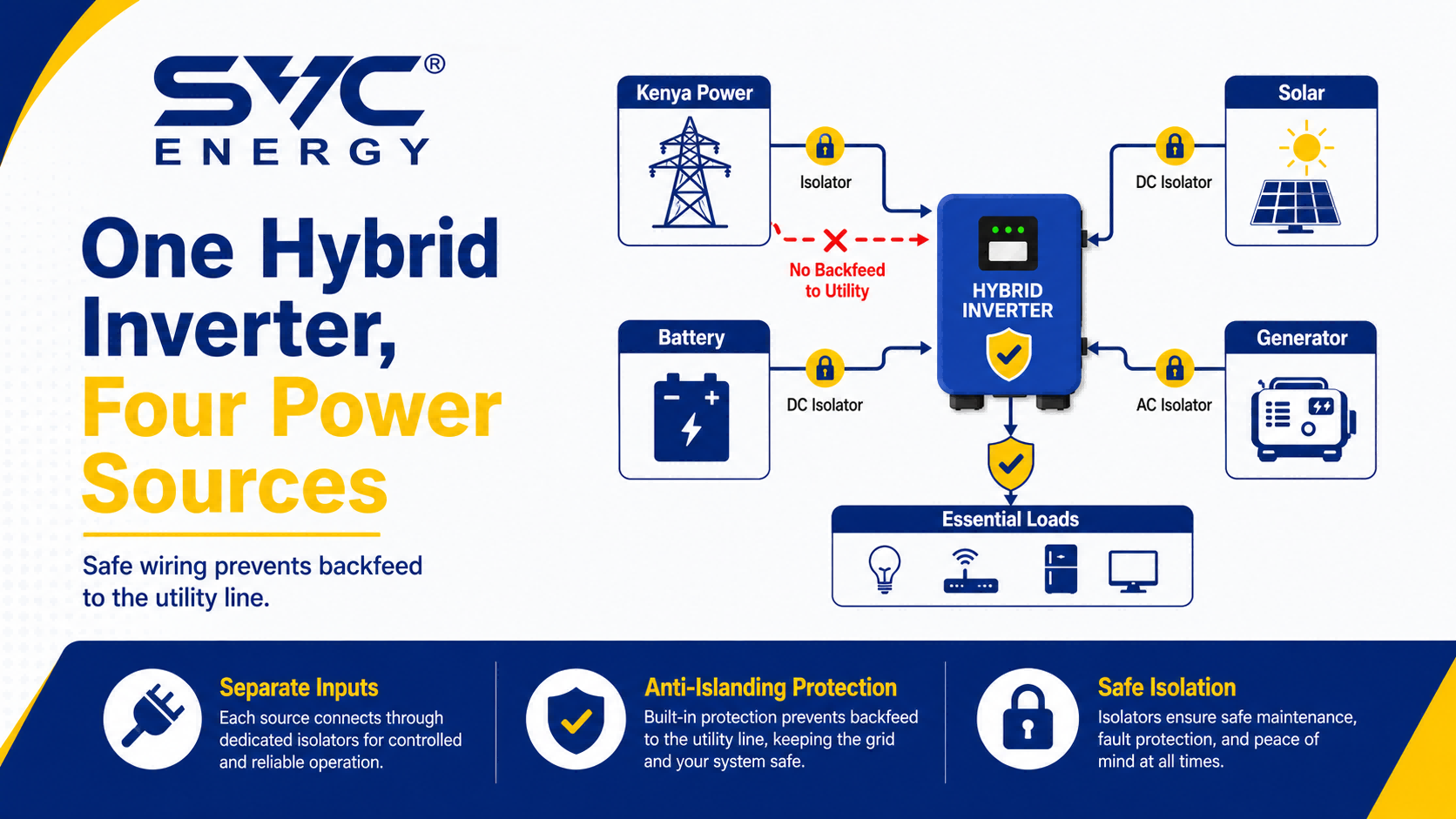
Hybrid Inverter
- Connects to solar PV, battery storage, and the grid.
- Gives priority to using solar energy for daytime loads and battery charging.
- Automatically manages battery discharge when solar energy is insufficient.
ATS (Automatic Transfer Switch)
- Monitors the availability of the grid.
- Automatically starts the generator when both the grid and battery are unavailable.
- Switches back to the grid automatically once it is restored.
System Logic
- During the day, loads are supplied by solar energy, and excess energy is used to charge the battery.
- If solar energy is insufficient, the battery discharges to supply the loads.
- When the battery is depleted, the system switches to the grid for power supply.
- In case of grid failure and an empty battery, the ATS starts the generator.
Practical Considerations for Africa
- Grid regulations: It is necessary to check local rules regarding net-metering or feed-in tariffs.
- Generator compatibility: Some older generators have poor voltage and frequency stability, which requires additional synchronization devices.
- Battery sizing: It depends on average loads and typical grid outages (for example, 5kWh / 10kWh / 20kWh systems).
- Maintenance and training: Local electricians should receive training to properly maintain batteries and hybrid inverters.
Recommendations
- Urban areas: Equip with 5–20kWh batteries and 5kWp or larger solar PV, and keep the generator as an emergency backup.
- Rural or off-grid areas: Use solar + battery as the primary power source, and the generator only as an emergency backup.
- Policy support: Many African governments already provide solar subsidies or zero import duties, making hybrid systems more appealing.
In summary, integrating solar energy storage into an existing grid + diesel generator setup creates a resilient, cost-effective, and sustainable energy supply that is well-suited to African conditions.
In this hybrid solar energy storage system applicable to the African context, SVC products can play an important role. Since African grids often have voltage fluctuations, and the operation of solar PV, battery storage, generators, and other equipment in the hybrid system may also cause voltage instability, SVC can effectively stabilize the voltage. It ensures that the voltage supplied to various loads, whether small rural household appliances or sensitive equipment in urban commercial facilities, remains within a stable range, thus improving the reliability and efficiency of the entire hybrid system.
Lights flicker when you turn on the AC? You might be using the wrong Inverter!
Why 314Ah Cells Are the Smart Choice for Today’s Energy Storage Systems?
Related Article