Protecting Zambian Factories: How Industrial Solar Handles ZESCO Power Surges

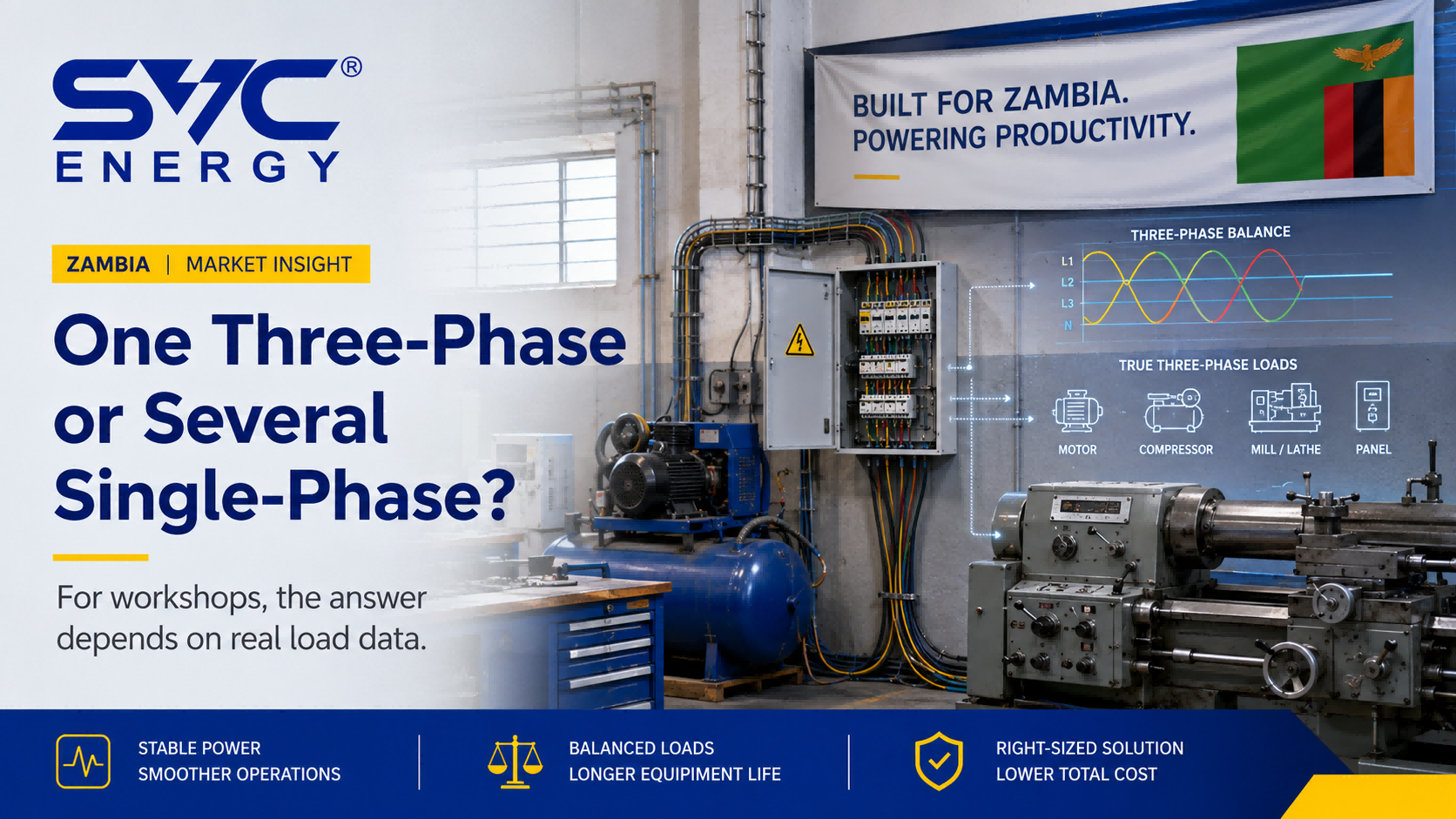
The "Power-Back" Threat: Why Your Breakers Trip In Lusaka and the Copperbelt, ZESCO load shedding isn't the only problem; it’s the moment the power returns. When the grid is restored after a 12-hour blackout, a massive voltage spike—often far exceeding the standard 230V—surges through the lines. For a factory or commercial lodge, this "grid spike" is lethal. If your breakers are tripping, it’s a sign that your system is struggling to reject this dirty energy. Without industrial-grade protection, these surges can bypass standard inverters and permanently damage your heavy machinery and server racks.
The Math & Tech Deep Dive: Fortress-Level Surge Protection To survive the Zambian grid, a commercial solar system needs more than just a battery; it needs a multi-layered defense. The SVC RPS 12KW + 16KWh All-in-One system is engineered with a specialized dual-protection architecture that sets it apart from standard residential units:
-
DC Side: Type II SPD (Surge Protective Device): This is your primary defense against atmospheric disturbances and large-scale surges coming from the solar array. Type II protection is rated to handle high-impulse currents, preventing lightning-induced surges from reaching the core electronics of your 12KW inverter.
-
AC Side: Type III SPD: This is the critical "fine-tuning" protection for the grid side. When ZESCO power returns with a high-voltage spike, the Type III SPD clamps the residual overvoltage to a level that your sensitive industrial equipment can handle.
-
UPS-Grade Switching (<10ms): Combined with these SPDs, the RPS 12KW features a ultra-fast transfer time. The moment the grid becomes unstable or spikes, the system disconnects from the dirty grid and switches to the clean, stable power of the 314Ah Grade A lithium cells in less than 10 milliseconds—faster than a human eye can blink.
Checklist: Is Your Facility Truly Surge-Proof? Before the next ZESCO outage, ensure your power strategy meets these industrial standards:
-
Verify SPD Ratings: Ensure your solar system has both DC (Type II) and AC (Type III) protection. Residential-grade systems often skip these to save costs.
-
Check Grounding (Earthing): Surge protectors are useless without a high-quality copper earth pit. Have your installer test the resistance levels in your Lusaka or Ndola facility.
-
Isolate Heavy Inductive Loads: Use the RPS 12KW’s Dual AC Outputs to separate heavy motors from sensitive office electronics, providing an extra layer of operational safety.
-
Monitor via App: Use the SVC Smart App to track real-time grid voltage. If you notice consistent high-voltage patterns when ZESCO returns, adjust your inverter’s high-voltage disconnect threshold.
How to "Jumpstart" a Sleeping Lithium Battery After Days of Rain in Nigeria
How to Make Your Solar Panels Work Earlier During Kenya's Rainy Season
Related Article