Is an All-in-One Solar Battery System Easier to Install in a Kenyan Apartment or Townhouse?

Yes, an all-in-one solar battery system is usually easier to install in a Kenyan apartment or townhouse, especially when the buyer wants backup for lights, Wi-Fi, TV, fridge, phone charging, security, and a few essential sockets.
The reason is simple: apartments and townhouses often have limited space, shared roofs, stricter estate rules, and less room for messy wiring. An all-in-one system combines the inverter and battery into one matched unit, so installation can be cleaner, faster, and easier for the homeowner to understand.
But “easier to install” does not mean “install anywhere without planning.” In Kenya, the installer still needs to check the home’s load list, wiring, ventilation, battery location, PV access, and backup circuit.
Why this question is common in Kenya
A Kenyan apartment or townhouse owner is usually not asking for a full off-grid system. The real question is closer to this:
“Can I get a neat backup system that keeps my essential appliances running without turning my house into a construction site?”
That is a very different question from a farm, factory, or large villa solar project.
In Nairobi, Mombasa, Kisumu, Nakuru, and other urban areas, many homes are already connected to the grid. The buyer may not need a huge solar system. They may need a stable backup solution for power interruptions, rising electricity-use pressure, work-from-home needs, refrigeration, internet, and evening comfort.
Public reporting on Kenya’s electricity access shows how important reliable power is for homes and small businesses. AP reported in April 2026 that electricity access can extend shop hours, support refrigeration, and improve household daily life in Kenya. At the same time, recent discussion around large power demand, including data-center capacity pressure, shows that energy reliability and capacity planning remain active topics in Kenya’s power market.
For an urban home buyer, that background turns into a practical need: keep the home working when the grid is not enough.
Where an all-in-one system makes installation easier
The biggest advantage is fewer separate parts.
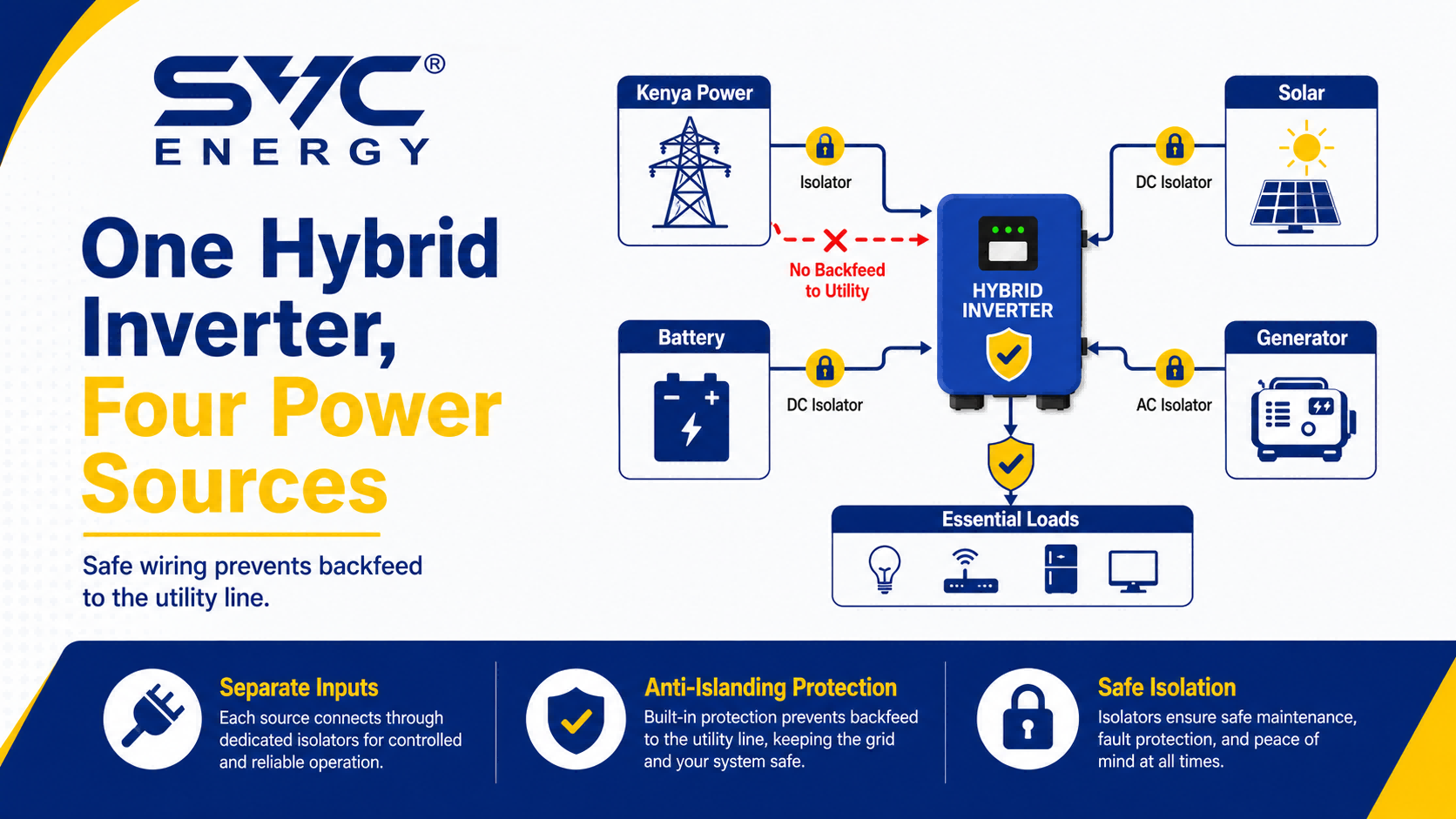
In a traditional setup, the installer may need to match a hybrid inverter, lithium battery, communication cable, breaker, monitoring device, battery cabinet, and wiring layout. If the inverter and battery are from different brands, communication settings can become a real problem.
An all-in-one solar battery system reduces that friction because the inverter and battery are already matched in one product design. For Kenyan apartments and townhouses, that matters for four reasons.
First, space is limited. A compact all-in-one unit can fit better in a utility room, garage corner, indoor service area, or protected wall-side location.
Second, wiring is cleaner. Fewer exposed cables make the system look more acceptable in a finished home.
Third, the buyer understands it faster. Instead of explaining several separate boxes, the installer can explain one backup unit, one app or display, and one essential-load circuit.
Fourth, after-sales support is easier. When inverter and battery communication are pre-matched, troubleshooting is usually clearer than with a mixed-brand system.
For an apartment: keep the system small and essential
In a Kenyan apartment, the best all-in-one setup is usually not a large system. It should focus on essential backup.
Typical apartment backup loads may include:
Lights
Wi-Fi router
TV
Laptop charging
Phone charging
Small fridge
Security camera
A few selected sockets
This is the kind of buyer who may fit an SVC 1.2kW + 4kWh solar generator for very basic backup, or an SVC 3.6kW + 8kWh all-in-one system when the home needs more comfortable evening backup.
The key is to avoid promising that a small apartment system will run everything. Kettles, irons, electric cookers, heaters, and large air conditioners should normally stay off the backup circuit unless the system is specifically sized for them.
For apartments, the main installation question is not only battery size. It is also permission. If the system includes solar panels, the homeowner may need approval from the landlord, building manager, or estate association. If roof access is not available, the buyer may still use the battery as a grid-charged backup system, but solar charging may be limited.
For a townhouse: all-in-one can support a stronger home backup plan
A townhouse usually gives the installer more options. There may be a garage, utility area, small compound, or better roof access for PV panels. That makes an all-in-one system more attractive.
A townhouse may need backup for:
Fridge and freezer
Wi-Fi and home office equipment
Lights
TV
Security system
Water pump
Fans
Selected kitchen or bedroom sockets
For this kind of home, an SVC 6kW + 10.5kWh all-in-one system may be more suitable than a small entry backup unit. It gives stronger inverter capacity and more battery storage for a family that wants longer backup and more flexible daily use.
If the townhouse has heavier loads, occasional AC use, a pump, or longer outage hours, the system may need a larger battery or a separate hybrid inverter and battery design. In that case, easy installation should not override proper sizing.
When all-in-one is not the best choice
An all-in-one system is easier for many homes, but it is not always the best answer.
If the customer wants a large PV array, long backup for heavy AC loads, multiple battery modules, or three-phase power, a separate hybrid inverter and battery bank may be more flexible.
If the apartment has no safe location for the battery, poor ventilation, no approved wiring route, or strict building rules, the project needs more planning.
If the home already has a good inverter and only needs more battery capacity, a standalone lithium battery may be more practical than replacing the whole system.
So the correct answer is: all-in-one is easier when the goal is clean essential backup; separate systems are better when the goal is large, customized, expandable power.
A practical installation checklist for Kenyan homes
Before choosing the system, the installer should ask the homeowner five questions.
What must stay on during an outage?
How many hours of backup are needed?
Is there a safe indoor or protected location for the unit?
Can solar panels be installed on the roof or compound?
Should the backup circuit exclude high-load appliances?
For most apartments, the answer should lead to a compact essential-load system.
For many townhouses, the answer may lead to a 6kW + 10.5kWh all-in-one system or a larger hybrid setup.
For homes with pumps, AC, or heavy appliances, the installer should do a proper load calculation before recommending battery size.
The buyer-friendly way to explain it
For Kenyan homeowners, the clearest explanation is this:
An all-in-one solar battery system is like a pre-matched backup power unit. It is easier to install because the inverter and battery are already designed to work together. It is best for homes that want clean backup for daily essentials, not complicated wiring or mixed-brand troubleshooting.
That message fits the apartment and townhouse market because the buyer is often looking for less disruption, not a complex solar engineering project.
Conclusion
An all-in-one solar battery system is usually easier to install in a Kenyan apartment or townhouse when the goal is essential home backup. It reduces wiring, saves space, simplifies inverter-battery matching, and gives the homeowner a cleaner system to understand and monitor.
For apartments, the best fit is usually compact backup for lights, Wi-Fi, TV, charging, and small fridge loads. For townhouses, a stronger all-in-one system can support more family loads, especially when roof access and a safe installation area are available.
The safest approach is to match the system to the home’s real backup list, not to a generic product size. Easy installation matters, but correct sizing and safe wiring matter more.
What Questions Should I Ask a Solar Installer Before Paying for an Inverter and Battery Package in Nigeria?
How Many kWh of Battery Storage Does a Shop or Clinic Need During Daily Load Shedding in Zambia?
Related Article