Which Lithium Battery Features Matter Most for Kenyan Installers: CAN, RS485, WiFi or App Monitoring?

Which Lithium Battery Features Matter Most for Kenyan Installers: CAN, RS485, WiFi or App Monitoring?
For Kenyan solar installers, CAN and RS485 matter before WiFi and app monitoring. WiFi and apps are useful for customers and after-sales service, but they cannot fix a battery that does not communicate properly with the inverter.
In real installation work, the first question is not “Does the battery have an app?” The better question is: “Can this battery talk correctly to the inverter, charge safely, show the right state of charge, and make troubleshooting easier later?”
Start with the Job Site, Not the Feature List
A homeowner in Nairobi may ask for an app. A shop owner may ask how long the battery will last. A distributor may ask which battery is easy to sell. But the installer has a different problem: the system must work on site, with the inverter already chosen or available in the local market.
That is why lithium battery features should be ranked by installation risk:
| Installer Question | Feature That Matters Most |
|---|---|
| Will the inverter read the battery correctly? | CAN or RS485 |
| Can I commission the system without repeated errors? | Compatible protocol and clear wiring |
| Can I diagnose problems later? | BMS data, RS485, monitoring |
| Can the customer understand battery status? | App monitoring |
| Can I support the site remotely? | WiFi or web monitoring |
| Can the system expand later? | Parallel support and stable BMS communication |
For installers, communication is not a marketing detail. It decides how smoothly the job can be delivered.
CAN and RS485 Solve the First Installation Problem
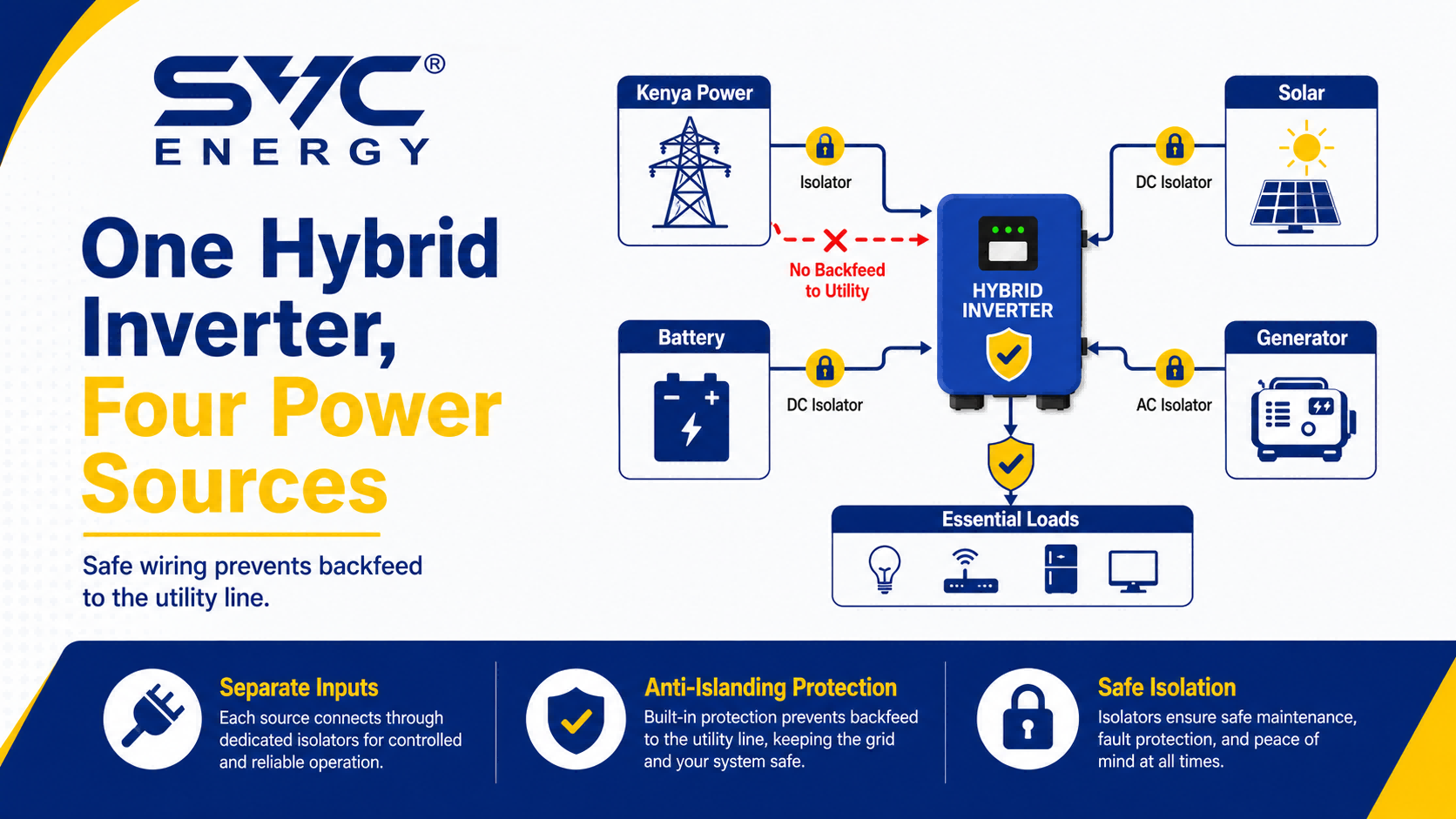
CAN and RS485 are the features that help the inverter and battery exchange useful information. This can include state of charge, voltage, current, charge limits, discharge limits, alarms, and protection status.
If this communication works, the system is easier to commission. If it fails, the installer may face warning codes, wrong battery percentage, incomplete charging, early shutdown, or customer complaints after the first night of use.
CAN is commonly used for direct inverter-battery communication. RS485 is also important for many inverter brands, battery setup, parallel battery systems, and service diagnostics.
For Kenya’s mixed inverter market, the safest choice is a lithium battery that supports both CAN and RS485. This gives installers more flexibility when working with different hybrid inverter brands and project sizes.
WiFi and App Monitoring Help After the System Is Working
WiFi and app monitoring become valuable after the core communication is stable. They help the customer see battery status and help the installer understand what is happening before visiting the site.
This is useful in real Kenyan projects where service travel can take time, especially for rural homes, shops, farms, clinics, and branch offices.
App monitoring can help answer practical questions:
- Is the battery charging during the day?
- Is the load higher than expected?
- Did the inverter shut down because of low battery or overload?
- Is the battery reaching full charge?
- Is the customer using heavy appliances at night?
This kind of visibility can reduce unnecessary return visits and make after-sales service easier. But monitoring should support the installation. It should not replace correct inverter-battery communication.
The Feature Kenyan Installers Should Not Ignore: Smart BMS
A smart BMS is the protection layer inside the lithium battery. For installers, it matters because it helps protect the battery from overcharge, over-discharge, overcurrent, short-circuit, and temperature problems.
In daily backup systems, especially for homes and small businesses, the battery may cycle often. A smart BMS helps the system operate more safely and gives installers useful data for service and troubleshooting.
For installer confidence, the battery should not only have capacity on paper. It should have a BMS that can manage real site conditions.
A Practical Ranking for Kenyan Installers
If you are choosing lithium batteries for Kenyan solar projects, rank the features this way:
- CAN and RS485 compatibility with common hybrid inverters
- Smart BMS protection and readable system data
- Parallel expansion support for future capacity growth
- WiFi or web monitoring for remote support
- App monitoring for customer visibility
This order reflects how installations usually work. First, the system must communicate. Then it must protect itself. Then it should be easy to expand and support.
How SVC Lithium Batteries Fit Installer Needs
SVC lithium batteries are designed for practical solar storage projects where installers need compatibility, protection, monitoring, and future expansion.
SVC standalone lithium batteries use LiFePO4 chemistry, Grade A battery cells, smart BMS management, app monitoring, and wide inverter compatibility. They also support parallel expansion up to 16 units, which is useful for installers serving homes, shops, offices, farms, and small commercial sites.
For Kenyan projects that need real capacity and longer backup, SVC’s 10.5kWh and 16.08kWh lithium battery options can be paired with suitable hybrid inverters. For buyers who prefer a simpler installation, SVC all-in-one solar storage systems combine inverter and battery in one unit, helping reduce wiring complexity and communication mismatch.
Final Takeaway
For Kenyan installers, the most important lithium battery features are the ones that reduce site risk.
CAN and RS485 help the battery communicate with the inverter. Smart BMS helps protect the system. WiFi and app monitoring help customers and installers understand what is happening after commissioning.
A battery with strong communication and monitoring is easier to install, easier to explain, and easier to support. That is what matters most on real Kenyan solar projects.
FAQ
Is CAN better than RS485 for lithium batteries?
Not always. CAN is common for inverter-battery communication, while RS485 is also widely used for inverter communication, setup, parallel systems, and diagnostics. Kenyan installers should prefer batteries that support both.
Is WiFi more important than CAN or RS485?
No. WiFi is useful for monitoring, but CAN and RS485 are more important for correct inverter-battery communication.
Why does app monitoring matter for installers?
App monitoring helps customers see battery status and helps installers identify load, charging, and fault issues before visiting the site.
CTA
Need lithium batteries that are easier to commission, monitor, and expand for Kenyan solar projects? SVC can support installers, distributors, and EPC partners with LiFePO4 battery options, hybrid inverter matching, and all-in-one solar storage solutions.
How to Protect Solar Panels and Batteries from Theft, Heat and Bad Wiring in Nigeria
Do I Still Need a Solar Battery in Zambia If Load Shedding Has Reduced in 2026?
Related Article