Remote Solar for Rural Kenya: How to Manage Your Parents' System from Nairobi

Yes, You Can Be the Virtual Technician If you work in Nairobi but are setting up a solar system for your parents in rural Kenya, your biggest anxiety is likely maintenance. What happens if the system trips? What if the battery drains and the house goes dark? For elderly parents, navigating complex inverter error codes or waiting days for a local technician to arrive is stressful and expensive.
The good news is that distance is no longer a barrier. By choosing a modern, intelligent setup like the SVC Energy All-in-One System, you can actively monitor, manage, and even troubleshoot the entire solar installation directly from your office in Nairobi. Your parents simply enjoy the uninterrupted power, while you act as the virtual engineer.
How the SVC Smart App Bridges the Distance The foundation of remote troubleshooting is visibility. Standard inverters only show data on a small local screen, leaving you blind when your parents call to say "the lights are off."
SVC Energy systems come standard with a Smart Monitoring App and Web portal. As long as your parents’ home has a basic Wi-Fi connection, you have total control from your smartphone in Nairobi.
-
Real-Time Diagnostics: You can instantly see how much solar power the panels are generating, the exact battery percentage (State of Charge), and the current household load.
-
Load Management: If you notice the battery draining unusually fast during the evening, you can call your parents and advise them to turn off a heavy appliance (like a water heater or iron) to ensure they have enough power to last through the night.
-
Error Code Alerts: If KPLC grid fluctuations cause a breaker to trip, the app sends a push notification with the specific fault, allowing you to guide your parents through a simple reset over the phone.
Preventing the "Dead Battery" Panic Call The most common point of failure for rural solar setups happens during the long rainy season. Cloudy days can lead to a completely depleted battery. In older systems, a deeply discharged lithium battery goes into "protection mode" and requires an expensive technician to come and manually "jumpstart" it with a grid charger.
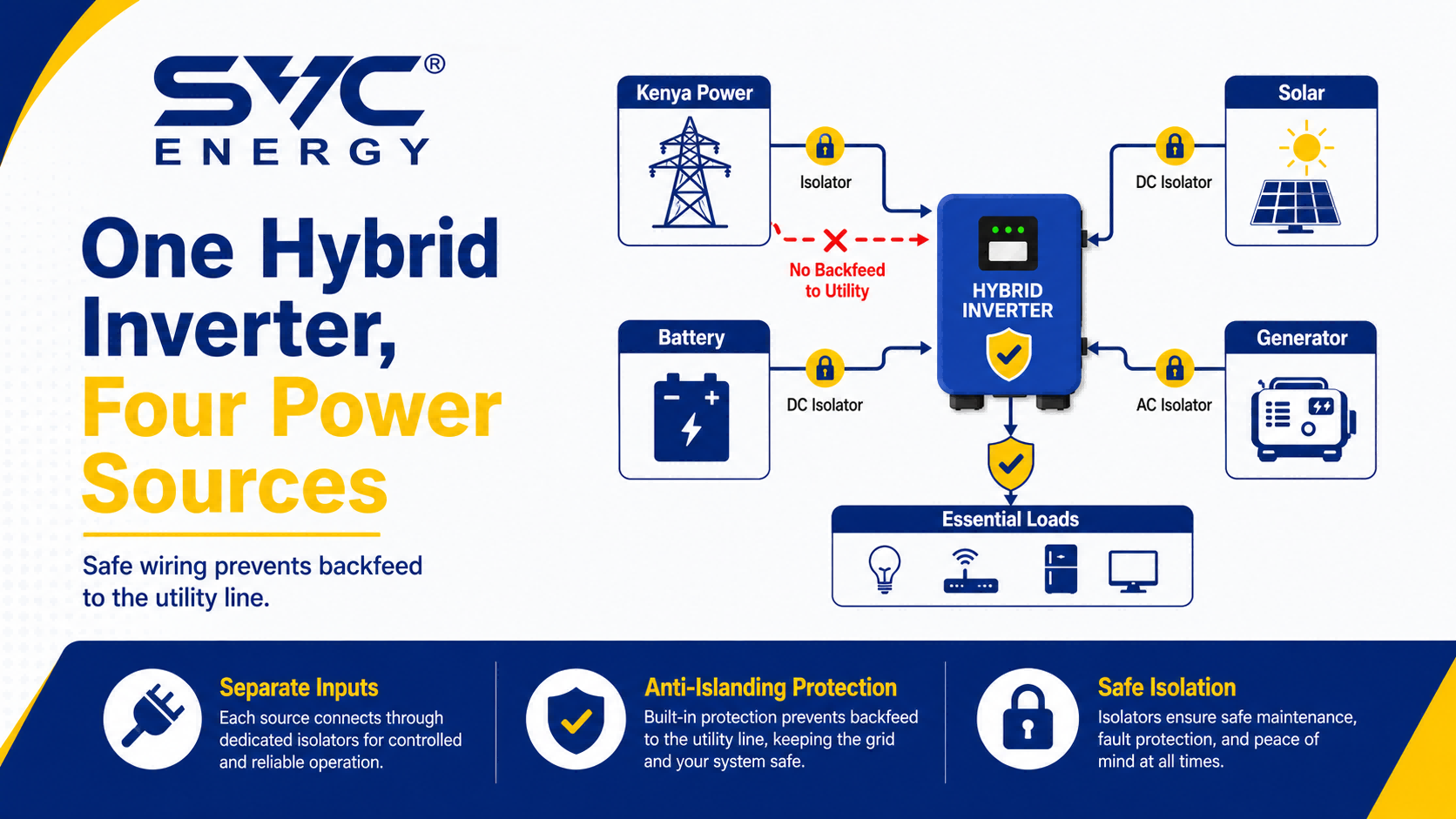
To eliminate this headache, SVC Independent Inverters and All-in-One units feature an automatic Lithium Battery Wake-up function. If the battery drains to 0% and shuts down to protect itself, it doesn't stay dead. The moment the morning sun hits the solar panels, the wide MPPT controller captures the early light, automatically wakes the battery from its sleep state, and begins charging. The system heals itself without anyone needing to touch a button.
The "Plug-and-Play" Advantage for Seniors When installing for non-technical users, complexity is the enemy. Piecing together different brands of batteries and inverters often leads to BMS (Battery Management System) communication failures—a nightmare to diagnose remotely.
By installing an SVC All-in-One Storage System (such as the 3.6KW+8KWh unit), you are providing a factory pre-wired, 3-in-1 compact solution. The inverter and the LiFePO4 battery have pre-matched communication protocols. There is no complex setup, no messy wiring, and no communication drop-outs. It is as reliable and easy to live with as a modern refrigerator, giving both you and your parents total peace of mind.
Why Solar Batteries Drain Fast at Night in Nigeria Even with Small Appliances
Beating ZESCO Token Price Hikes: Why Smart Zambians Are Buying Solar Now
Related Article