How Can Nigerian Families Compare a Solar Loan or PAYG System With Buying Outright?

How Can Nigerian Families Compare a Solar Loan or PAYG System With Buying Outright?
The best comparison is the total amount paid over the same ownership period—not only the deposit or monthly instalment. Include financing charges, installation, maintenance, replacement costs, insurance, service fees and any final ownership payment.
Quick Answer
Compare a solar loan, PAYG plan and outright purchase using the same system capacity, usable battery energy, warranty and service period. Add every payment and cost over the full planning period, then compare ownership rights, maintenance responsibility, equipment quality and the value of any included support.
Why the Lowest Starting Payment Is Not Always the Lowest Total Cost
Nigeria’s DARES programme is expanding access to standalone solar systems and recognises PAYG, consumer financing and lease-to-own models as ways to reduce upfront affordability barriers. However, a lower starting payment does not automatically mean a lower lifetime cost.
REA’s standalone solar programme also places importance on product verification, installation evidence and customer support. This means families should compare not only financing terms, but also the equipment, installation quality and after-sales service included in the offer.
What Costs Should a Family Include?
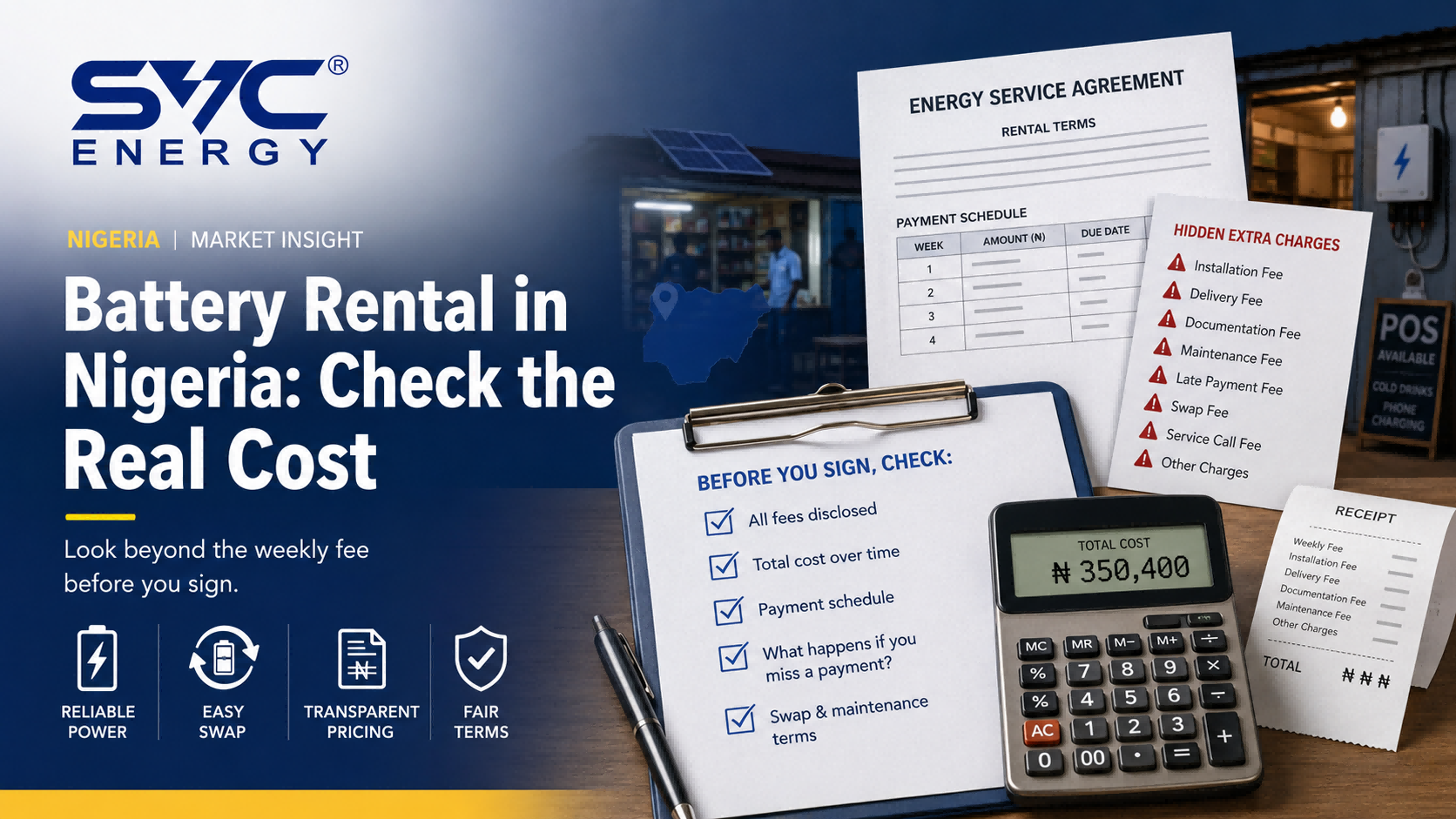
Start by requesting a written quotation that separates the equipment from financing and service costs.
For an Outright Purchase
- Solar panels, inverter and battery price
- Mounting equipment, wiring and protection devices
- Installation and commissioning
- Scheduled maintenance
- Expected battery or component replacement
- Any interest paid if the purchase is funded through a separate bank loan
For a Solar Loan or PAYG Plan
- Deposit
- Total of all weekly or monthly payments
- Interest or financing charge
- Account, monitoring or service fees
- Installation fee
- Late-payment or reconnection charges
- Insurance, if required
- Final buyout or ownership payment
- Maintenance costs not covered by the provider
- Equipment removal or account-closing conditions
Compare Like With Like
The comparison must cover the same system capacity, usable battery energy, warranty and service period. Comparing a small PAYG lighting system with a larger independently purchased home battery system would produce a misleading result.
How Do I Calculate the Total Financing Cost?
Total financed cost = deposit + all instalments + fees + uncovered maintenance + replacement costs + final buyout payment
For example, assume a household receives these two quotations.
Outright Purchase Example
- Outright system price: ₦4,200,000
- Estimated five-year maintenance: ₦300,000
- Battery replacement reserve: ₦1,200,000
Five-year planning cost: approximately ₦5,700,000
Financed Plan Example
- ₦600,000 deposit
- ₦120,000 per month for 48 months
- ₦250,000 in combined administration and service fees
- ₦300,000 maintenance allowance
- ₦1,200,000 replacement reserve
₦600,000 + (₦120,000 × 48) + ₦250,000 + ₦300,000 + ₦1,200,000
Planning cost: ₦8,110,000
This is only a calculation example, not a Nigerian market-price quotation. Actual prices and financing terms must come from the provider’s written offer.
When Can PAYG Still Be the Better Decision?
PAYG or lease-to-own may remain practical when a family cannot safely commit a large amount of cash upfront. It may also offer value if the contract includes installation, remote monitoring, preventive maintenance and reliable fault support.
The Important Question
The important question is not simply, “Is the monthly payment affordable?” It is: What equipment, service and ownership rights will the family have after making every payment?
Ask the Provider
- When does ownership legally transfer?
- Can the system be remotely disabled after a missed payment?
- What happens if the provider stops operating?
- Can another technician repair the system?
- Is the battery replaceable with a compatible product?
- Does early repayment reduce the financing charge?
- Which faults are excluded from the warranty?
How Should Equipment Quality Affect the Comparison?
A cheaper plan can become expensive if it uses a small battery, unclear battery capacity or equipment that cannot be expanded.
- Battery chemistry and nominal energy in kWh
- Recommended usable depth of discharge
- Inverter continuous output
- Solar-panel capacity
- Battery and inverter communication
- Warranty duration and exclusions
- Local availability of replacement parts
- Monitoring and fault-history access
A Measurable Battery Example
SVC’s Phoenix standalone battery uses a 51.2 V / 205 Ah configuration, providing approximately 10.5 kWh of nominal energy. Its documented features include LiFePO4 chemistry, smart BMS monitoring, more than 6,000 cycles and support for parallel expansion. These specifications provide measurable comparison points, but actual household runtime still depends on usable battery settings, inverter losses and appliance consumption.
Should Generator and Grid Savings Be Deducted?
Yes, but calculate them separately.
Record the family’s current monthly spending on:
- Prepaid or post-paid grid electricity
- Petrol or diesel
- Generator maintenance
- Generator oil and repairs
- Charging services or alternative backup power
Do not assume the solar system will eliminate all these costs. A realistic estimate should account for cloudy periods, unusually heavy loads and times when grid or generator charging is still required.
Final Buying Checklist
Before signing a solar financing contract, confirm:
- Cash price and total financed price
- Number and amount of payments
- Final ownership date
- Exact equipment models and capacities
- Installation and protection scope
- Warranty provider and claim procedure
- Remote-disable conditions
- Maintenance responsibilities
- Battery replacement assumptions
- Early-settlement and cancellation terms
Compare Total Cost, Ownership and Support
The right option is the one that fits the family’s cash flow while providing transparent ownership, adequate capacity and dependable long-term support—not simply the lowest deposit.
Frequently Asked Questions
Is PAYG Always More Expensive Than Buying Outright?
Not always. Financing usually adds cost, but included maintenance, monitoring or risk protection may add value. Compare the complete contract.
Should I Compare Monthly Payments With My Electricity Bill?
Only as a first step. Also include generator costs, maintenance, equipment ownership and future battery replacement.
What Is the Biggest PAYG Contract Risk?
A household may focus on the affordable deposit without understanding the total payment, remote-disconnection conditions or whether it owns the equipment at the end.
Need Help Comparing a Solar Financing Offer?
Compare the total financed price, equipment capacity, ownership terms, maintenance responsibilities and long-term support before signing.
Contact SVC EnergyWhat Test Results Should You Collect Before Making a Solar Battery Warranty Claim in Zambia?
What Monitoring Data Should a Kenyan Business Review Before a Solar-Battery Fault Becomes Downtime?
Related Article