Home /News /Industry News /What are the advantages and disadvantages of centralized photovoltaic and distributed photovoltaic? /
What are the advantages and disadvantages of centralized photovoltaic and distributed photovoltaic?
author: SVC ENERGY
2024-04-29
What are the advantages and disadvantages of centralized photovoltaic and distributed photovoltaic?
Photovoltaic (PV) power stations are categorized into centralized and distributed types. Centralized power stations occupy large areas and are severely constrained by national land policies, while China's land resources are quite scarce. In recent years, distributed PV stations have developed rapidly due to their convenience in connecting to the grid and flexibility in site selection. More and more industrial and commercial building rooftops have started installing distributed PV generation systems.
Centralized PV Stations
Centralized large-scale grid-connected PV stations are typically national-level power stations that transmit generated electricity directly to the grid for unified distribution to users. They are characterized by large land occupation, long transmission distances, significant investment, and lengthy construction periods. Specifically, PV arrays are installed on relatively broad areas such as mountainsides, water surfaces, and deserts. After sunlight irradiation, the PV arrays generate DC power, which is then converted to AC power by inverters and connected to the grid via a substation. Centralized PV stations are generally large, usually above 10MW, and increasingly, there are more mega-power stations above 100MW.
The three core elements of centralized PV are land, capital, and policy indicators. Centralized PV projects have large development scales, often occupying land or water surfaces, with multiple ground-based site options, expanding to include new land use models such as hillside, beach, marsh, Gobi, desert, and contaminated land that are idle or abandoned. Once the related procedures are completed and construction is finished, they can continuously enjoy national benchmark tariff subsidies, ensuring stable returns.
Classifications of Centralized Grid-Connected PV Stations:
(1) Large Desert Grid-Connected PV Stations
These utilize vast flat desert lands to develop PV stations, generally larger than 6MW. The station's inverter output is boosted and directly fed into high-voltage transmission grids of 35kV, 110kV, 220kV, or higher voltage levels. Due to the flat terrain and consistent orientation of the PV modules without shading, these stations mostly use centralized inverters.
Large desert grid-connected PV stations are primarily operated more economically and conveniently, using centralized inverters to better meet grid connection requirements. These stations are the main force of China's PV stations, mainly located in the western region.
Large desert grid-connected PV stations are primarily operated more economically and conveniently, using centralized inverters to better meet grid connection requirements. These stations are the main force of China's PV stations, mainly located in the western region.
(2) Large Hillside Grid-Connected PV Stations
These are developed using mountainous and hilly resources and can be divided into those with inconsistent PV module orientations or shading issues and those with very complex terrains.
The size of these PV stations varies from several megawatts to hundreds of megawatts, mainly generating electricity to be fed into high-voltage grids. Due to the terrain, many have inconsistent module orientations or shading issues, so these stations' inverters often use centralized MPPT (Maximum Power Point Tracking) inverters. Each MPPT can track over 100 kilowatts of PV modules, designing same-oriented modules into one string greatly improving construction convenience and effectively addressing orientation and shading issues. At the same time, they share an AC bus output, embodying the grid-friendly characteristics of centralized inverters.
The size of these PV stations varies from several megawatts to hundreds of megawatts, mainly generating electricity to be fed into high-voltage grids. Due to the terrain, many have inconsistent module orientations or shading issues, so these stations' inverters often use centralized MPPT (Maximum Power Point Tracking) inverters. Each MPPT can track over 100 kilowatts of PV modules, designing same-oriented modules into one string greatly improving construction convenience and effectively addressing orientation and shading issues. At the same time, they share an AC bus output, embodying the grid-friendly characteristics of centralized inverters.
Advantages and Disadvantages of Centralized PV:
(1) Advantages
1. Due to more flexible site selection, the stability of centralized PV output has increased, and it fully utilizes the positive peak regulation characteristics of solar radiation with electrical load, playing a role in peak shaving.
2. Their operation mode is more flexible, allowing for easier reactive power and voltage control and more readily participating in grid frequency regulation compared to distributed PV.
3. Short construction period, strong environmental adaptability, no need for water sources, coal transportation, and other raw material support, low operating costs, easy central management, and the ability to easily expand capacity due to small space constraints.
(2) Disadvantages
1. It requires long-distance transmission lines to deliver electricity to the grid, also serving as a significant source of disturbance to the grid itself, with issues like transmission line loss, voltage drop, and reactive power compensation becoming prominent.
2. Large PV capacities require coordination among multiple conversion devices, and the technology for the joint management of these devices is not yet mature.
3. To ensure grid safety, large-capacity centralized PV connections require new functions like LVRT (Low Voltage Ride Through), which may conflict with islanding protection.
Distributed PV Stations
Distributed PV stations typically refer to the use of dispersed resources, with smaller installed capacities located near users, generally connecting to lower than 35 kV or lower voltage level grids. Distributed PV stations specifically use PV modules to directly convert solar energy into distributed PV station systems.
The most widely used distributed PV station systems are built on urban building rooftops for power generation projects. These projects must connect to public grids and supply local loads alongside the public grid. Without public grid support, distributed systems cannot guarantee users' reliability and quality of electricity.
Classification of Distributed PV:
Based on different investors, it can be divided into industrial and commercial distributed PV and residential PV.
Industrial and commercial distributed PV refers to industrial and commercial capital utilizing existing building land within industrial and commercial enterprise boundaries for rooftop or ground-based distributed PV installations. Commonly installed in industrial plants, shopping malls, supermarkets, schools, hospitals, and other public building rooftops, recent years have seen industrial and commercial distributed PV expand to include land such as abandoned land, barren hills, wastelands, greenhouses, ponds, and lakes for on-site consumption of distributed PV stations.
Industrial and commercial distributed PV systems require single-point grid connection capacities greater than 50 kilowatts but not exceeding 6 megawatts. If a company installs a 10MW PV system, it would be divided into two 5MW parts connected through two separate grid connection points, still qualifying as distributed PV.
Residential PV projects are invested in by residents themselves, usually installed on residential rooftops or courtyards, meeting their own electricity needs while potentially earning economic benefits from surplus electricity fed back into the grid. They also provide additional benefits such as heat insulation and cooling.
Advantages and Disadvactages of Distributed PV:
(1) Advantages
1. PV power is at the user's side, treating generation as a local load, effectively reducing reliance on the public grid and reducing line losses.
2. Fully utilizing building surfaces, PV cells can also serve as building materials, significantly reducing the area occupied by PV stations.
3. Effective interfaces with smart grids and microgrids, flexible operation, and capable of operating independently from the grid under appropriate conditions.
(2) Disadvantages
1. The direction of power flow in the distribution network will change in real-time, causing additional losses due to reverse power flow, requiring recalibration of related protection, and constant transformation of transformer taps, among other issues.
2. Difficulties in voltage and reactive power regulation after the connection of large PV capacities, technical challenges in power factor control, and increased short-circuit power.
3. Need for energy management systems at the distribution grid level for unified management of loads when large-scale PV is connected. New requirements for secondary equipment and communications increase system complexity.
Explanation of String Inverters
How to Size Off-grid Solar Inverters
Related Article
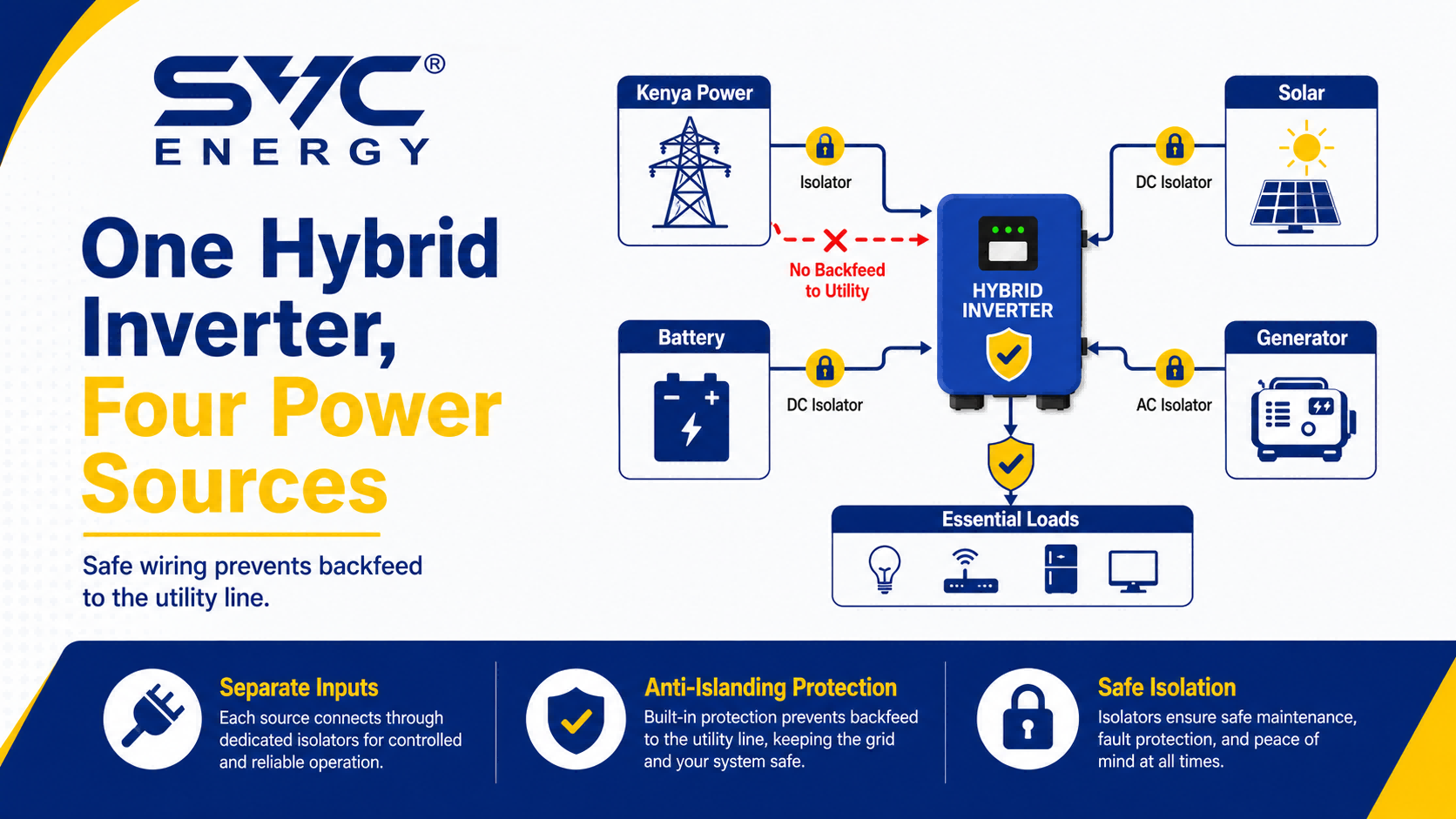
Yes—but Kenya Power, solar panels and the generator must enter the hybrid system through correctly separated inputs, with anti-islanding protection, source interlocking and properly tested export control.
Can a Hybrid Inverter Safely Combine Kenya Power, Rooftop Solar and a Generator?
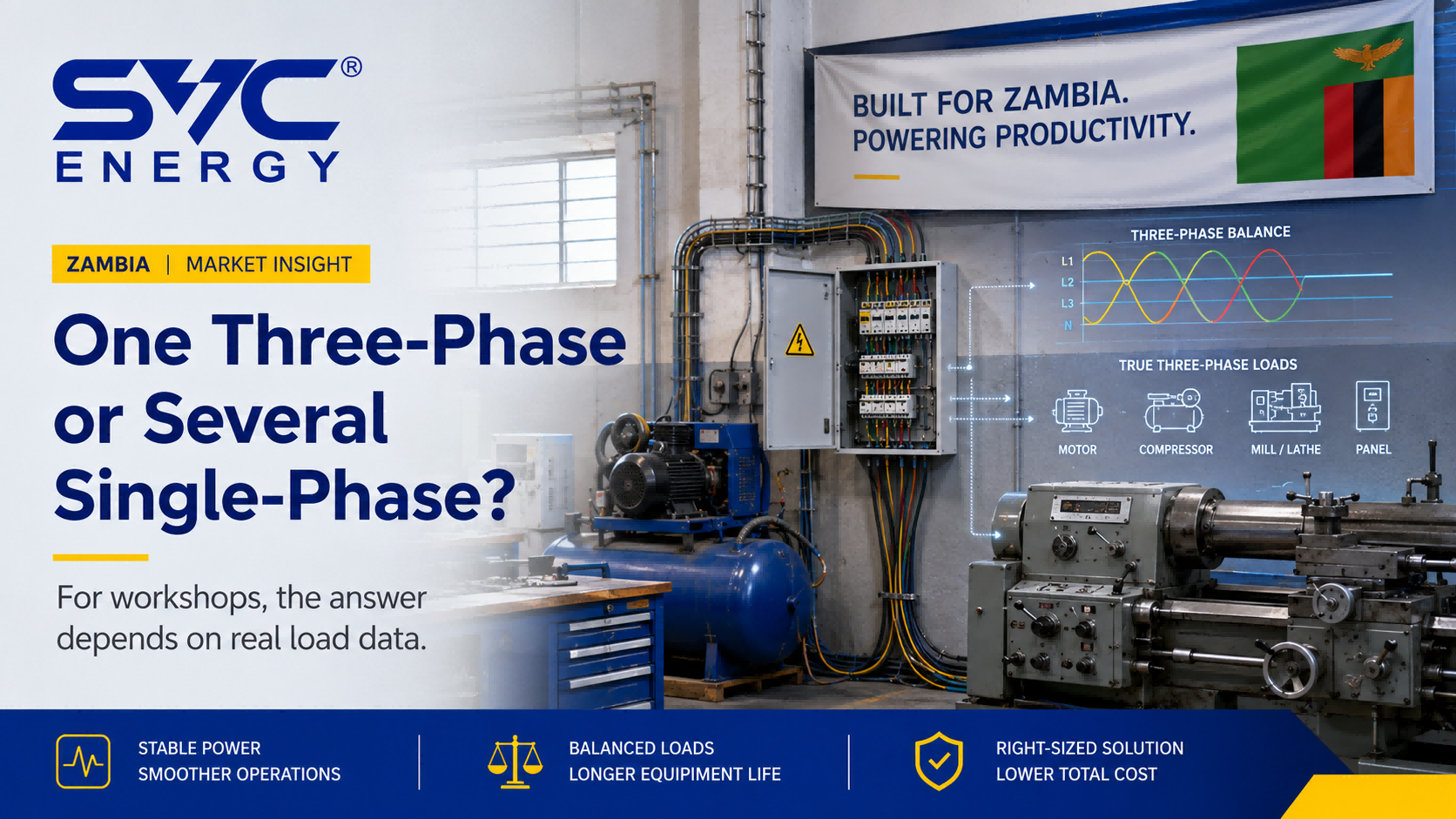
A practical comparison for Zambian workshops choosing between one three-phase hybrid inverter and several single-phase units, covering motor starting, phase balance, redundancy, batteries, installation and expansion.
Should a Three-Phase Zambian Workshop Use One Three-Phase Hybrid Inverter or Several Single-Phase Inverters?
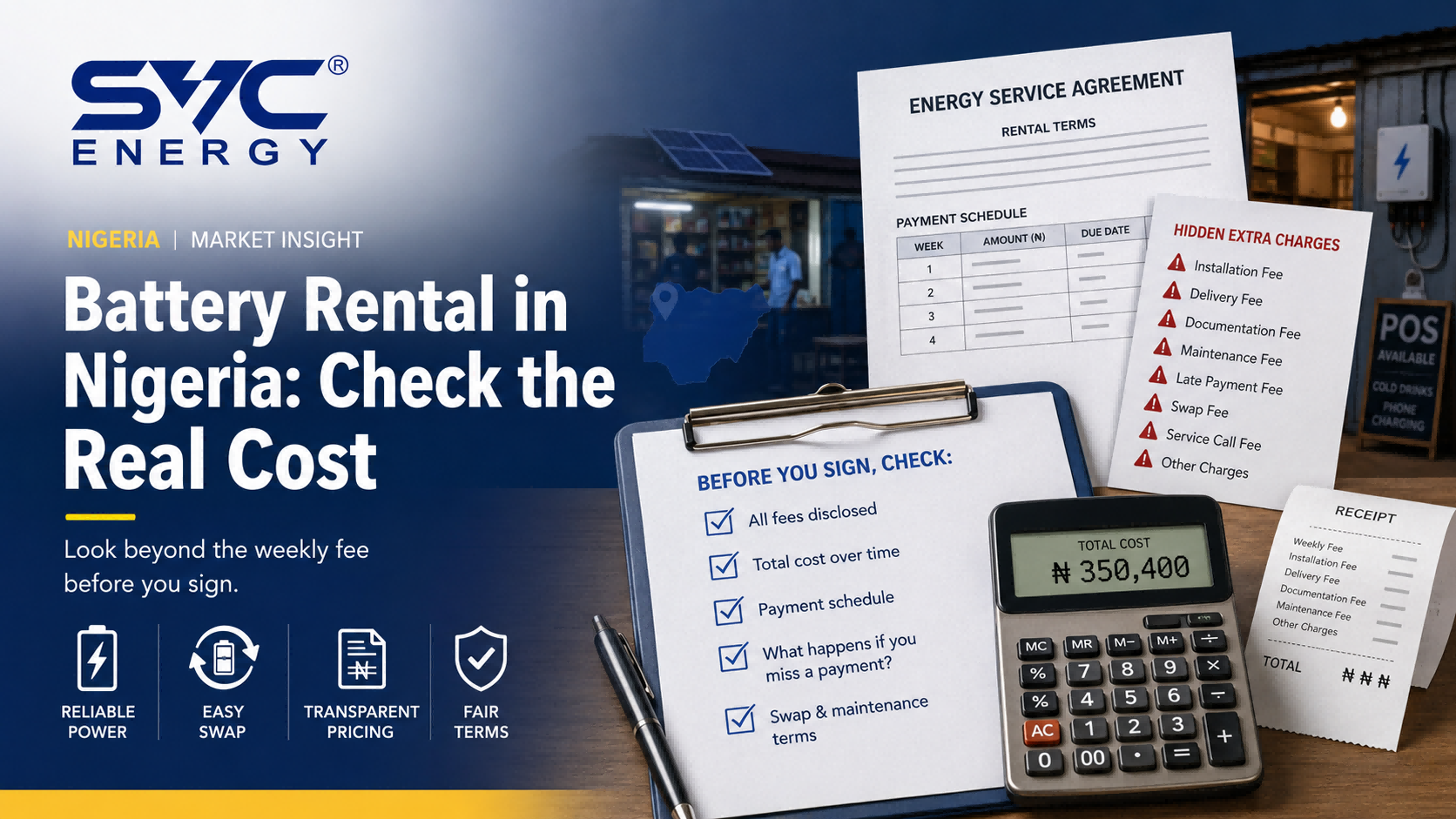
A practical guide for Nigerian households and small businesses checking deposits, delivery fees, battery swaps, maintenance, late-payment charges and ownership terms before signing a battery rental or energy-as-a-service contract.
What Extra Charges Should You Check Before Signing Up for Battery Rental or Energy-as-a-Service in Nigeria?