What Questions Should I Ask a Solar Installer Before Paying for an Inverter and Battery Package in Nigeria?
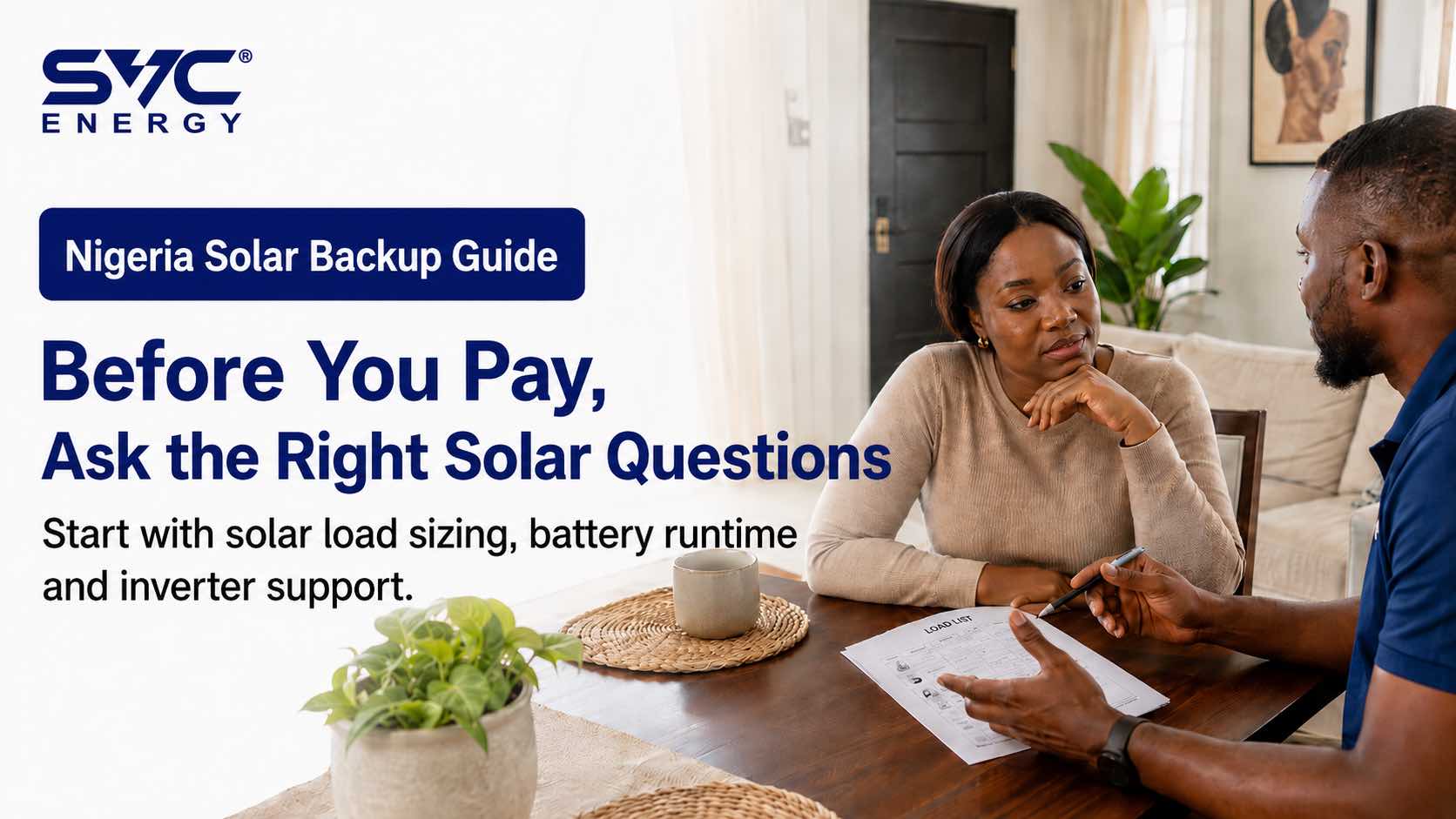
Before You Pay, Do Not Start With the Price
If you are buying an inverter and battery package in Nigeria, the first question should not be “How much?” It should be “What exactly will this system power, for how many hours, and who is responsible if it does not work as promised?”
Many Nigerian buyers are moving toward solar and battery backup because grid power is unreliable and generator fuel is expensive. Recent reporting on rural Nigerian solar microgrids shows why buyers care so much about stable electricity: clinics need night lighting, shops need refrigeration, and small businesses want to reduce generator dependence.
But a home inverter package can fail the buyer even when the products look good on paper. The common problems are simple: the battery is too small, the inverter cannot handle surge loads, the installer connects too many appliances, or the buyer does not know what the warranty covers.
Here are the questions to ask before paying.
1. What Loads Did You Use to Size This System?
Ask the installer to write down the exact appliances included in the design.
For a Nigerian home, that list may include lights, fans, TV, router, phone charging, fridge, freezer, water pump, washing machine, microwave, kettle, iron, or AC. These appliances should not be treated the same.
A good installer should separate essential loads from heavy loads. Lights, fan, router, TV, and phone charging are normal backup loads. Fridge and freezer need more care because of compressor surge. Pumps, AC, kettle, iron, and heater can overload or drain the system quickly if they are not properly sized.
Ask:
“What appliances are included in your calculation?”
“Which appliances should not run on the battery?”
“Did you calculate surge load for the fridge, freezer, pump, or AC?”
“Will you give me the load list in writing?”
If the installer cannot explain the load list, the package is not ready for payment.
2. How Many Real kWh Is the Battery?
A battery label can be confusing. Some sellers talk about “10kW battery” when they actually mean 10kWh. Others may quote voltage and amp-hours but not explain usable energy.
Ask the installer:
“What is the battery voltage and Ah rating?”
“What is the nominal kWh?”
“What usable capacity should I expect after battery reserve and inverter losses?”
“Is the battery LiFePO4?”
“What BMS protection does it have?”
For example, SVC’s Phoenix 10.5kWh lithium battery uses a 51.2V / 205Ah configuration, which gives about 10,496Wh nominal energy. That kind of voltage and Ah detail helps the buyer understand real capacity instead of only trusting a sales label.
If the home needs longer backup for fridge, freezer, fans, router, lights, and occasional heavier loads, a 16.08kWh LiFePO4 battery may be more realistic than a small battery. But the final choice should still depend on the load list.
3. What Is the Inverter Power, and Can It Handle Startup Surge?
Battery kWh tells you how long the system can run. Inverter kW tells you how much power it can deliver at one time.
This matters in Nigeria because many homes use appliances with startup surge: freezers, refrigerators, pumps, washing machines, and AC units. A battery may still show charge, but the inverter can shut down if the startup load is too high.
Ask:
“What is the inverter rated power?”
“What is the surge or peak power?”
“Can it start my pump or freezer?”
“Will heavy appliances be on a separate circuit?”
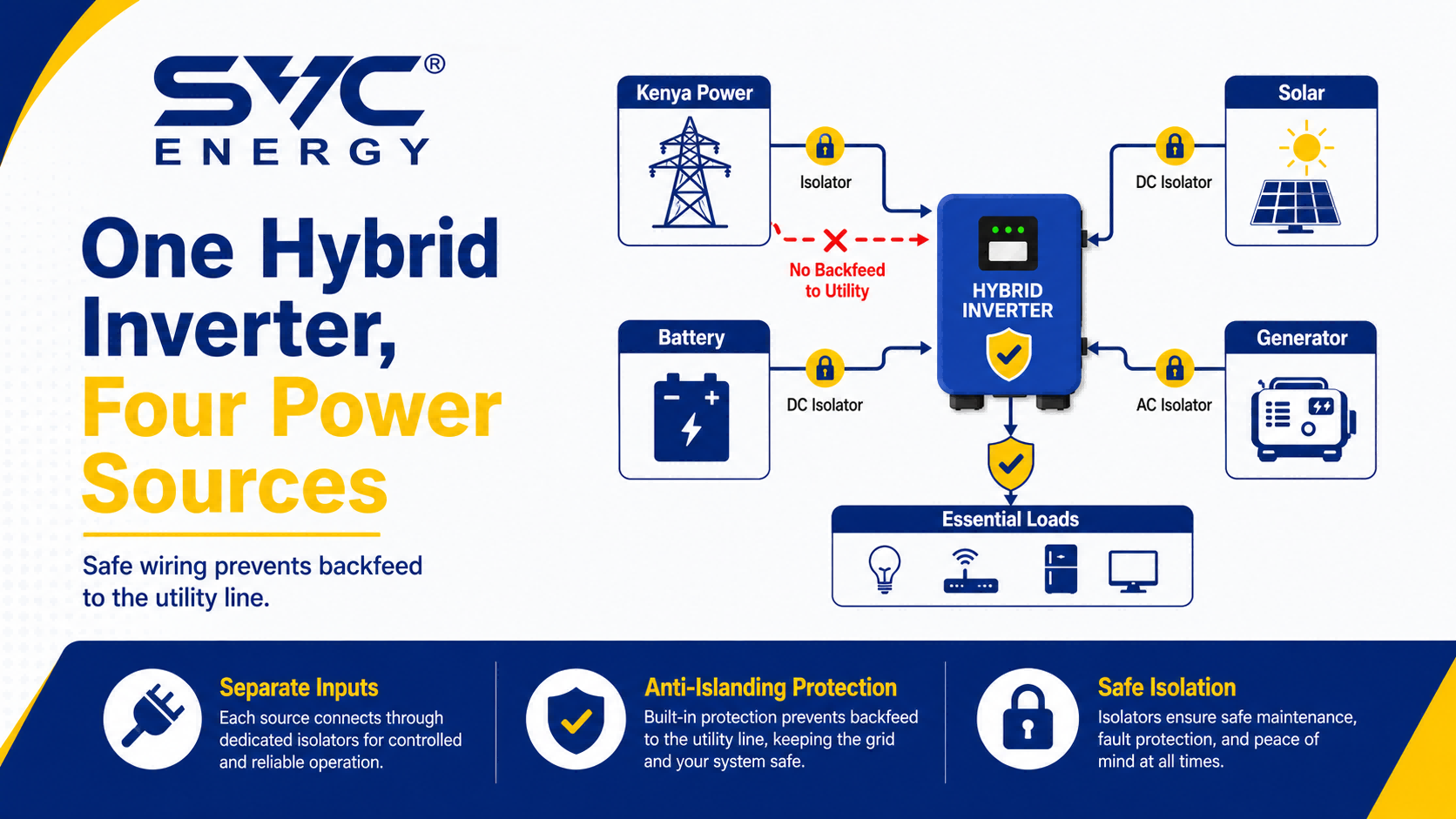
“Does the inverter have dual AC output for essential and non-essential loads?”
SVC’s hybrid inverter range includes models from 3.5kW to 11kW. Relevant features include wide MPPT voltage range on applicable models, lithium battery wake-up, dual AC outputs except the 3.5kW model, and dust filter design for harsh environments. Those details matter more than a vague promise that the inverter can “carry everything.”
4. Will You Install an Essential-Load Circuit?
This is one of the most important questions before payment.
An essential-load circuit means only selected appliances are connected to backup power. This prevents the battery from being drained by high-power devices and helps avoid inverter overload.
For many Nigerian homes, the essential circuit may include:
Lights
Fans
Router
TV
Phone charging
Fridge, if properly sized
Freezer, if properly sized
The non-essential circuit may exclude:
Kettle
Iron
Electric cooker
Water heater
Large AC
Heavy pump, unless designed for it
Ask the installer:
“Which sockets will be on backup?”
“Will you label the backup circuit?”
“What happens if someone plugs an iron or kettle into the backup socket?”
“Will the system separate essential and non-essential loads?”
If the installer plans to connect the whole house without a load discussion, that is a red flag.
5. Is the Battery Communication Compatible With the Inverter?
Many inverter and battery problems happen because the battery and inverter are not properly matched. Even if both products are good individually, communication issues can affect charging, discharge limits, battery protection, and monitoring.
Ask:
“Does the inverter communicate with the battery BMS?”
“Which protocol is used?”
“Will I see battery status on an app or screen?”
“Who will configure the settings?”
“What happens if the inverter cannot read the battery correctly?”
This is where all-in-one systems can be easier for some buyers. SVC all-in-one systems integrate the inverter and low-voltage battery in one compact design, with pre-matched inverter and battery communication before shipment. That does not remove the need for proper installation, but it can reduce cross-brand compatibility risk for homes that want a cleaner, simpler setup.
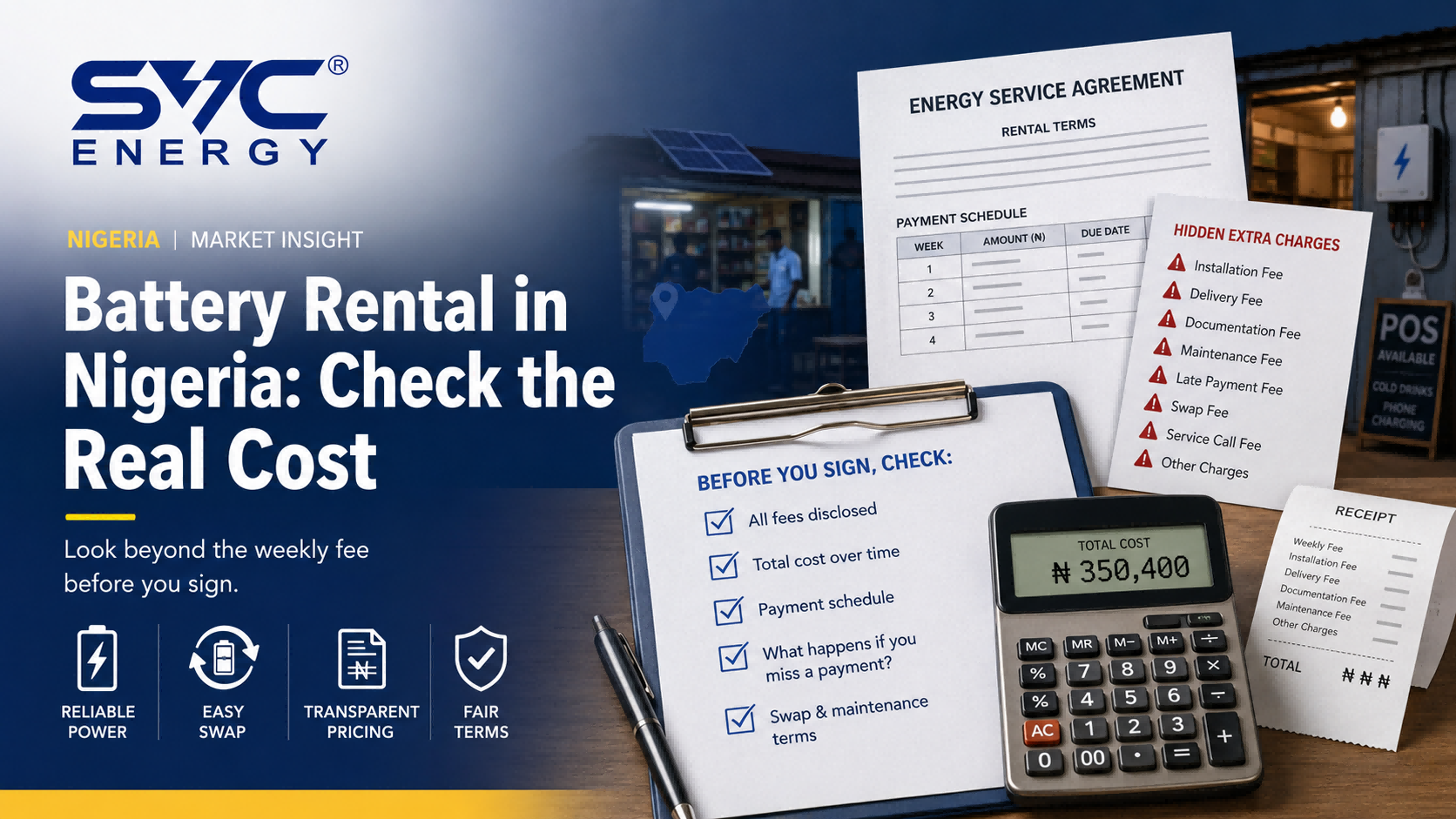
6. What Is Included in the Installation Price?
Do not assume the quoted price includes everything. Ask for a written scope.
The installation quote should state whether it includes:
Inverter
Battery
PV panels, if included
Mounting structure
DC and AC breakers
Cables
Changeover or distribution board work
Earthing and protection
Battery rack or placement
Monitoring setup
Transport
Installation labor
Testing and commissioning
Ask:
“Is this a full installed price or product-only price?”
“What accessories are included?”
“What will cost extra on installation day?”
“Will you test the system with my real appliances before leaving?”
A cheap quote can become expensive if protection devices, cables, or commissioning are missing.
7. What Warranty and After-Sales Support Do I Get?
Before payment, ask who handles the warranty: the installer, dealer, or brand supplier.
Ask:
“How many years is the battery warranty?”
“What voids the warranty?”
“Who do I call if the battery app shows an alarm?”
“Will you come back if the inverter trips under normal loads?”
“Do you provide installation photos, settings, and a handover checklist?”
SVC’s standalone 5kWh, 10kWh, and 16kWh lithium battery products have a 5-year warranty based on the supplied product notes, and the standalone 5kWh/10kWh products are documented with more than 6000 cycles. Those claims should still be tied to the exact product family and operating conditions.
Red Flags Before You Pay
Be careful if the installer says:
“This battery will run everything.”
“No need to list your appliances.”
“10kW battery” but cannot explain kWh.
“The inverter can carry AC, pump, kettle, and freezer” without a surge calculation.
“No need for BMS communication.”
“No need to separate backup loads.”
“Warranty is available” but nothing is written.
“Runtime is guaranteed” without assumptions.
A good solar backup system is designed around real loads, not only the buyer’s budget.
A Simple Buyer Checklist
Before paying, make sure you have:
A written appliance/load list.
Battery voltage, Ah, and nominal kWh.
Inverter rated power and surge capacity.
A clear essential-load circuit plan.
Battery-inverter communication details.
Installation scope and accessories list.
Warranty terms and after-sales contact.
Commissioning test plan using your actual appliances.
If any of these are missing, ask for clarification before making payment.
Conclusion
In Nigeria, an inverter and battery package should not be bought like a simple household appliance. It is a backup power system, and the design must match your real loads, outage habits, installation space, and future expansion plan.
Before paying, ask your installer about load sizing, real battery capacity, inverter surge power, backup circuit design, BMS communication, installation scope, warranty, and after-sales support. The answers will tell you whether the package is truly designed for your home or just assembled to meet a price.
If I Can Only Afford One Battery, Should I Choose Longer Backup Time or Higher Inverter Power in Zambia?
Is an All-in-One Solar Battery System Easier to Install in a Kenyan Apartment or Townhouse?
Related Article