How to Reduce KPLC Token Costs With Solar Battery Backup at Home in Kenya
Direct Answer
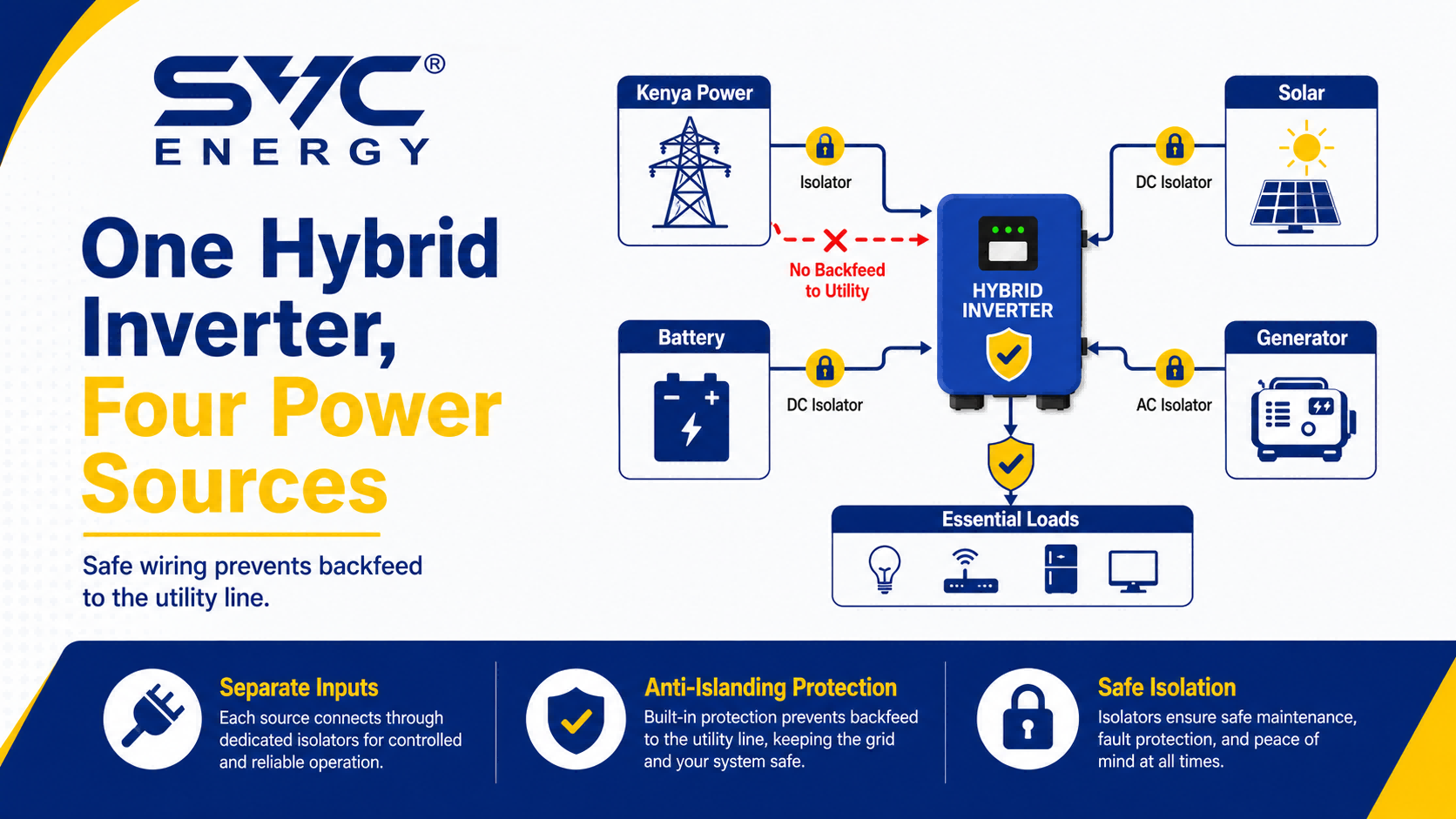
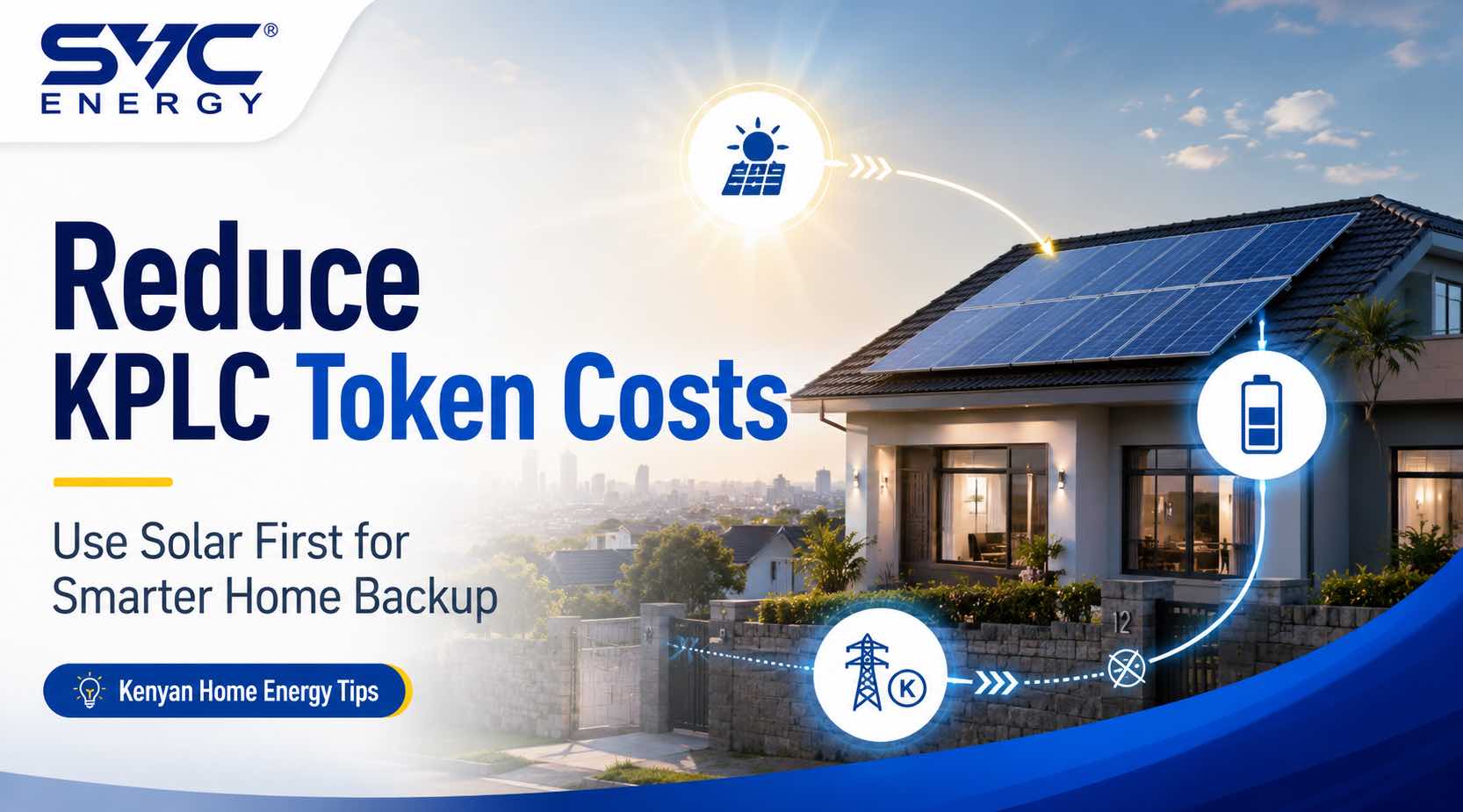
To reduce KPLC token costs with solar battery backup at home in Kenya, use solar power as the first energy source, store excess daytime solar energy in the battery, and keep KPLC grid power as backup. The biggest savings usually come from avoiding unnecessary grid charging and keeping heavy appliances off the battery circuit unless the system is designed for them.
Why KPLC Tokens Still Run Out Fast After Installing an Inverter
Many homeowners expect an inverter battery to automatically reduce token costs. But if the battery is mostly charged from KPLC power, the system is not truly saving energy. It is simply moving grid electricity into the battery, then using it later with some conversion loss.
This is why some homes install a backup system but still feel that tokens are disappearing quickly. The issue is often not the battery itself. It may be the inverter setting, the size of the solar array, or the appliances connected to backup power.
Kenya Power supports prepaid token customers through official purchase channels such as M-Pesa Paybill 888880 and USSD *977#. Since prepaid users buy units before use, daily energy habits are easy to feel in the household budget.
Set the System to Use Solar First
The best home backup setup in Kenya should use solar during the day before pulling power from KPLC. A hybrid inverter can usually be configured to prioritize solar power for household loads and battery charging.
Ask your installer to check three settings:
- The source priority: whether solar, battery, or grid is used first.
- The charging priority: whether the battery charges from solar first or grid first.
- The battery reserve: how much energy is kept for outages or night use.
For most homes, solar-first charging is the most useful setting. KPLC charging should remain available for cloudy days, low battery emergencies, or when the home needs guaranteed backup.
Keep Heavy Appliances Away From the Backup Circuit
If the whole house is connected to the inverter, token savings may be poor. Heavy appliances can drain the battery quickly, forcing the inverter to recharge from KPLC later.
For many Kenyan households, essential backup loads should include lights, WiFi, TV, phone charging, laptops, security devices, and possibly a fridge. These are practical loads for daily backup.
High-consumption appliances need more control. Electric kettles, irons, cookers, water heaters, pumps, and air conditioners can use a lot of energy in a short time. If these loads run through the battery system without proper sizing, they reduce backup time and increase the chance of grid charging.
A better setup is to separate essential loads from heavy loads. This helps the solar battery focus on the appliances that matter most during outages and evening use.
Use Daytime Solar to Reduce Evening Token Use
A home solar battery system works best when it captures daytime solar energy and uses it later. In Kenya, this is especially useful for households where family members return home in the evening, when lights, TV, WiFi, cooking support devices, and phone charging all increase.
The daily habit should be simple: let solar charge the battery during the day, then use the battery for essential evening loads. Avoid setting the inverter to recharge the battery from KPLC at night unless backup reliability is more important than token savings.
Monitor the Battery Before Upgrading
Before buying a bigger battery, check how the current system is being used. A smart battery or inverter app can show whether the battery is being charged by solar or by the grid, how fast it drains, and which loads are using the most energy.
SVC LiFePO4 battery systems support smart BMS protection, real-time battery monitoring, wide inverter compatibility, and parallel expansion. For Kenyan homes, this makes it easier to start with a practical backup system and expand later if the household load grows.
If the home needs longer backup for fridge, lights, WiFi, TV, and occasional pump or AC use, a higher-capacity lithium battery or an all-in-one system may be more suitable than a small inverter battery kit. The system still needs correct inverter settings and proper load separation to deliver real token savings.
Simple Checklist for Kenyan Homeowners
Before assuming your solar battery is too small, check these points:
- Is the inverter set to prioritize solar power?
- Is the battery charging from KPLC too often?
- Are heavy appliances connected to the backup circuit?
- Is the solar panel capacity enough to recharge the battery during the day?
- Does the inverter or battery app show energy flow clearly?
- Is the battery old, undersized, or losing usable capacity?
- Has a qualified installer separated essential and non-essential loads?
Conclusion
Reducing KPLC token costs with solar battery backup is mainly about using solar energy more intelligently. A solar-first setup, correct inverter settings, essential-load separation, and battery monitoring can help Kenyan households reduce unnecessary grid consumption while keeping backup power ready for outages.
Should You Choose a Wall-Mounted Lithium Battery or a Floor-Standing Battery for Your Nigerian Home?
How to Save ZESCO Prepaid Units When Using an Inverter and Solar Battery at Home
Related Article