What Solar Battery Products Are Easiest for Nigerian Distributors to Sell to Homes and Small Shops in 2026?
Direct Answer
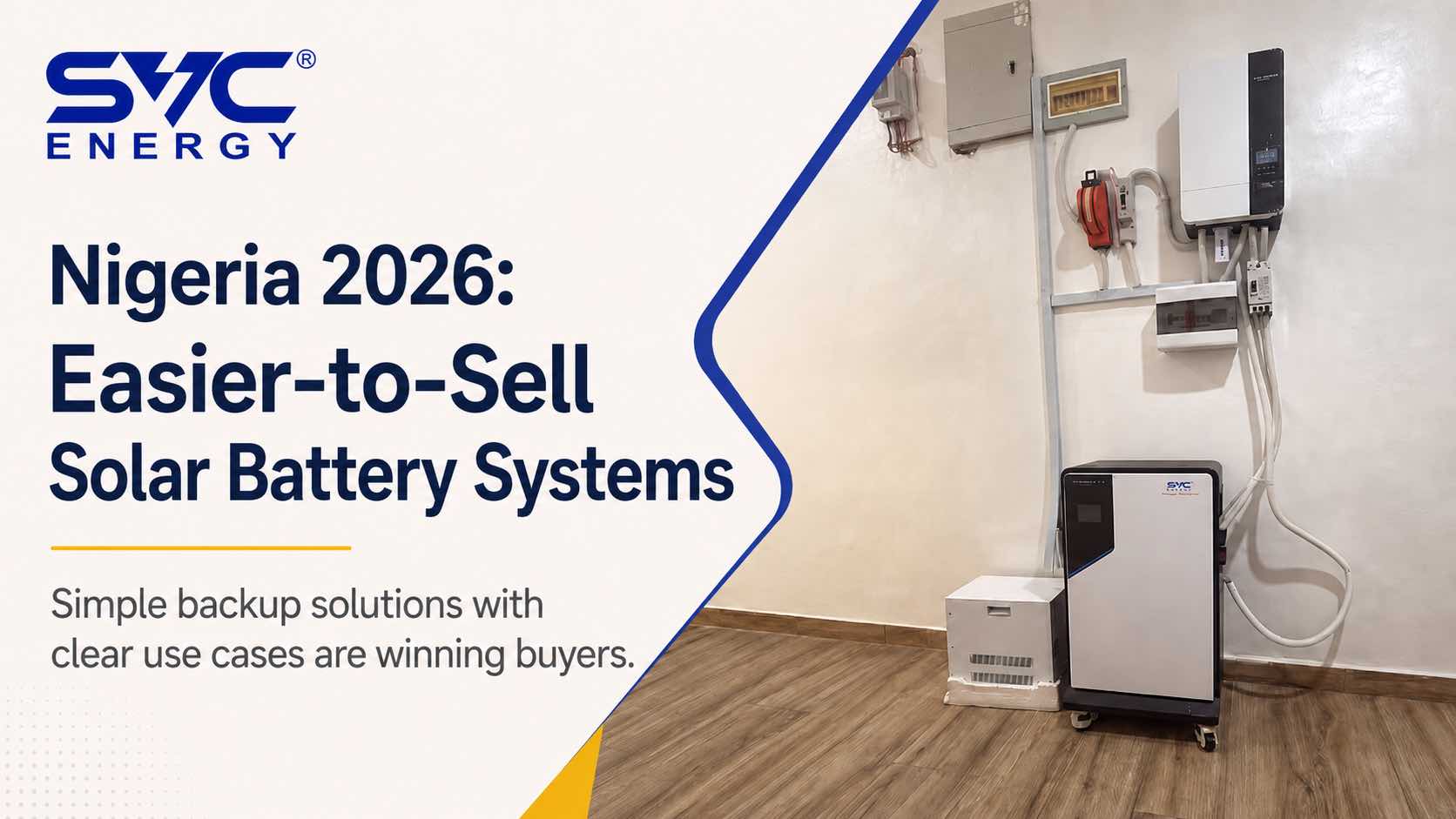
The easiest solar battery products for Nigerian distributors to sell in 2026 are simple, reliable backup systems with clear use cases: small all-in-one solar generators for basic home loads, 8kWh to 10.5kWh systems for family backup, 16kWh lithium batteries for longer runtime, and hybrid inverter-battery bundles for small shops with fridges, freezers, POS systems, routers, and lighting.
The winning products are not always the largest systems. They are the systems that a buyer can understand quickly, install safely, expand later, and trust after the first blackout.
Why Nigerian Buyers Are Asking This Question Now
Nigeria remains one of Africa’s most important markets for solar backup because unreliable power affects both households and small businesses. Recent reporting from rural Nigeria shows how solar microgrids and battery storage are already changing daily life for clinics, shops, and homes by replacing expensive generator use and enabling refrigeration, lighting, and longer business hours.
For distributors, this means demand is not only coming from technical solar buyers. It is coming from ordinary people with practical questions:
- Can this battery run my fan, lights, TV, Wi-Fi, and phone charging at night?
- Can this system keep my freezer or drink fridge cold?
- Will I spend less on petrol or diesel?
- Can I start small and add more battery capacity later?
- How do I know the battery capacity is real?
Those questions should guide product selection more than catalog size alone.
Product Category 1: Small All-in-One Backup for Budget Homes
For first-time residential buyers, distributors need an entry product that is easy to explain and hard to misuse. A small all-in-one solar generator or compact backup system is often the easiest starting point.
SVC’s 1.2kW + 4kWh solar generator fits this kind of buyer because it combines a solar charge controller, inverter, and lithium battery in one system. Its positioning is simple: basic backup for lights, phone charging, router, TV, fan, and small daily loads.
This type of product works best when the distributor avoids unrealistic claims. It should not be sold as a full-house power system. It should be sold as a practical essential-load backup system for homes that want a cleaner and quieter alternative to running a small generator every evening.
Best buyer fit:
- Budget households
- Small apartments
- Rural homes
- Customers replacing candles, phone charging shops, or small petrol generators
- Buyers who want a first solar product before investing in a larger system
Sales message:
“Start with essential backup first. Keep your lights, fan, phone, router, and small appliances running, then upgrade later if your load grows.”
Product Category 2: 8kWh to 10.5kWh All-in-One Systems for Family Homes
Middle-class households usually need more than phone charging and lighting. Their questions are about refrigerators, fans, routers, TVs, water pumps, and occasional high-load appliances. For this group, distributors need a product that looks clean inside a home, reduces wiring complexity, and gives the installer fewer compatibility problems.
SVC’s 3.6kW + 8kWh all-in-one system and 6kW + 10.5kWh all-in-one system are natural fits for this category. All-in-one systems are easier to explain because the inverter and battery communication are pre-matched before shipment. This can reduce cross-brand compatibility risk, simplify installation, and make the system feel more like a finished home appliance than a loose technical kit.
The 6kW + 10.5kWh system is especially useful for homes that need stronger inverter capacity and longer backup than entry-level systems can provide. It can be positioned for households that want a better daily experience during outages without immediately moving into a large custom system.
Best buyer fit:
- Middle-class homes
- Families with fridge, TV, fans, router, and lighting
- Buyers who care about clean indoor appearance
- Customers who want app monitoring and fewer installation complications
- Homes where the installer wants a faster, more standardized setup
Sales message:
“Choose an all-in-one system when you want one matched backup unit, cleaner wiring, app monitoring, and fewer inverter-battery compatibility worries.”
Product Category 3: 10.5kWh Standalone Lithium Battery for Real-Capacity Buyers
One of the strongest distributor angles in Nigeria is real battery capacity. Many buyers compare “10kWh” offers but do not understand voltage, amp-hour rating, usable energy, cell quality, or BMS protection.
SVC’s Phoenix 10.5kWh lithium battery is useful for this market because it gives distributors a clear technical story: 51.2V / 205Ah, about 10,496Wh nominal energy, LiFePO4 chemistry, smart BMS, more than 6000 cycles, and up to 16 units in parallel.
This product is easy to sell when the buyer already has an inverter or when an installer wants to build a flexible system. It is also useful for articles and sales conversations about fake capacity risk, because buyers can learn how voltage and amp-hour ratings translate into actual nominal kWh.
Best buyer fit:
- Homes upgrading from lead-acid or small lithium batteries
- Buyers comparing 10kWh battery offers
- Installers building custom hybrid systems
- Shops that want modular battery expansion
- Customers worried about fake capacity or second-hand cells
Sales message:
“Do not compare battery labels only. Check voltage, Ah, nominal kWh, BMS, cycle life, weight, warranty, and parallel expansion.”
Product Category 4: 16kWh Lithium Battery for Longer Runtime Homes and Small Shops
For Nigerian buyers with heavier loads, a 10kWh system may not feel enough. This is where a 16kWh battery becomes easier to sell, especially for homes with longer outage hours or small businesses that need refrigeration, lighting, POS systems, routers, fans, or small equipment.
SVC’s 16.08kWh LiFePO4 battery uses a 51.2V / 314Ah configuration and supports smart BMS protection. It is suitable for buyers who want longer backup time and future expansion. The product’s floor-standing format and mobility features can also help in real installations where battery placement matters.
For distributors, the 16kWh product should be sold with a load discussion, not as a magic runtime promise. A freezer, fan, lighting, router, and POS terminal have very different power behavior from an air conditioner, pump, or electric kettle. Runtime depends on load, battery settings, inverter efficiency, and installation conditions.
Best buyer fit:
- Larger homes
- Small shops
- Pharmacies
- Cold drink sellers
- Barber shops and salons with controlled loads
- Buyers who want longer backup and modular growth
Sales message:
“Move to 16kWh when the buyer needs longer runtime, more comfort, or small-business backup beyond basic household loads.”
Product Category 5: Hybrid Inverter and Battery Bundles for Small Shops
Small shops are one of the most important Nigerian distributor opportunities because power failure directly affects revenue. A shop owner with cold drinks, a freezer, POS machine, router, lights, and fans does not ask for solar as a lifestyle upgrade. They ask because downtime costs money.
For this segment, distributors should sell bundles, not loose parts. A practical bundle might include a hybrid inverter, a 10.5kWh or 16kWh LiFePO4 battery, PV input, and a clear load-priority plan.
SVC’s 3.5kW to 11kW hybrid inverter range supports useful selling points for this market, including wide MPPT voltage range on applicable models, lithium battery wake-up, dual AC outputs except the 3.5kW model, battery-less operation, and dust filter design for harsh environments. For shops, dual AC output is especially useful because installers can separate essential loads from non-essential loads.
Best buyer fit:
- Mini-marts
- Pharmacies
- POS and charging shops
- Drink shops
- Small offices
- Shops with freezer or fridge loads
Sales message:
“For shops, sell a load-priority backup system: keep the freezer, POS, router, lights, and essential fans running first.”
What Nigerian Distributors Should Avoid Selling First
Distributors should be careful with products that are difficult for the buyer to understand or easy to oversell. The highest-margin product is not always the easiest product to scale.
Avoid leading with:
- Systems that require too much custom explanation for first-time buyers
- Batteries without clear voltage, Ah, kWh, warranty, BMS, or cycle-life documentation
- Overpromised AC backup packages without a load calculation
- Mixed-brand inverter and battery kits without confirmed communication compatibility
- Very small systems marketed as full-house backup
- Large C&I systems sold to small shops without a realistic budget path
The better approach is to build a ladder: entry backup, family backup, longer-runtime storage, shop backup, and then larger C&I systems.
A Simple Stocking Strategy for Nigerian Solar Distributors
For homes and small shops in Nigeria, a distributor can build a practical product ladder around five stock groups:
- Entry all-in-one solar generator for essential home backup.
- 8kWh all-in-one system for stronger residential backup.
- 10.5kWh all-in-one or standalone lithium battery for family homes and installers.
- 16kWh standalone lithium battery for longer runtime and small-shop backup.
- Hybrid inverter-battery bundles for shops that need refrigeration, POS, lighting, and router uptime.
This stocking strategy helps the sales team avoid one-size-fits-all selling. It also makes training easier: every product has a buyer role, a load scenario, and a simple upgrade path.
FAQ
Should Nigerian distributors focus more on homes or small shops?
Both matter, but small shops often have stronger urgency because power failure affects revenue. Homes are usually higher volume, while shops may accept a larger battery if the system protects refrigeration, POS operations, and evening sales.
Is a 10.5kWh battery enough for a Nigerian home?
It can be enough for many essential home loads, depending on the appliance list and outage duration. It should be sized using actual loads such as lights, fans, fridge, router, TV, pump, and AC. Runtime should never be guaranteed without assumptions.
Why are all-in-one systems easier for distributors to sell?
All-in-one systems are easier to explain because the inverter, battery, wiring, and communication are integrated or pre-matched. They reduce the buyer’s fear of compatibility problems and can make installation more standardized.
What is the best product for Nigerian shops with freezers?
A shop with freezers should usually consider a hybrid inverter and lithium battery bundle sized around compressor surge, daily runtime, and essential-load priority. A 10.5kWh or 16kWh battery may fit, but the final design depends on the freezer power and operating hours.
Conclusion
In 2026, the easiest solar battery products for Nigerian distributors to sell are not just batteries with large numbers on the label. They are products with a clear buyer story: essential backup for homes, clean all-in-one systems for families, real-capacity lithium batteries for serious buyers, and hybrid backup bundles for shops that lose money when power fails.
For SVC distributors, the strongest sales path is to match each product to a practical Nigerian use case, explain capacity honestly, and give buyers a safe upgrade route from basic backup to larger solar storage systems.
How Many kWh of Battery Storage Does a Shop or Clinic Need During Daily Load Shedding in Zambia?
Is There Demand for Solar-Powered Battery Swap and Second-Life Storage Products in Kenya?
Related Article