Why Does My Solar System Still Fail After Installation in Zambia?
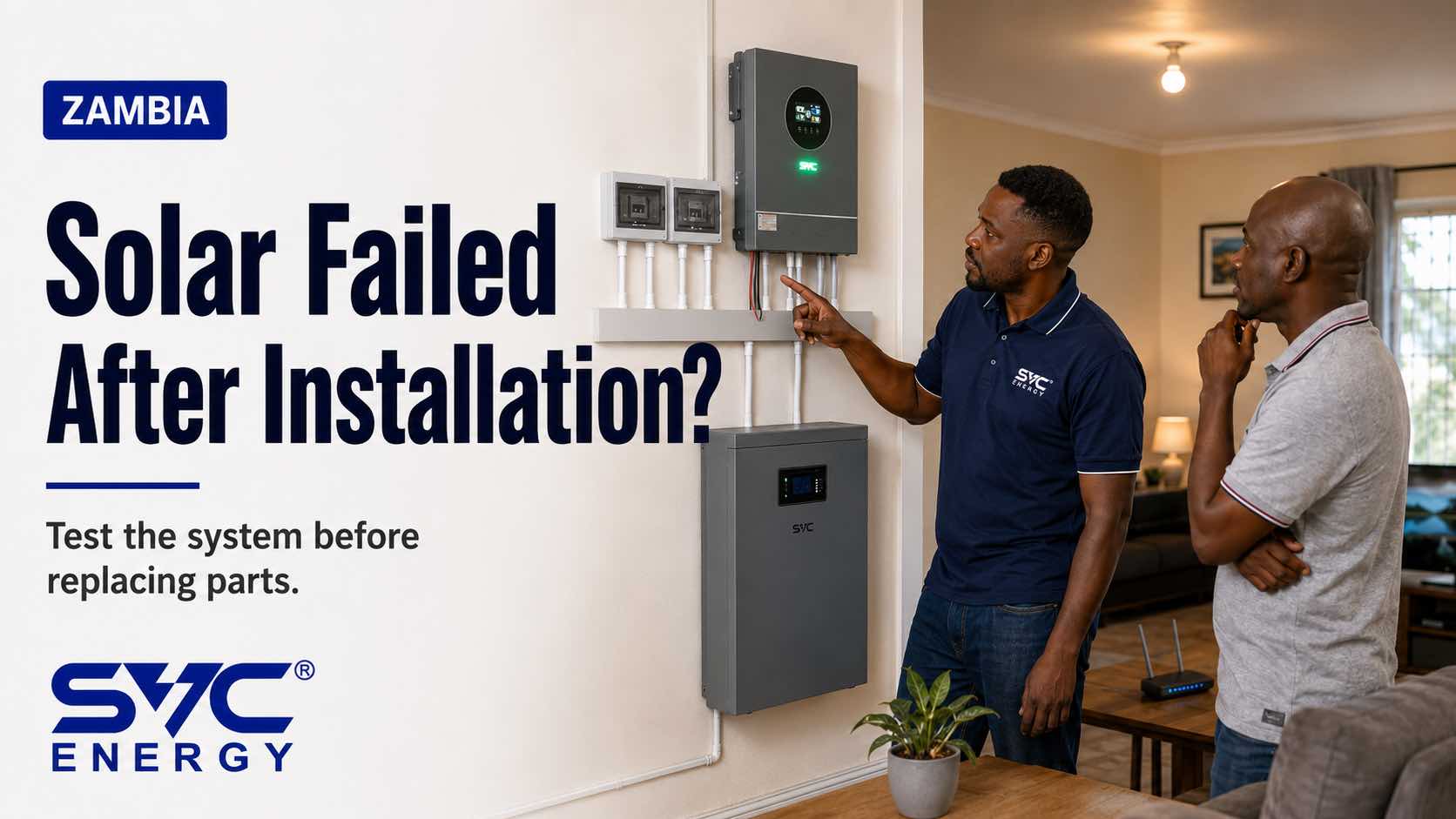
Why Can a Solar System Still Fail After Installation in Zambia?
A solar system can still fail after installation because a good-looking setup is not always a properly commissioned one. In Zambia, recurring power interruptions make correct battery settings, load control, charging design and installer support especially important. Before replacing equipment, ask the installer to check the system in operation and show you how to inspect the parts that most often cause preventable failures.
Quick Answer
A solar system can still fail after installation when load planning, battery configuration, solar charging, wiring or commissioning are incomplete. Before replacing equipment, ask the installer to test the system under real loads and explain the settings, alarms and maintenance routine.
Start With the Symptom, Not the Brand
“Solar system failure” can mean very different things. Your lights may go off when a pump starts, the battery may run down before morning, the inverter may show an alarm, or the system may not recharge properly after a long outage.
The right solution depends on the symptom. A battery that drains quickly may be carrying more load than expected. An inverter that trips may be undersized for a motor surge. A system that does not recharge may have a PV, charging-setting or connection issue. Replacing a battery before checking these basics can waste money.
The Four Checks Your Installer Should Make First
Confirm the Real Load on the System
Ask the installer to identify which appliances are on the backup circuit and measure or list their normal power demand. Refrigerators, freezers, pumps, compressors, irons, kettles and air conditioners can change the result significantly.
The installer should also explain which loads are essential during an outage and which ones should remain off. A backup system is more reliable when lights, Wi-Fi, a TV, phone charging and other critical devices are separated from high-demand appliances.
Check Battery Settings and Battery Health
A lithium battery must communicate correctly with the inverter and operate within the recommended charging and discharge settings.
Ask the installer to show you:
- ✓The selected battery type and communication setting
- ✓The low-voltage shutdown setting
- ✓The charge current setting
- ✓The battery state of charge on the display or monitoring app
- ✓Any active warning or fault code
- ✓Whether the battery is receiving charge from solar, grid or generator as intended
Do not rely only on the percentage shown on a screen. The installer should explain what happens when the battery reaches its low-voltage limit and how the system recovers after grid power returns.
Verify Solar Charging, Not Just Panel Appearance
Panels can look clean and connected while the system still receives less solar energy than expected. Ask the installer to show the PV input on the inverter display during daylight and explain whether the battery is charging, the house is using the solar power, or both.
Important checks include panel shading, loose connectors, isolator condition, cable routing and whether the PV string voltage is within the inverter’s allowed MPPT range. If a home or shop has a roof with different orientations or partial shade, the PV layout should be reviewed before assuming the battery is the problem.
Test the System Under a Realistic Outage
A proper handover should include more than switching the system on. Ask the installer to simulate a grid outage while the normal essential loads are running. Watch what happens to your lights, router, fridge or other priority appliances.
The installer should demonstrate:
- ✓Automatic transfer from grid to backup
- ✓What happens if a high-power appliance is switched on
- ✓Which alarms appear during overload or low battery
- ✓How the system switches back when grid power returns
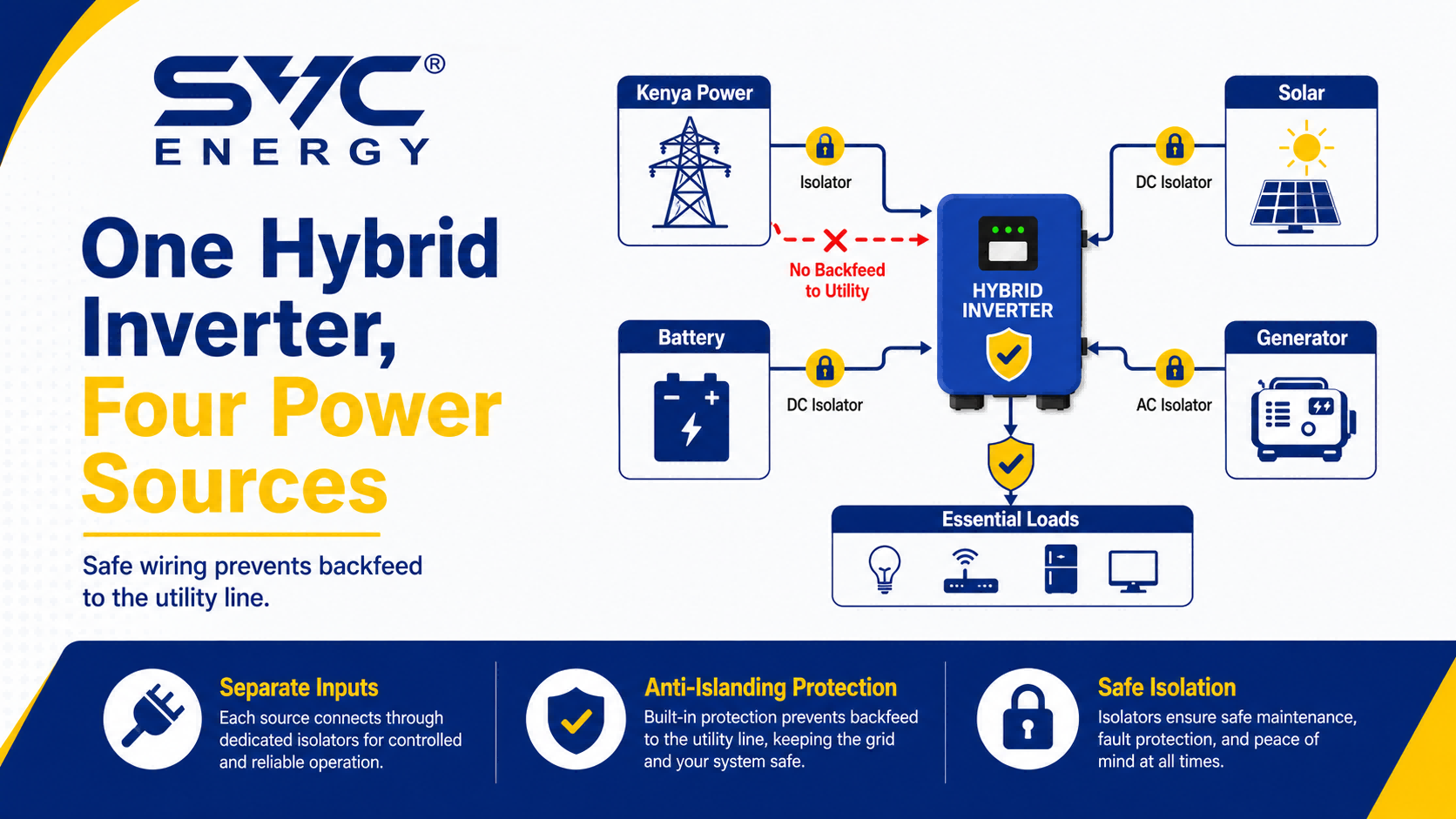
- ✓How to isolate the system safely in an emergency
If the system fails only when a particular appliance starts, that is useful evidence. It may point to startup surge, an overloaded output or a load that should be moved off the backup circuit.
Maintenance Your Installer Should Teach You
Most households do not need to perform electrical repairs. But the installer should leave you able to spot a problem early and know when to call for support.
- ✓Check the inverter display or app for warnings at least once a week.
- ✓Keep the battery and inverter area dry, ventilated and free of stored items.
- ✓Do not block ventilation openings or place heat-producing appliances beside the equipment.
- ✓Visually check for damaged cables, loose covers, water entry or unusual smells; do not touch exposed wiring.
- ✓Keep panels reasonably clear of heavy dust, leaves or shading, using safe access methods.
- ✓Record repeated alarms, the time they occur and which appliances were running.
- ✓Keep the installer’s commissioning record, warranty documents and contact details.
Red Flags That Need Professional Attention
- !Repeated inverter shutdowns
- !A burning smell
- !Swollen battery casing
- !Unusually hot cables
- !Water around electrical equipment
- !Persistent fault codes
- !A major drop in backup performance with the same normal loads
Also ask for support if the installer cannot explain the battery settings, refuses to test the system under an outage or leaves you without a labelled essential-load circuit and basic handover instructions.
A Solar System Is More Than Its Main Components
A solar system should be treated as an energy system, not just a collection of panels, a battery and an inverter. In Zambia, reliable backup depends on correct sizing, proper commissioning, safe wiring, realistic load priorities and a clear maintenance handover. Before buying replacement equipment, ask your installer to prove how the system performs under your real household or business loads.
Need Help Reviewing a Solar Backup System?
Start with the actual loads, battery settings, solar charging data and a realistic outage test before replacing major equipment.
Contact SVC EnergyHow Can I Avoid Buying a Cheap Inverter or Battery That Fails After One Year in Kenya?
Can a Hybrid Inverter Switch Automatically During a Power Outage Without Restarting Work Devices in Nigeria?
Related Article