How big is the untapped solar energy potential in Africa?

The Rising Need for Renewable Energy in Africa
According to a study, about one-third of the global population is struggling with the lack of electricity or the unavailability of proper electricity sources. Africa is one of the regions facing this issue, where a large population, nearly 600 million people, live without access to reliable electricity. While the continent is on the brink of an energy revolution, it still faces a severe shortage of sustainable energy resources.
Traditional power grids and fossil fuel-based energy sources are increasingly failing to meet the growing energy demands. As a result, solar energy is emerging as one of the most sustainable, affordable, and powerful sources of energy for the people. Solar energy is finding great opportunities as a clean, scalable, and highly cost-effective way to light up homes, power businesses, and meet the energy needs across Africa’s vast and diverse landscape.
By adopting solar energy, people can protect themselves from the growing energy crisis and take advantage of a reliable, affordable, and sustainable energy resource. Although the continent has immense potential in the field of solar energy, it remains largely untapped.
Abundant Solar Resources Across the African Continent
Some parts of the Sahara Desert receive more than 3,600 hours of solar irradiation per year, which accounts for about 82% of the sunshine hours. In its eastern region, solar irradiation exceeds 4,000 hours annually, more than 91% of the total sunshine hours. If proper infrastructure for solar energy is developed in the Sahara Desert, it alone could generate enough solar power to supply the entire world. This would eliminate the need for reliance on traditional solar technologies and provide an endless source of renewable energy.
Challenges Facing Solar Energy Adoption in Africa
Meanwhile, Africa receives between 2,500 to 3,500 hours of sunlight annually. Despite receiving such abundant sunlight, solar energy contributes only 2% to Africa’s total electricity production. This clearly highlights the continent’s untapped potential and the immense opportunity to harness its natural resources more effectively.
Across Africa, the development of solar energy faces several challenges that are significantly hindering the continent’s energy progress. These include a lack of basic infrastructure, limited grid electricity connectivity in many regions, and unreliable transmission lines. Even though the cost of solar panels has decreased, adopting solar energy still remains a challenge for many small households and businesses in Africa, often seeming like an unattainable dream.
Moreover, the lack of adequate skills among the people and certain government policies and regulations also act as barriers to the growth of solar energy on the continent.
Opportunities for Growth in the African Solar Market
The future is promising. Multiple trends indicate that solar adoption across the African continent will grow rapidly.
Technology Costs Are Declining: The cost of solar panels and lithium-ion batteries has plummeted in the past decade.
Small, decentralized systems are highly suitable for remote areas where extending the grid is not practical.
Global Push from Traditional Environmental Money: International climate funds and green financing programs are making it easier for solar projects to get access to capital.
Youth-Driven Innovation: Africa’s rising legion of young entrepreneurs is flooding into solar tech and constructing localized energy solutions.

SVC ENERGY’s Role in Africa’s Solar Transition
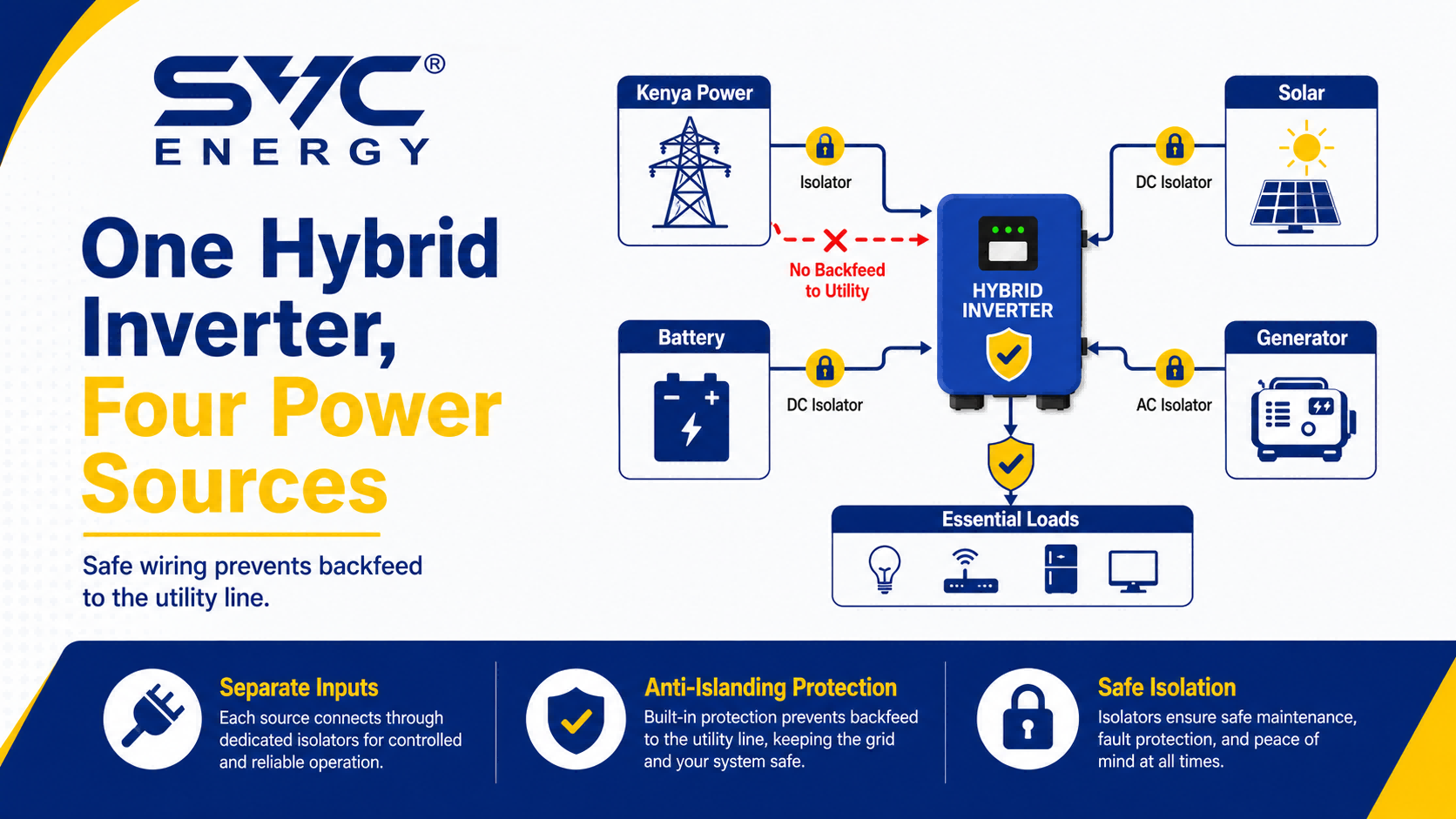
That is why companies like SVC ENERGY are essential to changing Africa’s energy system. SVC's technology, geared specifically to the African market, makes solar viable here, especially with their hybrid solar inverters, lithium battery storage systems, and off-grid solar solutions.
Their Ground HV series of high-voltage lithium batteries, hybrid solar inverters, and home energy storage systems can power rural villages, small businesses, and even industrial setups, putting energy access exactly where it’s most needed.
SVC’s energy solutions:
- Smart battery management for over 24/7 power.
- It operates in grid-connected and stand-alone situations.
- Support home and community-level scalability.
Imagine a remote village in Kenya or Nigeria without access to the national grid. The entire community benefits through a solar microgrid fed by SVC’s hybrid inverters and lithium battery banks:
- Lighting and electrical appliances
- Cold storage for medicine and food
- Electricity for schools, health clinics, and internet access
- This is more than energy - it is empowerment.
The Economic and Social Benefits of Solar Expansion
A booming solar sector means:
Employment: They hire and train local technicians, installers, and salespeople.
Better Education: With schools able to power computers and lights, learning outcomes will improve.
More Efficient Healthcare: Clinics can store the vaccines and facilitate medical devices.
Entrepreneurship: Businesses, large and small, are able to run for longer and expand faster with electricity. The benefits of clean energy flow to every corner of our society.
Future Outlook: Building Africa’s Green Energy Future
The world is in the midst of an energy transition - Africa has a unique opportunity to leap over outdated fossil fuel systems right to solar. Researchers say solar capacity across Africa is set to grow fourfold by 2030. Public-private partnerships, donor funding, and international collaboration will be crucial. Companies like SVC ENERGY will need to continue innovating to deliver affordable, scalable solutions. Solar power can allow Africa to lead the world if the right investments, policies, and technologies are deployed for the continent.

Conclusion: Africa's Bright Solar Future Awaits
Africa has the sun, the need, and the will. What it needs now is action. By embracing solar energy, especially hybrid systems with battery storage, Africa can unlock sustainable growth, energy independence, and a brighter future for millions.
Let’s illuminate Africa, one solar panel at a time.
Economic Benefits of Solar Energy
Do you really understand the MPPT of the inverter?
Related Article