Solar Panel and Batteries Wiring
author: SVC ENERGY
2024-06-26
Solar Panel and Batteries Wiring ☀️?
● Wiring Solar Panels and Batteries in Series
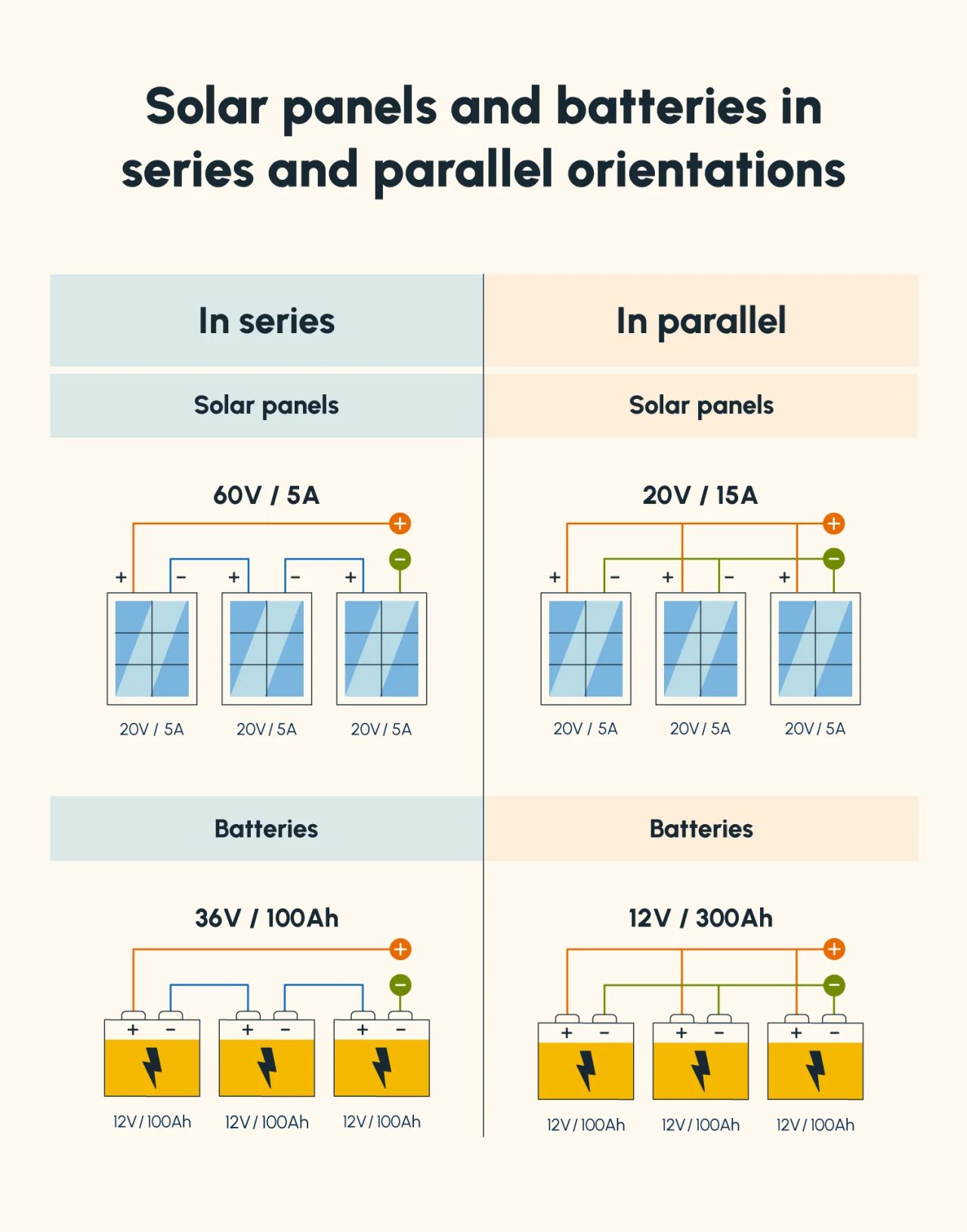
Wiring in series refers to connecting the plus of one panel or battery to the minus of another (+-). This adds the voltages of all panels together but leaves the current (amps) the same.
Wiring in series refers to connecting the plus of one panel or battery to the minus of another (+-). This adds the voltages of all panels together but leaves the current (amps) the same.
For example, if you have four panels wired in series, each with 20 volts and five amps, the output would be 80 volts and five amps.
Advantage
- Wire simplicity: With a low-amperage system (wired in series), you can use smaller-gauge wires, which are relatively inexpensive and easier to organize and manage. They can be more easily kept out of sight when running them from the panels to the other components of your solar system.
Disadvantages
Disadvantages
- More expensive controller: When wiring panels in series, it’s necessary that you use a Maximum Power Point Tracking (MPPT) charge controller. This controller regulates high voltage to match that of a battery bank without resulting in power loss. However, MPPT controllers tend to be more expensive (by approximately $200) than Pulse Width Modulation (PWM) controllers.
- Only for unshaded conditions: Unshaded conditions are best for series wiring, as each panel’s performance in a series connection impacts the performance of the entire system.
● Wiring Solar Panels and Batteries in Parallel
Wiring in parallel, on the other hand, refers to connecting two batteries’ or two panels’ pluses together (++) or minuses together (--). This adds the currents (amps) of all panels together but leaves the voltages the same.
Wiring in parallel, on the other hand, refers to connecting two batteries’ or two panels’ pluses together (++) or minuses together (--). This adds the currents (amps) of all panels together but leaves the voltages the same.
For example, if you have four panels each with 20 volts and five amps wired in parallel, the output would be 20 volts and 20 amps.
Advantages
- Cheaper: As long as the voltage of your panels matches the voltage of your battery, you don’t need to worry about regulating your voltage when storing solar energy from parallel-wired panels in a battery. This is because your voltage doesn’t get added together when wiring in parallel. For this reason, you can use a less expensive PWM charge controller rather than investing in an MPPT controller.
- Independent output: With parallel wiring, each panel operates independently of the other panels in the system. This means that, if shade covers one or two panels, the remaining panels will continue to operate unimpeded by the shaded panels’ lower performance.
Disadvantage
Disadvantage
- Wire management: The higher your amperage, the larger, more expensive, and less user-friendly your wires become. This may pose a challenge when it comes to organizing your wires from your roof and guiding them to your charge controller.
How to Choose Inverter and Battery Combination For Home
SVC ENERGY is excited to attend SOLAR ENERGY EXPO in Kenya
Related Article
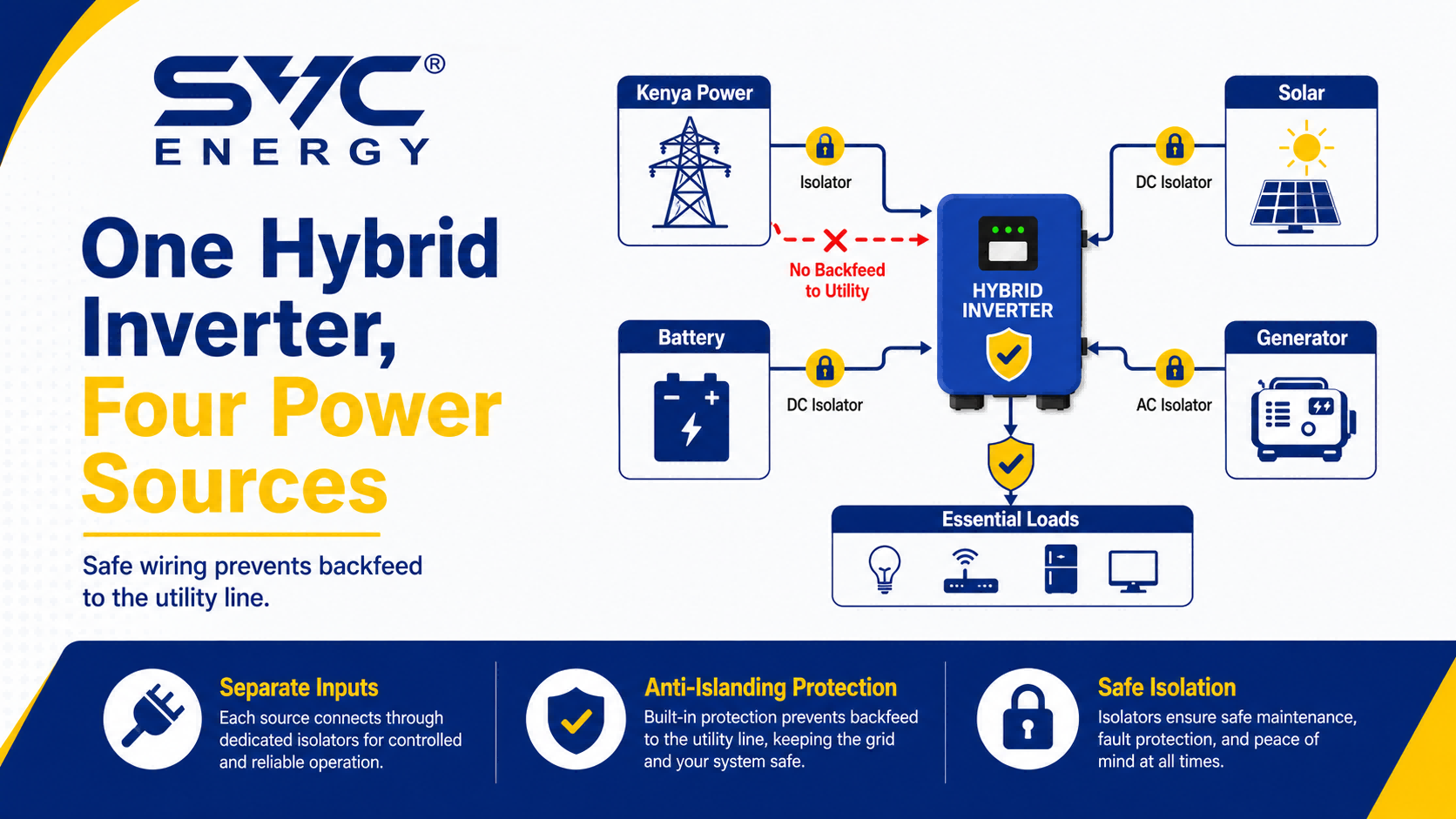
Yes—but Kenya Power, solar panels and the generator must enter the hybrid system through correctly separated inputs, with anti-islanding protection, source interlocking and properly tested export control.
Can a Hybrid Inverter Safely Combine Kenya Power, Rooftop Solar and a Generator?
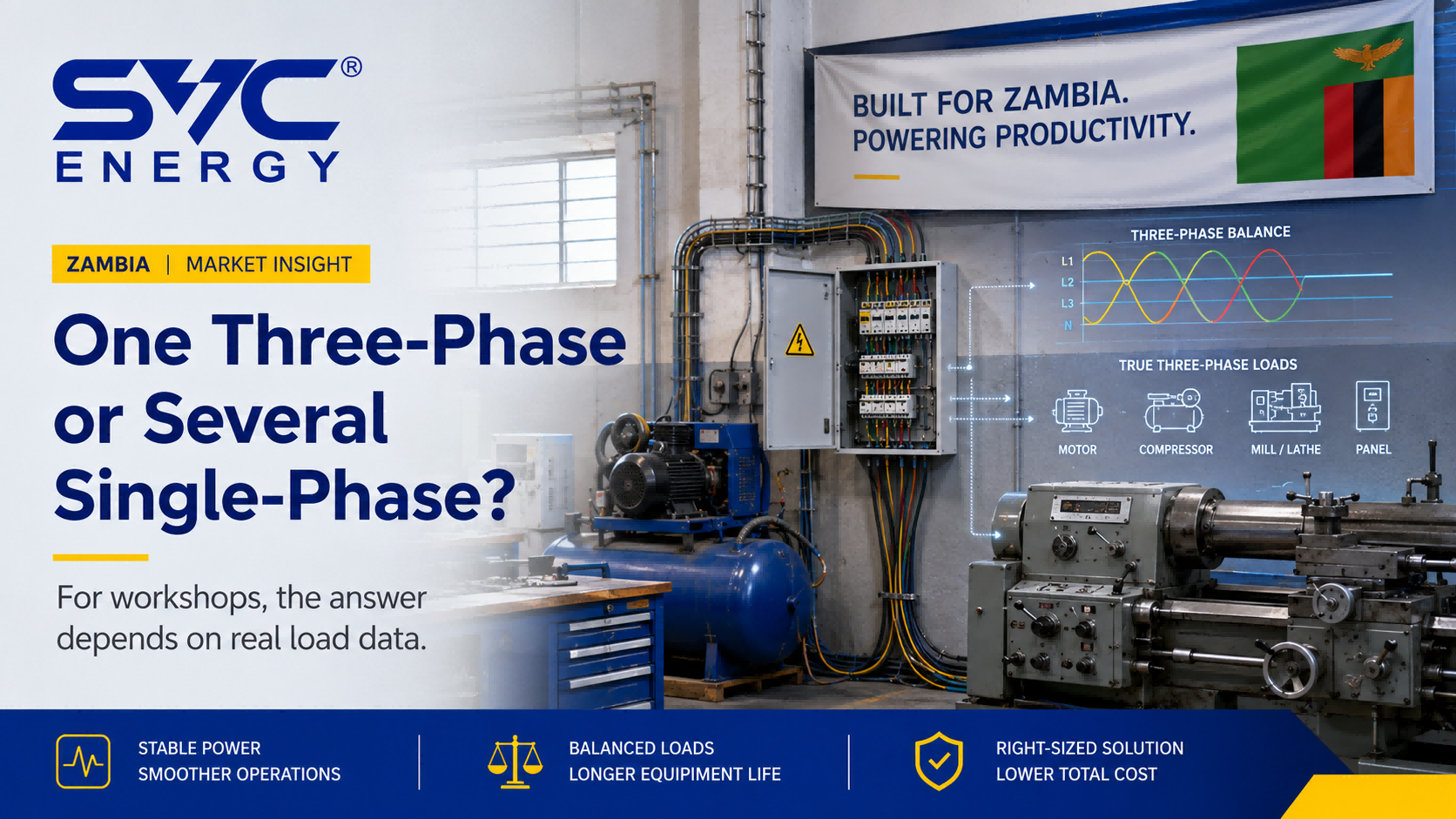
A practical comparison for Zambian workshops choosing between one three-phase hybrid inverter and several single-phase units, covering motor starting, phase balance, redundancy, batteries, installation and expansion.
Should a Three-Phase Zambian Workshop Use One Three-Phase Hybrid Inverter or Several Single-Phase Inverters?
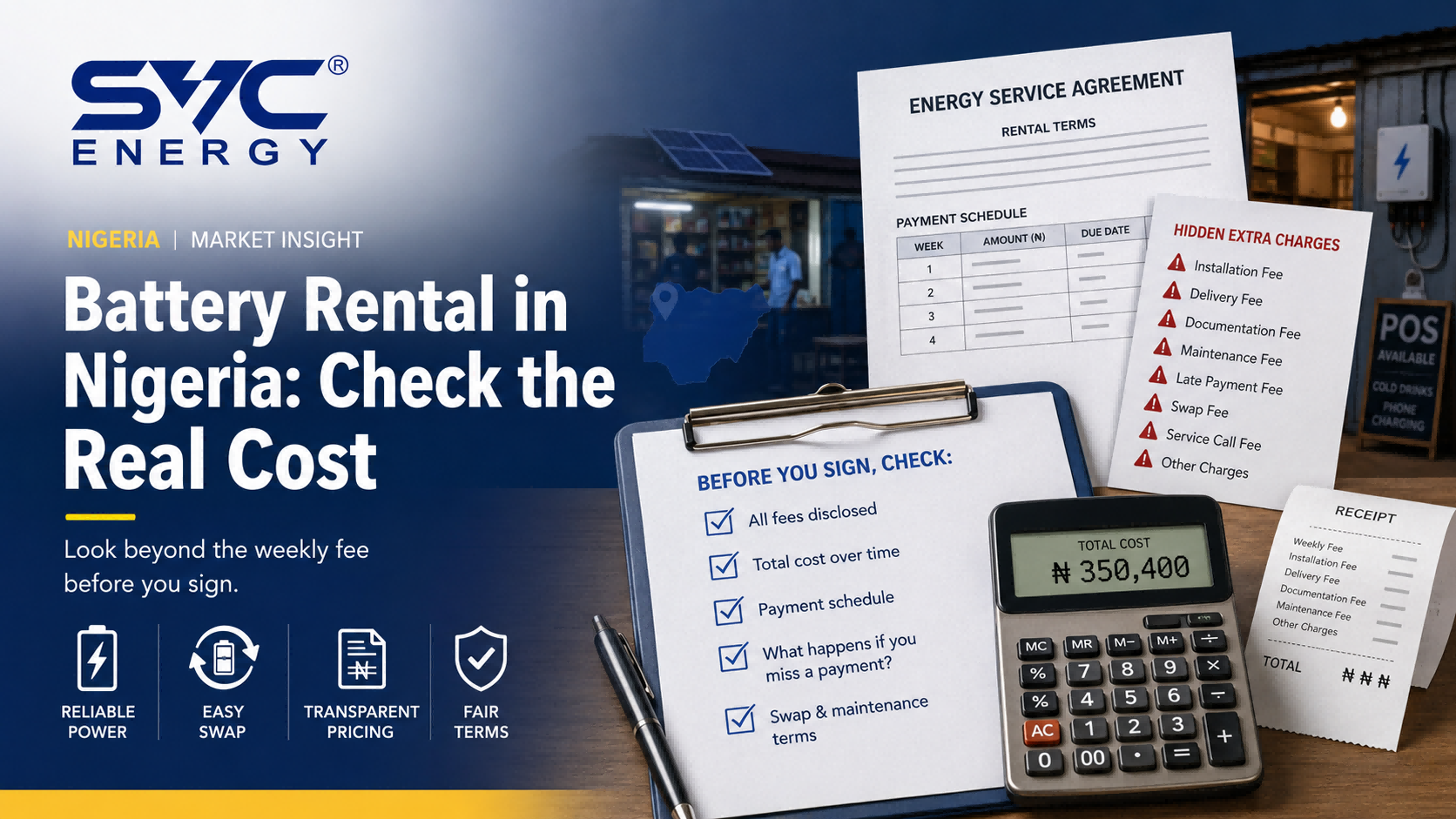
A practical guide for Nigerian households and small businesses checking deposits, delivery fees, battery swaps, maintenance, late-payment charges and ownership terms before signing a battery rental or energy-as-a-service contract.
What Extra Charges Should You Check Before Signing Up for Battery Rental or Energy-as-a-Service in Nigeria?